Albania protest fine measures have introduced penalties of up to $6,130 for people who remain in crowds involved in violence or looting, even if they do not personally commit violent acts. The government says the measures are intended to curb escalating anti-government demonstrations.
The legislation was adopted by Prime Minister Edi Rama’s government on Wednesday, October 28, amid months of protests in the capital, Tirana. Demonstrations that began peacefully have increasingly turned into confrontations between protesters and security forces.
The new penalties have raised questions about the balance between maintaining public order and protecting citizens’ right to peaceful assembly. Under the measures, merely remaining in a crowd involved in violence could attract a substantial financial sanction.
Albania protest fine reaches six times the average monthly salary
The new rules impose fines of up to 500,000 Albanian leks, equivalent to approximately €5,500 or $6,130, on people who remain in crowds carrying out violent acts or looting in public spaces.

The legislation also covers individuals who conceal their identities in the circumstances specified by the measures. The maximum fine is particularly significant in a country where the average gross monthly salary is approximately €930, or $1,026.
At the maximum level, the penalty amounts to roughly six times the average monthly salary before tax. Such a financial burden could have serious consequences for ordinary citizens caught up in demonstrations.
A major point of controversy is that the legislation can apply even when a person has not personally engaged in violence. Critics of such an approach may argue that presence in a crowd does not automatically establish individual responsibility for unlawful conduct.
The government, however, appears determined to discourage participation in demonstrations that escalate into destruction of property, clashes or looting.
Police receive new powers to restrict public gatherings
Alongside the financial penalties, the Albanian government has granted police additional powers to temporarily restrict gatherings in designated areas when authorities believe there is a risk of violence.
The restrictions may apply near educational institutions, healthcare facilities and government buildings. The stated objective is to prevent confrontations and protect essential public services.
The measures also introduce sanctions for online incitement to violence. Authorities are seeking to address not only disorder in the streets but also online activity that may encourage or contribute to violent incidents.
Another provision provides for compensation to small businesses whose property is damaged during protests. This could offer a route for affected traders to recover losses arising from demonstrations.
However, the effectiveness of the measures will depend partly on how authorities interpret and enforce them. Their application to people who remain in violent crowds could become a contentious issue, particularly where demonstrators claim they were present peacefully or were unable to leave safely.
The measures took immediate effect following the government’s adoption of the legislation. They must, however, receive parliamentary approval within 45 days to remain in force.
How Albania’s protests escalated
The protests in Tirana have developed over several months, beginning with opposition to a luxury hotel project planned for a nature reserve.
The project was backed by Jared Kushner, the son-in-law of US President Donald Trump. The development became a rallying point for a leaderless protest movement that initially organised peaceful demonstrations in May.
By mid-October, the movement had expanded into student-led protests against perceived government corruption, weaknesses in the healthcare system and the lack of opportunities available to young people.
Albania has a population of approximately 2.3 million people, and the demonstrations reflect wider frustrations among sections of society over governance and economic prospects.
In recent days, the protests have deteriorated into intense confrontations between demonstrators and security forces. The clashes have increased pressure on the government to respond to the unrest.
The demonstrations have also included calls for Rama to resign. The prime minister has rejected demands that he step down, while the government has pursued measures aimed at containing the violence.
Edi Rama cites French legislation as inspiration
Rama said on Sunday that he had been inspired by a French bill intended to make protesters financially responsible for damage caused during street demonstrations.
The French proposal had passed the country’s upper house of parliament on Wednesday, according to the report. It was designed to increase financial accountability for damage associated with public demonstrations.
Rama’s government has adopted a similar approach by introducing penalties and compensation provisions as part of its response to the unrest.
However, the Albanian measures go beyond imposing financial responsibility on people who personally cause damage, because they also target individuals who remain in crowds engaged in violence or looting.
This distinction could become central to debates over the new rules. While holding individuals accountable for property destruction is different from penalising people merely for being present, the legislation addresses both circumstances.
The government’s approach is likely to attract scrutiny over whether the rules are applied proportionately and whether peaceful demonstrators can exercise their rights without facing excessive penalties.
Government blames foreign actors for unrest
Rama has repeatedly blamed what he describes as foreign actors for contributing to the violence and instability surrounding the protests.
He has accused Russia and Iran of driving online misinformation, although the allegations were presented as the prime minister’s claims rather than independently established findings.
At the same time, Rama has called for dialogue, suggesting that the government is maintaining a stated willingness to engage even as it strengthens its response to demonstrations.
The combination of calls for dialogue and tougher penalties highlights the competing priorities facing the administration. Authorities want to prevent violence, while protesters have raised concerns about corruption, healthcare shortcomings and limited prospects for young people.
The government’s challenge will be to address public grievances while ensuring that law enforcement measures do not unnecessarily restrict legitimate political expression.
What happens next?
The immediate future of the new legislation depends on parliamentary approval within 45 days. If lawmakers do not approve the measures within that period, they will not remain in force under the stated arrangement.
The parliamentary process could also provide an opportunity for debate about the scope of the fines, police powers and the circumstances in which people can be penalised for remaining in a violent crowd.
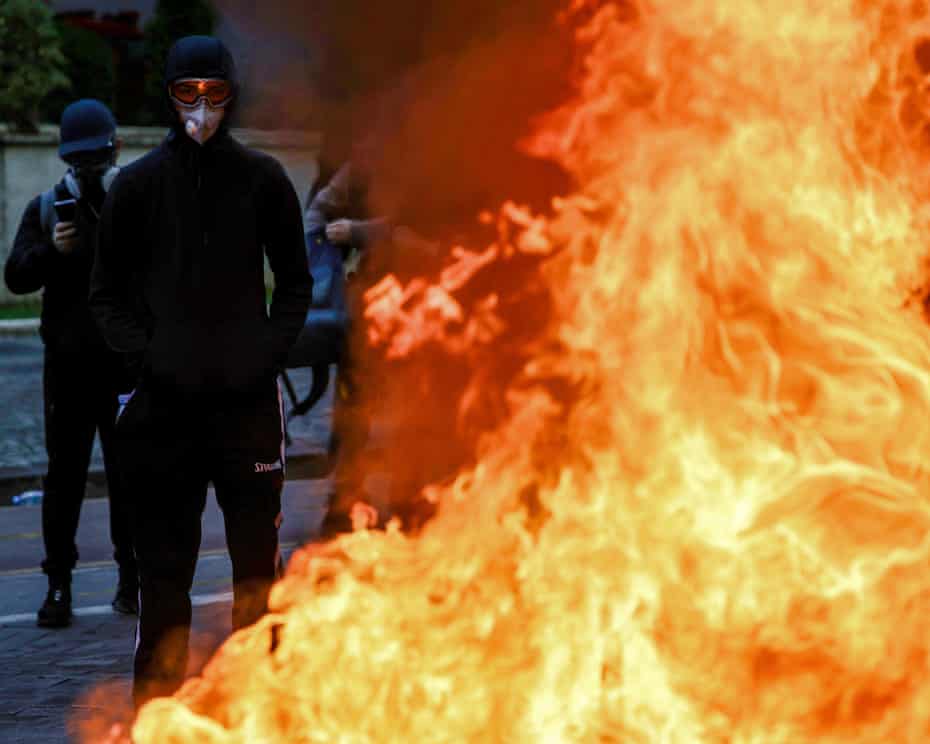
For demonstrators, the rules introduce the possibility of a financial penalty that far exceeds an average monthly salary. For businesses affected by the unrest, the compensation provisions could provide an avenue for seeking redress.
The protests themselves have emerged from a combination of concerns, including a controversial development project, allegations of corruption, healthcare problems and a lack of opportunities for young people.
Whether the government’s tougher approach will reduce violence or intensify opposition remains uncertain. The outcome may depend on enforcement, parliamentary scrutiny and the authorities’ willingness to address the underlying grievances.
For now, Albania protest fine measures represent a significant escalation in the government’s response to demonstrations, placing financial penalties and restrictions on gatherings at the centre of its strategy to restore public order.
About The Author