

France deploys 70000 police officers and gendarmes across the country this weekend as authorities prepare for another wave of demonstrations following last weekend’s looting, vandalism and clashes. The unprecedented security mobilisation comes amid growing criticism of protest bans, mass arrests and the government’s increasingly forceful response to public unrest.
Interior Minister Laurent Nuñez announced the deployment as the government seeks to prevent a repeat of the violence reported on 17 October. Riot-control squads, specialist security units and even police trainees are being mobilised to reinforce officers on the streets.
The measures have triggered a separate political confrontation, with trade unions, student organisations, lawyers and civil rights campaigners accusing authorities of restricting the right to demonstrate. The government insists that strict security measures are necessary to protect public buildings, businesses and residents.
The scale of the deployment reflects the seriousness with which French authorities are treating the coming weekend. Museums, tourist attractions and businesses are also preparing for possible disruption, while some major Paris institutions, including the Louvre and Musée d’Orsay, are closing.
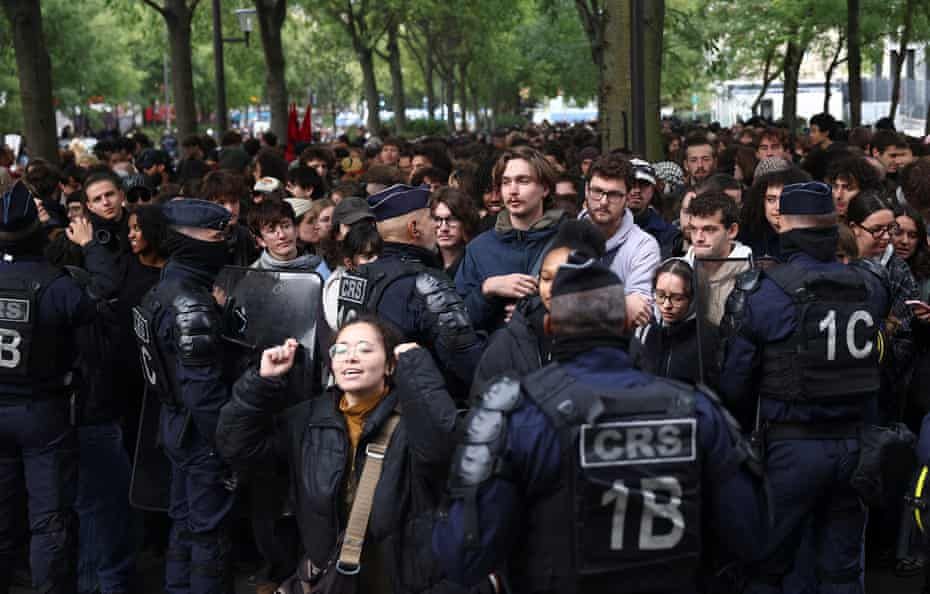
France Mobilises 70,000 Officers for Weekend Protests
The French government is preparing one of its largest security deployments in response to the latest wave of demonstrations, with 70,000 police officers and gendarmes expected to be mobilised nationwide.
Nuñez said the authorities wanted an “extremely mobile, agile and effective” force capable of responding quickly to incidents and protecting vulnerable locations.
Gendarmes are military-status personnel who perform policing duties within France’s national security system. Their deployment alongside regular police officers will provide additional manpower as authorities prepare for demonstrations in several cities.
Specialist riot-control teams and elite intervention units are also being activated. Police trainees are expected to provide further support as the government attempts to reinforce its presence across affected areas.
Some officers will be assigned specifically to protect government offices, public buildings and other locations considered vulnerable to attacks or vandalism.
The mobilisation follows reports of looting, fires and violence during demonstrations last weekend. Authorities have said they intend to prevent a repeat of those incidents, particularly attacks on public infrastructure and commercial premises.
The security operation is also taking place against a backdrop of heightened political tension, with protest organisers challenging restrictions they say threaten fundamental democratic rights.
Elite Police Units Prepared for Possible Clashes
Among the specialist units being activated are the National Gendarmerie Intervention Group, known as GIGN, and RAID, the police intervention unit whose name stands for Research, Assistance, Intervention and Deterrence.
These units are more commonly associated with counterterrorism operations, hostage rescue and the protection of senior state officials.
Their involvement in policing demonstrations has drawn attention to the government’s assessment of the security risks facing the country.
Nuñez defended the decision, pointing to concerns about calls on social media, which he attributed to far-left groups, to target public buildings. He did not provide detailed evidence for those allegations in the reported remarks.
“We are not talking about a peaceful, friendly demonstration,” Nuñez told reporters.
He added: “We are ready tomorrow to be extremely firm and not tolerate anything.“
The minister also condemned the looting and vandalism reported during the previous weekend’s protests, promising a tough response against those responsible.
He said: “What happened on Octobe 17 is totally unacceptable. We will be fully in control to prevent these lootings, these attacks on public buildings” from occurring again.
Nuñez warned that the authorities would be uncompromising towards people involved in criminal activity during demonstrations.
The government’s position is that the security operation is intended to distinguish legitimate protest from violence, protect public property and prevent businesses and residents from suffering further damage.
Critics, however, argue that the increasingly militarised response risks treating demonstrations as security threats before any violence has occurred.
Demonstration Bans Trigger Anger Among Unions and Civil Rights Groups
The deployment of thousands of officers is not the only source of controversy. Restrictions on demonstrations in several French cities have provoked strong opposition from left-wing politicians, trade unions, student groups and civil rights advocates.
Authorities in cities including Marseille and Lyon initially imposed blanket bans on unauthorised demonstrations. The restrictions prompted protest organisers to submit applications for marches and negotiate approved routes with officials.
They also triggered legal challenges from campaigners who argue that the bans interfere with constitutional protections for freedom of assembly and political expression.
The situation has continued to change as local authorities reassess their decisions. In Marseille, a blanket prohibition was lifted sufficiently to allow a trade union march to proceed on Saturday, according to the Guardian report.
The shifting restrictions have left organisers uncertain about where demonstrations can take place and what conditions they must meet.
Trade unionists, lawyers, students, public intellectuals and rights activists have criticised the government’s approach, arguing that public safety measures should not become a blanket restriction on peaceful political participation.
The dispute has placed the French government under pressure to explain how it intends to balance public order with citizens’ right to assemble and protest.
Mélenchon’s Party Accuses Government of Authoritarianism
Jean-Luc Mélenchon’s left-wing political movement, La France Insoumise, strongly criticised the restrictions, warning that the government was crossing democratic boundaries.
In a statement published on Friday, the party argued that the combination of demonstration bans, curfews and increased reliance on private security was pushing the country towards an authoritarian approach to public order.
The statement said:
“By deciding to ban demonstrations, to choose who has the right to organize them, to put in place curfews on the scale of a department or a city, to encourage traders to use private security, the executive is crossing one by one the limits that separate a democracy from an authoritarian and police state.”
The party also questioned whether prohibiting demonstrations would actually prevent unrest.
It argued:
“Furthermore, bans on demonstrations are foolish decisions that are likely to generate chaos. Indeed, these bans will not quell anger against the government’s policies, nor will they quell the desire to express it in the streets.”
The criticism reflects a wider disagreement over whether tougher restrictions can restore order or instead deepen public anger.
Supporters of the government’s approach maintain that authorities must prevent attacks on buildings, looting and violence. Opponents counter that broad restrictions may prevent peaceful demonstrators from exercising their rights and could intensify the confrontation.
The dispute is particularly significant because the government’s response to the demonstrations has become a political issue in its own right.
More Than 200 People Jailed After Previous Weekend’s Violence
The judicial consequences of the previous weekend’s unrest have added to concerns about the scale of the crackdown.
According to the Guardian’s live report, the Justice Minister said 232 people had been sentenced to prison since Saturday.
The figure comes amid criticism from legal professionals over the number of arrests and court proceedings linked to the protests.
Romain Boulet, co-president of the Association of Criminal Lawyers, described the week as exceptionally repressive.
“The most repressive week in the history of the Fifth Republic.”
Boulet also said:
“Never before in France have there been so many arrests and so many people brought before the courts as this week.”
His remarks reflect concerns among some legal professionals about the pace and scale of enforcement. They do not, by themselves, establish that every arrest or sentence was unlawful.
The government, meanwhile, has defended its response by pointing to the violence and damage associated with the demonstrations.
The large number of people facing judicial proceedings illustrates how the unrest has moved beyond street confrontations into a wider dispute over law enforcement, criminal accountability and civil liberties.
The coming weekend will test whether the expanded police presence can prevent further violence without triggering additional controversy over the treatment of protesters.
Louvre and Other Tourist Attractions Close Amid Security Fears
The impact of the unrest is extending beyond political rallies and police deployments, with businesses and tourist destinations taking precautions ahead of the demonstrations.
Several museums and tourist sites are closing during the weekend, including the Louvre and Musée d’Orsay in Paris, according to the report.
Shops and other businesses have also begun boarding up their premises in anticipation of possible disorder.
The precautions could affect visitors, workers and commercial activity, particularly in areas where demonstrations are expected to draw large crowds.
For businesses already facing uncertainty, the possibility of looting or property damage creates additional pressure to protect buildings and merchandise.
The closure of major cultural institutions also demonstrates the extent to which security concerns are affecting everyday life in the French capital.
Authorities have not suggested that every location will experience violence. Nevertheless, the scale of the security preparations indicates that officials are preparing for several possible scenarios, from peaceful demonstrations to confrontations requiring intervention.
The deployment of specialist units and the protection of public buildings are intended to limit the consequences if incidents occur.
Shooting in Trappes Adds to Security Concerns
The heightened security atmosphere was further complicated by a shooting in Trappes, a town west of Paris, that left one person dead and four others injured, including a 12-year-old girl.
French President Emmanuel Macron commented on the incident, saying that the suspect had already been taken into custody.
“We would like to thank our law enforcement agencies, which have already taken the suspect into custody. The National Anti-Terrorism Prosecutor’s Office has taken over the case.”
The involvement of the National Anti-Terrorism Prosecutor’s Office indicates that the case has been taken over by the specialised prosecution service. However, the available report does not establish the motive for the shooting or confirm that it was connected to the protests.
The incident has added to the challenges facing law enforcement at a time when tens of thousands of personnel are being mobilised for demonstrations across France.
Authorities must manage the protest-related security operation while responding to separate incidents of serious violence.
The shooting should therefore be treated as a distinct investigation unless further evidence establishes a connection to the demonstrations.
Government Faces a Difficult Test Over Public Order and Civil Liberties
France now faces a weekend in which the government’s ability to maintain public order will be tested alongside its commitment to protecting democratic freedoms.
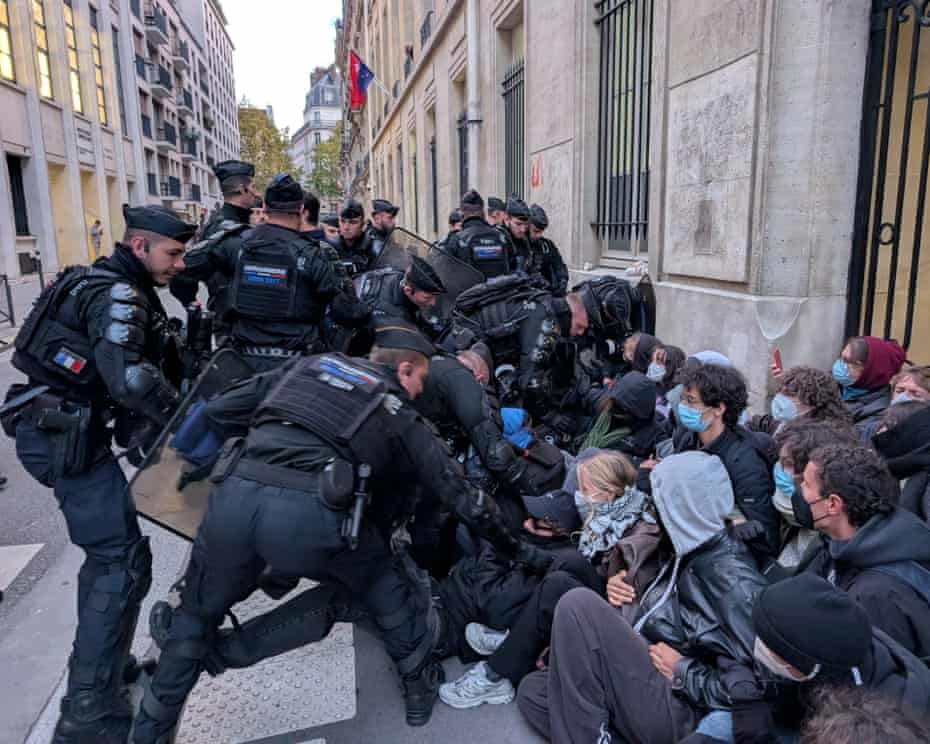
The mobilisation of 70,000 police officers and gendarmes demonstrates the seriousness of the authorities’ preparations. Specialist units, protective deployments around public buildings and the closure of major tourist attractions all point to concerns about possible disorder.
Yet the restrictions on demonstrations have created a second source of tension. Critics argue that banning rallies and imposing broad restrictions could undermine the right to peaceful protest, while the government insists that preventing violence and protecting property must remain priorities.
The competing positions are likely to remain central to the political debate as demonstrations continue and legal challenges proceed.
The government’s immediate objective is to prevent a repeat of the looting, fires and attacks reported last weekend. Its longer-term challenge is to show that security measures can be enforced without unnecessarily restricting peaceful political expression.
With unions, students and civil rights groups challenging the bans, and hundreds of people already facing judicial consequences from the previous unrest, the coming days could prove decisive in shaping the next phase of France’s protest crisis.
About The Author


