The Alberta independence referendum has delivered a decisive victory for Canadian unity, with approximately 76% of voters rejecting a proposal to begin the process of separating the oil-rich province from Canada, according to unofficial results.

With nearly 1.9 million votes counted, around 24% supported beginning a legal process that could eventually lead to independence, while the overwhelming majority chose to remain part of the country.
The outcome represents a significant political victory for Canadian Prime Minister Mark Carney and supporters of national unity, while dealing a setback to separatists who have campaigned for Alberta to break away from the federation.
Carney, who grew up in Edmonton, Alberta’s capital, welcomed the result, describing it as a clear statement of the province’s commitment to Canada.
“Albertans made a clear choice. They chose unity, to build together, and to take care of each other. Above all, Albertans chose Canada,” the prime minister said.
The result also raises questions about the future of Alberta’s separatist movement, which has gained attention amid longstanding disagreements over federal policies, economic grievances and the province’s relationship with Ottawa.
Alberta Independence Referendum Delivers Decisive Victory for Canada
The Alberta independence referendum was one of 10 questions put before voters on Monday, October 19, as residents considered several issues affecting the province’s political and constitutional future.
Although the separation question did not directly ask voters to declare independence, it asked whether Alberta should remain in Canada or begin a legal process that could eventually lead to another vote.
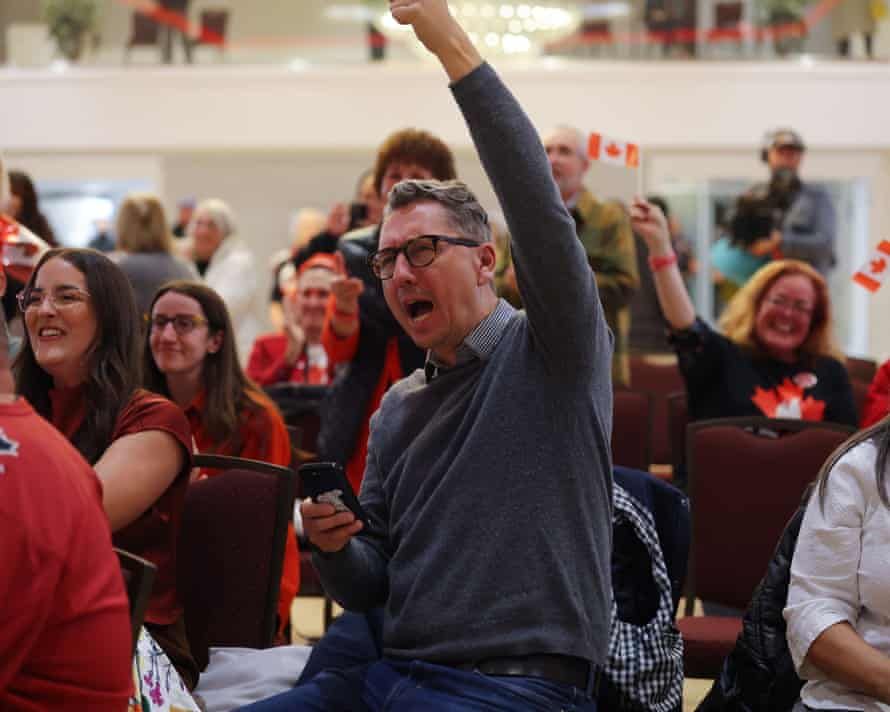
The distinction frustrated some separatists, who wanted a more direct question on independence. Nevertheless, the ballot exposed deep political divisions and produced an overwhelming result in favour of remaining within Canada.
Unofficial figures from Elections Alberta showed that approximately 1.9 million votes had been counted, with roughly three-quarters supporting continued membership of the Canadian federation.
The remaining questions covered issues including immigration, healthcare, education and Alberta’s constitutional powers. Elections Alberta said counting on the other questions could continue for several days.
Mark Carney Says Alberta Has Chosen Unity
Carney used the result to call for cooperation between Alberta and the federal government, arguing that the province could pursue its economic ambitions more effectively within a united Canada.
The prime minister said the outcome would allow the country to move forward together while accelerating efforts to diversify trade, develop major infrastructure projects and strengthen Canada’s position as a global energy powerhouse.
Alberta, a major oil-producing province, occupies an important place in the country’s economic and energy strategy.
Carney’s message sought to shift attention away from the separation debate towards economic development and Canada’s ability to compete internationally.
His victory also provides political encouragement to supporters of national unity, who had warned that a separation process could introduce years of uncertainty for businesses, workers and investors.
Why Alberta Voters Rejected the Separation Proposal
The result suggests that many Albertans can remain dissatisfied with federal policies without supporting the province’s departure from Canada.
Alberta has experienced longstanding disagreements with Ottawa over energy development, environmental regulations and the distribution of federal resources.
Separatists have argued that the province contributes significantly to Canada’s economy, particularly through oil and gas production, while claiming that federal policies do not adequately reflect Alberta’s interests.
However, the referendum results indicate that these grievances did not translate into majority support for beginning the separation process.
Pollster David Coletto told The Guardian that many residents viewed the referendum as a distraction from issues they wanted the provincial government to address.
“There was almost a general sadness about the wasted energy spent on this rather than the more real threats they see, including the Trump administration,” Coletto said.
He added that many Albertans held deep grievances against the federal government while remaining proud of their Canadian identity.
“Most Albertans feel deep grievances with the federal government while also being proudly Canadian. The marriage may be rocky at times, and most Albertans want to see some thing changed, but very few are willing to see the marriage end,” he said.
Separatists Say the Result Still Sends a Message
Despite their defeat, leaders of Alberta’s independence movement argued that the result demonstrated continued dissatisfaction with the province’s treatment by the federal government.
Keith Wilson, a prominent separatist leader, said at least a quarter of Albertans believed the province deserved better treatment.
“We don’t have the final results. I think the numbers are going to fluctuate, but it is fair to say that at least a quarter of Albertans feel that Alberta needs to be treated better,” Wilson said.
His comments reflected the movement’s determination to continue campaigning despite failing to secure majority support for the separation proposal.
However, other separatist voices acknowledged that the outcome represented a serious setback.
David Parker, a longtime far-right organiser linked to a major voter-information breach, described the result as bleak in a social media post.
“Independence feels far away and we should not pretend this was not a defeat, however, it changes nothing about the reality of the circumstances Albertans find themselves in,” Parker wrote.
The conflicting reactions reveal uncertainty within the separatist movement over whether to focus on rebuilding public support, challenging provincial leadership or pursuing a longer-term campaign.
Danielle Smith Welcomes Alberta Referendum Result
Alberta Premier Danielle Smith welcomed the early results, saying they demonstrated widespread support for remaining within Canada.
“Albertans have voted for a stronger Alberta in a united Canada,” Smith wrote on social media.
The referendum, however, has placed Smith in a difficult political position because her leadership of the United Conservative Party has been influenced by divisions between separatists and supporters of Canadian federalism.
Separatists within the party played a significant role in the political upheaval that removed her predecessor, Jason Kenney.
In recent months, Smith has attempted to accommodate different factions within her political base while governing a province where a majority of residents were not interested in secession.
The referendum has nevertheless become a political liability for her government, with the party’s public support reportedly declining in recent months.
Its difficulties have included the loss of a previously conservative stronghold in a by-election, adding to questions about the party’s political direction.
Separatists Consider Challenge to Smith’s Leadership
The referendum defeat could intensify internal conflict within the United Conservative Party, particularly among members who believe Smith has failed to advance the independence movement.
Jeffrey Rath, a prominent separatist, told Global News that Alberta independence would remain a distant dream while Smith, whom he described as an “avowed federalist”, remained in power.
He said it was time for separatists to “take back ownership” of the party.
Another prominent separatist leader indicated that he would push for a special general meeting aimed at removing Smith.
These developments suggest that the referendum could influence the province’s internal political battles long after the votes have been counted.
Rather than ending the independence debate, the defeat may force separatists to reconsider their strategy and their relationship with the governing party.
Pierre Poilievre and Canadian Unity Supporters Celebrate
Carney was not the only prominent Canadian politician to oppose Alberta’s separation proposal.
Conservative leader Pierre Poilievre, whose parliamentary constituency is in Alberta, also urged residents not to use the referendum as a way to express frustration with the federal government.
During the campaign, Poilievre told supporters that Albertans were not “quitters”.
“To those people who are thinking about taking out their frustration on the current government by voting for separation in the referendum, I say this: Canada is more than a government,” he said.
He added: “It is a people, a flag, a land, a history and a promise.”
His comments sought to distinguish dissatisfaction with government policies from opposition to Canada itself.
The referendum result broadly reinforced that argument, showing that substantial grievances with Ottawa could coexist with support for the country’s continued unity.
Calgary Mayor Warns Against Economic Uncertainty
Calgary Mayor Jeromy Farkas, a strong opponent of the independence movement, also argued that the city’s future was best secured within Canada.
Before the vote, Farkas expressed concern that prolonged uncertainty could encourage businesses and investors to move their capital elsewhere.
“I am Canadian because I’m Canadian, not in a transactional way and regardless of the flavour of prime minister,” he said.
He added that he would continue making the case for national unity because the referendum would not permanently end separatist sentiment.
“No result will permanently put this to bed. The separatist movement sees this as a long-term project,” Farkas said.
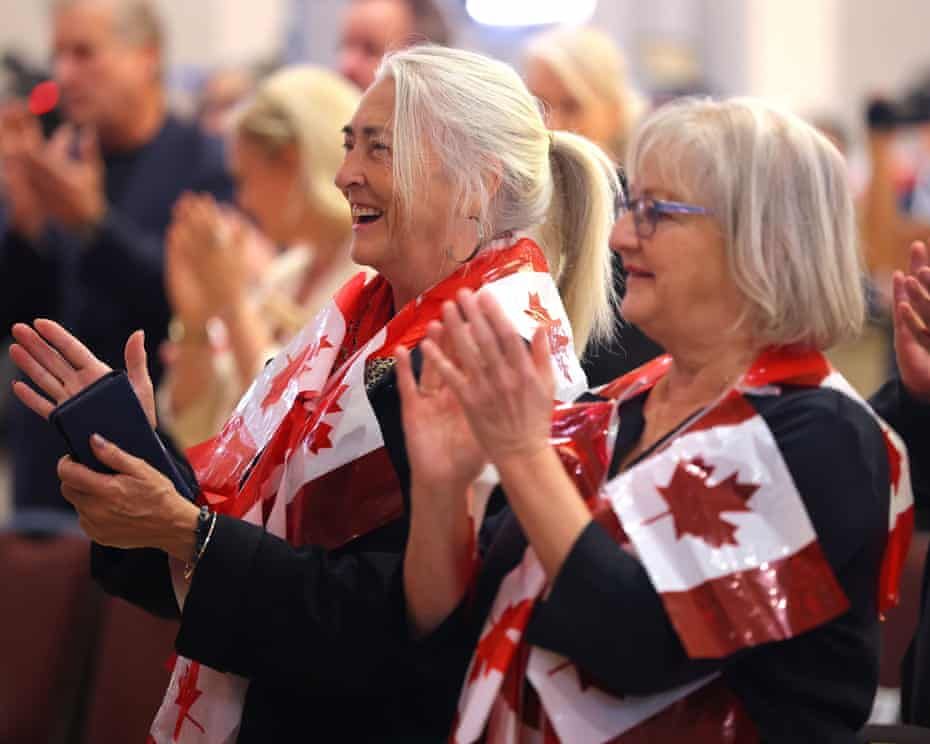
His comments reflected a broader concern among opponents of separation that even a decisive referendum result might not eliminate political uncertainty surrounding Alberta’s constitutional future.
Alberta Independence Movement Faces an Uncertain Future
The Alberta independence movement now faces the challenge of maintaining its political momentum after failing to persuade most voters to begin the separation process.
The referendum exposed genuine dissatisfaction with federal policies, but the results showed that the majority of participating voters were unwilling to take the proposed next step towards independence.
For Carney and supporters of Canadian unity, the outcome provides an opportunity to focus on economic development, infrastructure and the management of Alberta’s grievances within the existing federation.
Read also: Britain deploys RAF typhoon jets to defend Saudi Arabia against Houthi drone and missile attacks
For Smith, the result offers a clear expression of public support for a united Canada but could also intensify pressure from separatists within her own political party.
The province’s political future will therefore depend partly on whether federal and provincial leaders can address the issues that fuelled the independence campaign.
The vote also demonstrated that a separatist movement can attract substantial support without securing the majority required to advance its central objective.
With approximately 76% backing continued membership of Canada and 24% supporting the start of a separation process, the immediate political message was unmistakable.
Alberta voters rejected the proposal, strengthening Canada’s unity for now while leaving the underlying disagreements between the province and the federal government unresolved.
About The Author