Fresh strikes raise fears of renewed conflict
US-Iran airstrikes intensify as fears of wider war grow after fresh American attacks on Iranian targets triggered retaliatory strikes against American interests across several Middle Eastern countries, officials reported.
The latest escalation has shattered hopes that the confrontation between Washington and Tehran had been contained after weekend attacks, raising concerns that sustained military operations could return.
US Central Command said American forces had completed another wave of strikes targeting Iran’s Islamic Revolutionary Guard Corps, describing the attacks as responses to threats.
According to CentCom, the American strikes followed attempted attacks against commercial shipping in the Strait of Hormuz and attacks directed at American service members.
Iran responded quickly, with its Revolutionary Guards claiming attacks against American interests in Jordan, Bahrain, Kuwait and Iraq as tensions spread across several regional locations.
Iran launches retaliatory attacks
The Iranian Revolutionary Guards claimed that Camp Titin, a US Marine Corps base in Jordan, came under an intense ballistic missile attack early Wednesday.
Jordanian authorities said their forces intercepted ten ballistic missiles launched from Iran, while three additional missiles reportedly landed in remote areas without causing confirmed casualties.
The Jordanian army did not confirm injuries or direct impacts at the American training facility, located near the Gulf of Aqaba and close to regional borders.
Iranian forces also claimed attacks against an American base in Erbil, Iraq, while missile and drone activity was reported in Kuwait amid the rapidly deteriorating situation.
In Bahrain, journalists reported hearing warning sirens associated with airborne attacks, adding another layer of uncertainty to the expanding confrontation between the United States and Iran.
The developments demonstrate how quickly Iran retaliatory strikes can broaden an already dangerous confrontation, potentially drawing additional countries into a conflict with significant regional and global consequences.
Civilian casualties reported in Iran
Iran’s Red Crescent reported that four people, including a child, were killed after shrapnel from an American missile attack struck a home during a wedding celebration.
More than fifty people were reportedly wounded in the incident in Kuhestak, according to the Iranian Red Crescent, although independent verification of the casualty figures remained unavailable.
US Central Command spokesperson Captain Tim Hawkins said the American military does not target civilians, while accusing Iran’s Revolutionary Guards of doing otherwise.
Iranian authorities nevertheless accused Washington of striking civilian areas, while describing the latest American operation as part of an intensified campaign against the country.
State-linked Iranian media reported explosions on Qeshm Island, situated on the northern side of the Strait of Hormuz, amid continuing military activity around strategic waterways.
Additional explosions were reported in Bandar Abbas and Chabahar, two important Iranian port locations, as both sides exchanged threats and prepared for possible further confrontation.
Strait of Hormuz becomes central flashpoint
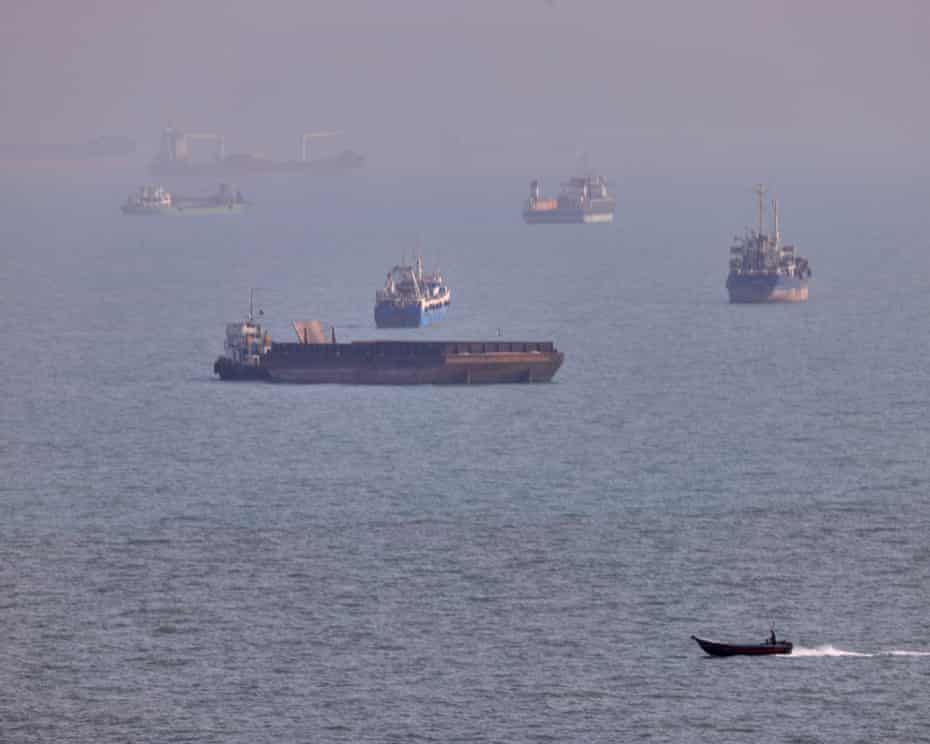
The Strait of Hormuz has become one of the most significant pressure points in the escalating confrontation because enormous quantities of global oil supplies normally pass through its waters.
Oil prices had already begun rising following the weekend exchange of attacks between Washington and Tehran, with reports also emerging that two tankers were hit.
Iran has effectively closed the waterway to shipping, according to the report, while Tehran warned that it could prevent oil exports from the Gulf altogether.
Such a development could have consequences far beyond the immediate battlefield, potentially affecting international energy markets, transportation costs, inflation and economies dependent upon reliable petroleum supplies.
Donald Trump warned Iran that Washington would respond with significantly greater force if Tehran retaliated against the latest American strikes targeting Revolutionary Guard positions.
The US president also warned that a much larger attack remained possible, using increasingly severe language as tensions between Washington and Tehran continued escalating.
Iranian officials, meanwhile, showed no indication that they intended to retreat, instead warning that American pressure would provoke further military and diplomatic responses.
Six-month conflict faces dangerous new phase
The latest fighting follows a six-month conflict that had increasingly shifted away from direct military confrontation toward sanctions, blockades and economic pressure.
That fragile situation changed during the weekend, when American forces attacked Iran’s Larak Island before Tehran launched missiles against two American airbases in Jordan.
The exchange of attacks has now raised questions about whether the conflict could return to sustained military operations after months of economic confrontation.
Earlier attempts to stop the fighting produced a June memorandum of understanding intended to establish an end to hostilities and create space for negotiations.
However, the agreement left several difficult issues unresolved and established a broader sixty-day negotiation period that eventually passed without a comprehensive settlement between the opposing sides.
Iranian President Masoud Pezeshkian said Tehran would respond immediately if Washington returned to its commitments under the memorandum of understanding.
Speaking in Bishkek during a Shanghai Cooperation Organisation summit involving Russia and China, Pezeshkian presented Tehran’s position as conditional rather than an outright rejection of negotiations.
Tehran rejects American pressure
Iranian officials have continued rejecting what they describe as excessive American demands, arguing that Washington has confused genuine negotiations with attempts to dictate conditions.
Iranian Foreign Ministry spokesperson Esmaeil Baghaei said Tehran would use its available capabilities, both militarily and diplomatically, if Washington maintained its current approach.
Iranian parliament speaker Mohammad Baqer Qalibaf also warned that preventing Iranian oil exports could trigger a broader response affecting oil exports throughout the Persian Gulf.
His remarks underscored the potentially enormous economic consequences of continued confrontation, particularly if the Strait of Hormuz remains inaccessible to international commercial shipping.
The exchange of threats has therefore extended beyond military targets, creating an economic confrontation involving energy supplies, sanctions, maritime security and international diplomatic pressure.
For Washington, preventing attacks on American forces and commercial shipping remains central to its justification for continuing military operations against Iranian Revolutionary Guard targets.
For Tehran, however, the attacks represent foreign interference and an attempt to impose American demands through military and economic pressure rather than negotiated diplomacy.
Wider Middle East conflict remains possible
The expansion of attacks beyond Iran’s borders has increased fears that the Middle East conflict could involve additional American facilities, allied governments and strategic infrastructure.
Jordan, Bahrain, Kuwait and Iraq have already experienced reported military activity connected to the confrontation, although the scale and consequences differed across those locations.
The involvement of these countries creates additional risks because American military personnel and facilities are positioned across the region, making them potential targets during future Iranian retaliation.
Regional governments could also face difficult choices about air defence, military cooperation, civilian protection and diplomatic efforts to prevent further escalation.
The latest US military strikes and Iranian responses therefore represent more than another isolated exchange, particularly because each side has publicly threatened stronger action.
Trump’s warning of a potentially larger American attack has further increased uncertainty, while Iran’s promises of retaliation suggest that Tehran does not intend to absorb additional strikes without responding.
Diplomatic efforts face renewed pressure
The deteriorating situation places renewed pressure on diplomatic channels that previously offered an opportunity to prevent the conflict from returning to sustained warfare.
Pezeshkian’s comments suggest Iran remains prepared to reciprocate under the terms of the earlier understanding, provided Washington fulfils commitments Tehran believes were previously accepted.
However, American and Iranian positions remain sharply divided, with both governments accusing the other of creating the conditions responsible for continued escalation.
The absence of agreement during the sixty-day negotiation period demonstrates how difficult it may be to restore the fragile arrangements that previously reduced direct military activity.
Meanwhile, the humanitarian consequences are becoming increasingly concerning, particularly as reports emerge of civilian deaths, injuries and disruption around populated areas.
Read also:British man deported from Sweden after 24 years
The reported death of a child during a wedding celebration has added emotional weight to growing international concerns about the consequences of renewed attacks.
Global energy markets watch developments
The Strait of Hormuz remains particularly important because prolonged disruption could affect international energy markets at a moment when oil prices are already responding to geopolitical uncertainty.
Reports of damaged tankers have intensified concerns about maritime security, potentially forcing commercial operators to reconsider routes and increasing risks for vessels attempting to navigate the strategically important waterway.
If Iran carries out its warning to prevent Gulf oil exports, the consequences could extend well beyond the United States and Iran.
Energy-importing countries could face higher costs, while businesses and consumers worldwide could eventually experience additional economic pressure from increased transportation and fuel prices.
The possibility of a wider confrontation therefore gives the latest military exchanges significance far beyond the immediate targets struck by either side.
A fragile situation with uncertain consequences
The latest developments show how quickly a conflict can move from economic pressure and diplomatic confrontation back toward direct military action.
US-Iran Airstrikes Intensify as Fears of Wider War Grow because both sides have demonstrated willingness to respond forcefully, while regional targets continue becoming involved.
Whether the latest escalation remains limited or develops into a broader confrontation will depend heavily on decisions made by Washington, Tehran and governments across the Middle East.
The immediate challenge is preventing further attacks while preserving diplomatic channels capable of addressing the disputes that have repeatedly pushed the two countries toward confrontation.
With oil markets watching, commercial shipping under pressure and American facilities facing reported Iranian attacks, the stakes now extend far beyond the battlefield.
The coming days could therefore prove crucial in determining whether the latest exchange becomes another temporary flare-up or the beginning of a dangerous new phase.
About The Author