President Donald Trump declared a Trump Iran strike pause late Saturday, saying the US would hold fire if Iran quickly agrees to a deal. The decision followed urgent pressure from Riyadh and warnings from Tehran.
The White House confirmed Trump spoke with Saudi Arabia. Reports said the Saudi crown prince intervention was direct. Crown Prince Mohammed bin Salman urged restraint and expressed deep concern about escalation across the Gulf region immediately.
According to Axios, one source stated the prince “urged Trump to de-escalate and refrain from launching the strikes.” The message was clear. Riyadh feared massive retaliation if Washington targeted Iranian energy sites or infrastructure.
The Associated Press also reported the call. It said Saudis worried that US hits on Iran could trigger mirrored attacks on the kingdom. No official details were released about the substance of the conversation.
Tehran responded with forceful language. Foreign Minister Abbas Araqchi called Turkey, Pakistan and Saudi Arabia. He warned against any “adventurous action” and promised a “proportionate response” to US or Israeli aggression.
Iranian media amplified the warning. Nournews said US attacks on Iranian energy would prompt strikes on oilfields in Saudi Arabia and UAE. It also named gasfields in Qatar and Israel as possible targets.
The Iran retaliation threat became real on Saturday. Kuwait’s army reported destroying Iranian drones. Shrapnel hit a government facility in northern Kuwait and property on Bubiyan Island. No casualties were confirmed by officials.
At sea, tensions rose sharply. UK Maritime Trade Operations logged two incidents off Oman. One tanker suffered engine room damage from a projectile. Another reported a close explosion with no damage to the vessel.
The Strait of Hormuz closure is the biggest fear. About 20% of global oil passes through it. Any disruption would spike prices worldwide and hurt Gulf economies dependent on exports and shipping lanes.
Trump posted in his usual style. He wrote the “USA is locked and loaded” with power “not seen since World War II.” Then he added the US was asked to wait by Iran and Middle Eastern countries.
He listed conditions for the Trump Iran strike pause to continue. They include “immediate, complete and total opening of the Hormuz strait, and an end to Iran’s nuclear threat.” The terms are sweeping and non-negotiable publicly.
Trump also claimed “the country of Israel joins me in this commitment.” That statement is disputed. Netanyahu’s government has rejected prior US announcements and disagrees on strategy toward Iran and Hezbollah.
CBS News reported US Israel joint strikes were planned for the weekend. Targets reportedly included oil refineries and power plants. It is unclear if those plans are now suspended due to the new diplomatic push.
Saudi Arabia has played both sides. It joined US strikes on militia sites in Iraq this week. But it also pushes for talks. The kingdom does not want a regional war on its borders or coast.
Analysts say the Saudi crown prince intervention bought time. Riyadh needs stability to protect oil revenue and investments. A war would derail Vision 2030 and risk direct hits on critical infrastructure.
Iran’s strategy is pressure plus negotiation. By launching drones at Kuwait and threatening the Strait of Hormuz closure, Tehran raises costs for the US. Then it asks for talks to freeze further escalation.
The Iran retaliation threat is not new. But the specificity about Saudi, UAE and Qatari energy assets makes it sharper. Gulf states have invested billions in facilities that are hard to defend fully.
Washington is split. Some advisers want maximum pressure. Others fear entanglement. The Trump Iran strike pause reflects that tension, offering a deal while keeping military options visible and ready.
For Israel, the pause is awkward. It has pushed for harder action. If US Israel joint strikes are delayed, Netanyahu may act alone. That could drag the US back in despite Trump’s announcement.
Kuwait’s incident shows risk of spillover. Drones crossing borders create panic. Even without casualties, material damage forces governments to respond and raises the chance of miscalculation.
Shipping companies are nervous. The attacks near Oman prove the Strait is vulnerable. Insurance rates will climb. Tanker crews may avoid routes, tightening supply even without a formal Strait of Hormuz closure.
Oil markets will react Monday. Traders hate uncertainty. The Trump Iran strike pause calms markets short term. But the Iran retaliation threat keeps a risk premium built into crude prices.
Diplomacy is the next test. Can Araqchi and US envoys meet quickly? Trump’s “rapidly make a deal” timeline is vague. Without a framework, the pause could collapse within days.
Regional players are talking. Turkey and Pakistan received calls from Tehran. They may mediate. The Saudi crown prince intervention shows Riyadh wants that role too, as the key Gulf broker.
The Pentagon has not commented. Military assets remain in place. “Locked and loaded” means carriers and bombers are ready. The Trump Iran strike pause is political, not operational stand-down yet.
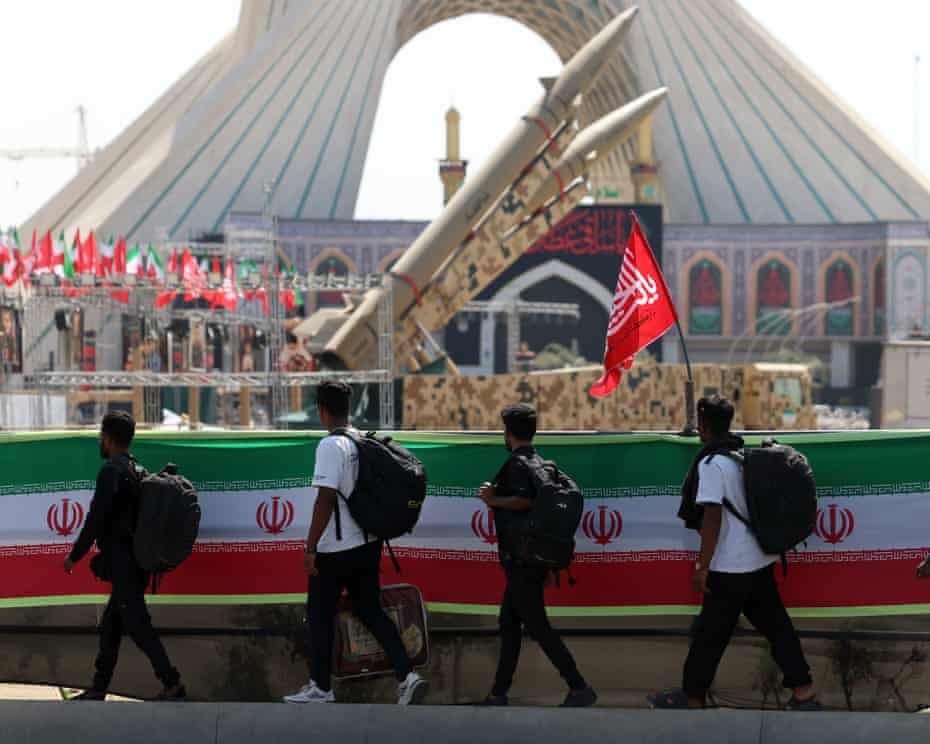
Iran displays strength at home. Missiles were shown at Azadi Square in Tehran. The imagery tells citizens the government is defiant, even while its foreign minister seeks de-escalation channels.
Experts warn about miscalculation. Drones, ship attacks, and rhetoric create fog. One more incident could end the Trump Iran strike pause and trigger the strikes Trump said he was holding back.
Economic pain is a lever. If Iran hits Saudi oil, prices soar. If the US hits Iran, Iran hits back. The Strait of Hormuz closure threat is mutually assured economic damage for everyone involved.
Domestically, Trump frames this as strength. He avoided war while demanding concessions. Critics will say he blinked. Supporters will say he is negotiating from power with the Trump Iran strike pause.
Read also: Ceuta migrant crisis: 60,000 cross from Morocco as Trump calls it catastrophe and Spain deploys troops
What happens next depends on three things. One, direct US-Iran talks. Two, whether Israel accepts the pause. Three, if Gulf states can guarantee security to prevent further Iran retaliation threat actions.
For now, missiles are not flying. In Riyadh, relief. In Tehran, defiance. In Washington, a deal is demanded. The region holds its breath waiting to see if diplomacy beats escalation.