Iran warns of quick retaliation as tensions with the United States escalated sharply on Thursday after President Donald Trump renewed threats of military action, prompting Tehran to declare it was ready to respond immediately and forcefully to any attack.
The exchange has raised fears of a wider regional conflict as diplomatic channels narrow and military assets continue to move into strategic positions around the Middle East.
Iran’s foreign minister said the country’s armed forces were fully prepared to respond “immediately and powerfully” should the United States strike Iranian targets.
The warning came just hours after Trump publicly reiterated that Washington was prepared to use military force against Iran, using language that suggested speed and overwhelming power.
Iranian officials framed the remarks as evidence that the threat of war was no longer hypothetical, but a real and immediate danger.
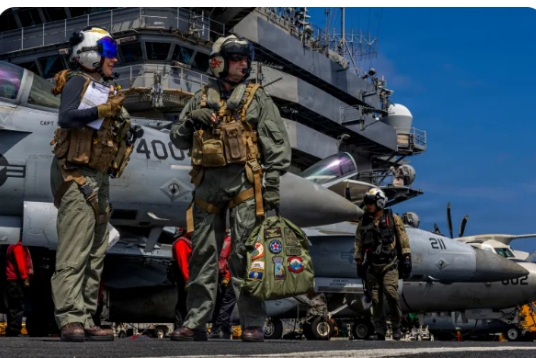
The United States has increased its military presence near Iran in recent days, deploying additional assets to the Arabian Sea, including the nuclear-powered aircraft carrier USS Abraham Lincoln.
US officials have described the buildup as defensive and precautionary, but Iranian leaders view it as preparation for possible strikes. The movement of naval and air forces has intensified anxiety across the region, particularly among countries hosting US bases.
European governments have responded to the escalating crisis by imposing new sanctions on Iran. European Union foreign ministers approved measures including travel bans and asset freezes on Iranian officials accused of involvement in the violent suppression of protests that have rocked the country since late December.
The sanctions also target Iranian entities linked to support for Russia, reflecting broader European concerns about Tehran’s regional and international activities.
Analysts warn that any US-Iran confrontation is unlikely to remain contained. Ali Vaez, Iran project director at the International Crisis Group, said a direct conflict could easily spill over into neighbouring countries.
Although Gulf states such as Saudi Arabia and the United Arab Emirates have stated they will not allow their airspace or territory to be used in an attack on Iran, US forces stationed across the region remain deeply embedded in intelligence and air defence operations.
Vaez noted that in the event of escalation, Iran would likely consider US bases in the Middle East legitimate targets. Iran’s short-range missiles and naval capabilities, he said, could inflict serious damage on US facilities and Gulf state infrastructure.
These capabilities are central to Tehran’s deterrence strategy and explain why Iranian officials have repeatedly warned Washington against using military force.
The consequences of a prolonged conflict could be even more severe if it led to the collapse of Iran’s government. Vaez warned that such a scenario would create a failed state of more than 90 million people, triggering refugee flows, instability and radicalisation across the Gulf and beyond.
He described this outcome as deeply alarming for Iran’s neighbours, many of whom are already grappling with regional conflicts and economic uncertainty.
Despite Trump’s threats, analysts argue that coercion is unlikely to force Iran to accept US demands. Vaez said the Iranian leadership views surrendering to US pressure as more dangerous than enduring military strikes.
This calculation, he said, has remained consistent since Trump’s first term, when economic sanctions and military threats failed to fundamentally alter Tehran’s policies.
Iran has continued to signal military readiness. State-aligned media reported that the Iranian army had received 1,000 newly delivered drones, distributed across multiple branches of the armed forces.
Iran’s army chief said the delivery was part of efforts to strengthen strategic advantages and ensure the ability to deliver a crushing response to any aggressor. The announcement appeared designed to reinforce Iran’s deterrent posture amid rising tensions.
Russia has urged restraint, with Kremlin spokesperson Dmitry Peskov saying the potential for negotiations between Tehran and Washington had not been exhausted. He warned that any use of force would create chaos in the region and lead to dangerous consequences.
Moscow remains a key diplomatic and military partner of Iran, and its calls for dialogue reflect concerns about the destabilising effects of war.
Inside Iran, concern among the public is growing. Reporting from Tehran, journalists described a climate of fear as daily statements from US officials fuel speculation about imminent military action.
Many Iranians worry that a war would primarily harm civilians rather than political leaders, compounding the suffering caused by ongoing protests, economic hardship and international isolation.
Iranian authorities have intensified their crackdown on dissent. Police in the central province of Yazd arrested 27 people accused of filming protests and sending footage to foreign media outlets. Officials have labelled demonstrators as “rioters” and blamed the unrest on foreign interference, particularly from the United States and Israel.
Activists, however, say thousands of people have been killed nationwide since the protests began.
Diplomatic activity continues alongside the rising tensions. Iran’s foreign minister is scheduled to visit Turkiye, where Ankara is expected to offer mediation between Tehran and Washington.
Turkish officials have consistently opposed military intervention against Iran, warning of regional and global risks. The visit is seen as a potential opening for de-escalation, though expectations remain low.
The ripple effects of the standoff are already being felt beyond politics and security. Lufthansa has extended the suspension of overnight flights to Tel Aviv, citing regional security concerns linked to US-Iran tensions. Airlines and businesses across the region are adjusting operations amid fears of escalation.

Markets have also reacted. Gold prices hit record highs, driven by investor anxiety over the possibility of war and continued weakness in the US dollar. The surge reflects broader uncertainty about global stability if the standoff between Washington and Tehran continues to intensify.
As Iran warns of quick retaliation and the United States signals readiness for military action, the risk of miscalculation remains high. With sanctions tightening, military forces on alert and diplomacy struggling to gain traction, the coming days may prove critical in determining whether the crisis moves toward negotiation or confrontation.
Read also:Iran doctors arrested for treating protesters amid crackdown
About The Author