A Jigawa High Court has ordered the release of Ja’o Sabo after over 10 years of unlawful detention, awarding ₦10m damages and mandating a public apology.
The Jigawa State High Court has delivered a landmark judgment ordering the immediate release of Ja’o Sabo, a Nigerian citizen who was detained for more than ten years without trial, in what the court described as a grave violation of his constitutional rights.
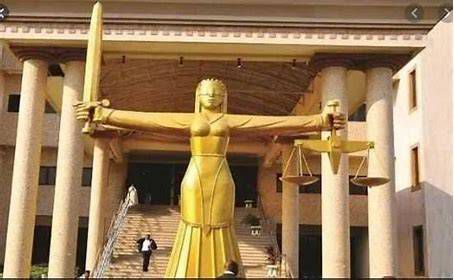
The ruling was delivered on Tuesday, January 7, by Justice Ado Yusif Birnin-Kudu, who presided over a fundamental rights enforcement suit filed on behalf of Sabo.
The court condemned the prolonged incarceration, stating that no justification existed under Nigerian law for keeping a citizen in custody indefinitely without due process.
Sabo was arrested in 2014 on allegations of criminal conspiracy and armed robbery. Despite the seriousness of the accusations, the prosecution failed to bring the matter to trial for over a decade.
Throughout this period, Sabo remained in detention, with no formal conclusion to investigations or judicial determination of his guilt or innocence.
In his judgment, Justice Birnin-Kudu held that the continued detention amounted to unlawful detention, stressing that the Nigerian Constitution clearly guarantees the right to personal liberty and fair hearing.
According to the court, law enforcement agencies and prosecuting authorities have a duty to either prosecute suspects within a reasonable time or release them.
“The prolonged detention of Mr Sabo without trial is a flagrant violation of his fundamental rights as enshrined in Sections 35, 36, 41, and 46 of the 1999 Constitution of the Federal Republic of Nigeria (as amended),” the judge declared.
Justice Birnin-Kudu noted that constitutional safeguards are not optional and cannot be suspended by administrative negligence or institutional delay.
He warned that allowing such practices to continue would undermine public confidence in the justice system and promote abuse of power by state authorities.
As part of the reliefs granted, the court awarded ₦10 million in damages to Sabo as compensation for the emotional, psychological, and physical hardship suffered during his years of incarceration.
The judge ordered that the compensation be paid jointly by the Attorney-General of Jigawa State, the Jigawa State Government, and the Commissioner of Police.
In addition to the financial award, the court directed the respondents to issue a public apology to Sabo.
The apology, according to the ruling, must be broadcast on major radio stations across Jigawa State to publicly acknowledge the injustice done to him.
Legal observers say the ruling reinforces the judiciary’s role as a guardian of citizens’ rights, particularly in cases of unlawful detention that have become increasingly common across Nigeria.
Human rights advocates have long raised concerns about suspects languishing in custody for years without trial, often due to poor investigations, lack of legal representation, or prosecutorial delays.
Reacting to the judgment, a human rights lawyer based in Dutse described the ruling as “a strong reminder that constitutional rights are enforceable, regardless of how long a violation has persisted.”
He added that the decision could encourage other victims of prolonged detention to seek redress through the courts.
The case also highlights systemic challenges within Nigeria’s criminal justice system, including congested detention facilities, inadequate case tracking, and weak coordination between police investigators and prosecuting authorities.
Experts warn that without structural reforms, incidents of unlawful detention may continue to recur.
Justice Birnin-Kudu emphasized that suspects are presumed innocent until proven guilty and that detention without trial contradicts the fundamental principles of justice.
He urged relevant authorities to ensure strict compliance with constitutional provisions to prevent similar violations in the future.
For Sabo, the judgment marks the end of a long ordeal and the beginning of a new chapter after more than ten years behind bars without conviction.
While the compensation cannot fully restore the lost years, the court held that accountability and public acknowledgment were necessary steps toward justice.
The ruling has since sparked renewed debate on police accountability and the urgent need to address prolonged pre-trial detention across the country, particularly in state-level correctional facilities.
Ireport247news
About The Author