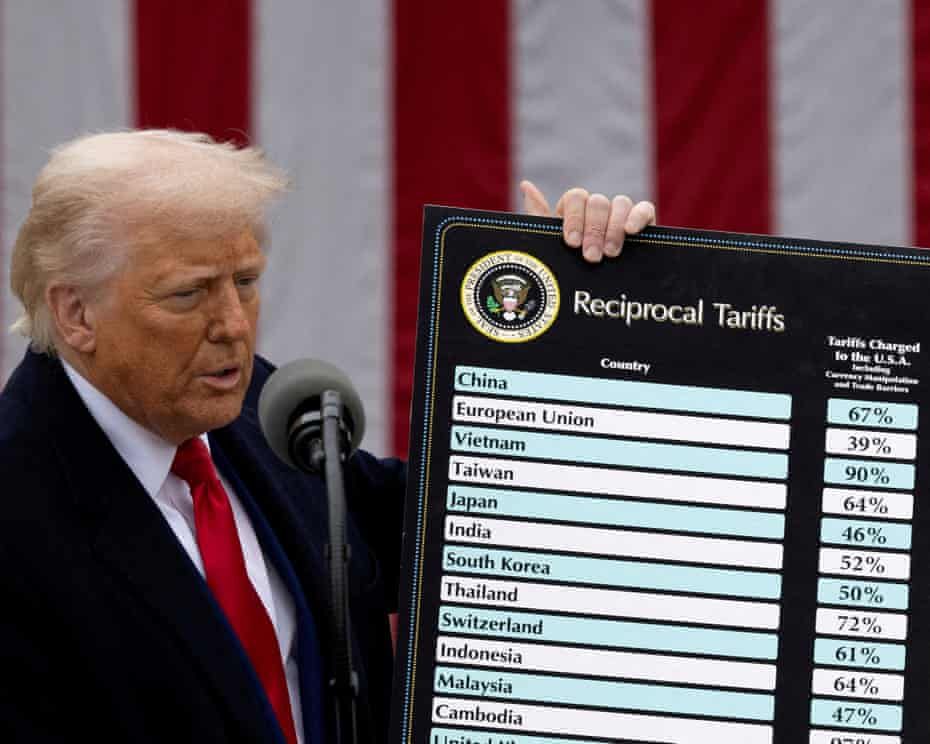
The conflict in the Gulf has intensified sharply. The US launches third night of strikes on Iran as President Donald Trump announced a new policy to charge ships for passage through the Strait of Hormuz.
The escalation came after Iranian cruise missiles struck two Emirati oil tankers, killing one crew member and wounding eight, and as Tehran claimed retaliatory attacks on US facilities across the region.
According to live reporting, US Central Command said the strikes targeted coastal defense systems, missile and drone sites, and maritime capabilities in locations including Bandar Abbas, Bushehr, Chah Bahar, Jask, Konarak, and Abu Musa Island.
The renewed military action marks the third consecutive night of US operations against Iran and signals a major shift in how Washington intends to secure one of the world’s most vital energy chokepoints.
Escalation In The Gulf: Strikes And Tanker Attacks
The latest wave of violence began Monday night and continued into Tuesday. US officials said the mission lasted about five hours and was ordered directly by Trump. Centcom stated forces hit Iranian military targets “to further degrade Iran’s ability to attack commercial shipping.”
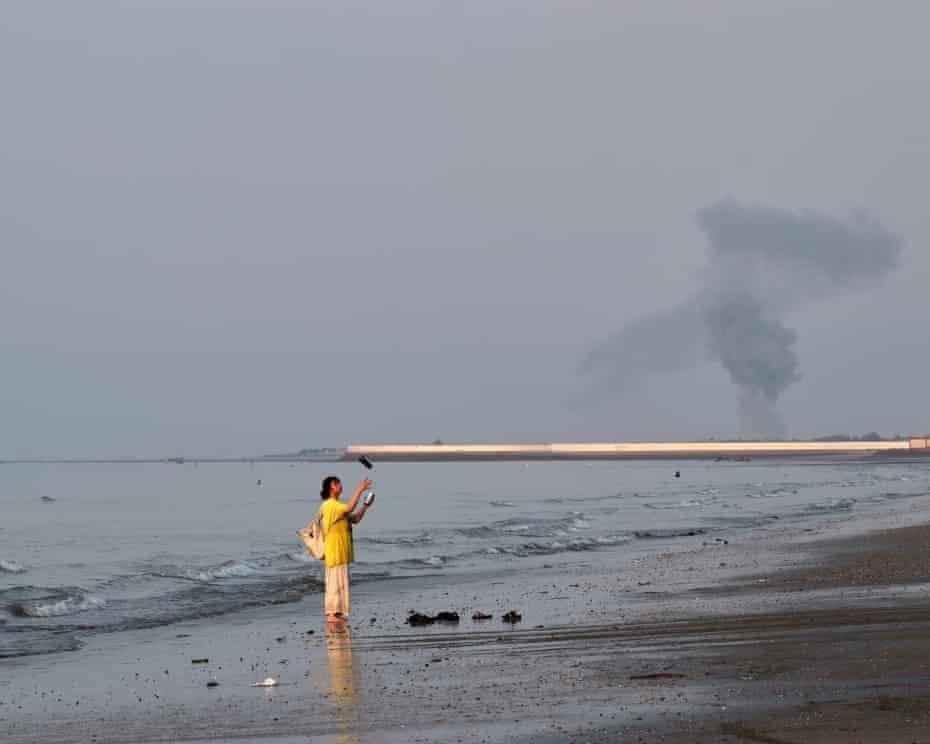
Iranian media reported explosions in Bandar Abbas naval base, as well as on Kish, Qeshm, and Abu Musa islands. The US has deployed more than 50,000 service members across the Middle East amid the operations.
Iran responded within hours. The Revolutionary Guards claimed attacks on a US Patriot radar, a Fifth Fleet air control radar, and an early warning system in Bahrain. Tehran also said it fired ballistic missiles at a US airbase in Jordan, though Jordan reported intercepting four missiles with no casualties. Bahrain sounded missile alert sirens multiple times overnight.
The most serious incident at sea involved the Strait of Hormuz. The United Arab Emirates said Iranian cruise missiles hit two Emirati oil tankers, the Mombasa and Al Bahiyah, while they transited in Omani territorial waters.
The attack set both vessels ablaze before fires were extinguished. One mariner was killed and eight were injured. The Guards claimed the ships “ignored repeated warnings” and “chose to pass through a minefield.”
Trump Hormuz Transit Fee: A Policy Reversal
In a move that upends decades of US naval doctrine, Trump announced the US would reinstate a blockade of Iranian shipping and begin charging all vessels for safe passage.
Speaking to Fox News and on Truth Social, Trump said the Strait of Hormuz would remain open “with or without Iran,” but that the US would act as its “guardian.” He declared a 20% fee would be levied “for any and all costs necessary to do the job of providing safety and security.”
“We’re protecting a very rich portion of the world,” Trump said. “We’re spending money. And so, what we’ve done is, we are going to be reimbursed for protection.”
US Central Command said the new policy would begin at 4pm ET on Tuesday. The announcement represents a sharp break from the long-standing US position that the strait should remain free to all shipping without tolls — a principle the US navy has defended since the Barbary Wars.
Iran rejected the plan outright. Foreign Minister Abbas Araqchi posted that Tehran would “forever” be the guardian of the strait, adding “20% is of course too much. We will be fair.” Iran’s top joint military command said the US had “no role in determining the strait’s future and would not be allowed to intervene.”
The International Maritime Organisation pushed back as well, stating passage through Hormuz “should remain free of any tolls and charges, in accordance with international law.”
Strait Of Hormuz Oil Prices Surge On Fears
Markets reacted immediately to the escalation and the Trump Hormuz transit fee proposal. Brent crude futures climbed 2% to $84.98 a barrel by early Tuesday GMT, after earlier hitting $85.64 — the highest since mid-June. US West Texas Intermediate rose 2.1% to $79.79. The gains followed a 9.6% surge in Brent in the previous session, its biggest daily jump since May 2020.
Analysts warned the situation could deteriorate quickly. Vivek Dhar, an energy commodities strategist at Commonwealth Bank of Australia, said “the clock has started ticking again on global oil inventory depletion.” He projected Brent could hit $100 a barrel within 10 days and $150 within 10 weeks if hostilities continue.

The Strait of Hormuz oil prices spike reflects how much of the world’s energy flows through the 21-mile-wide waterway. About 20% of global oil and LNG passes through it daily. Any disruption, fee, or military incident immediately raises costs for importers in Asia and Europe.
Stock markets also fell. Taiwan and South Korea shares were hit hard, and Japan’s Nikkei 225 dropped 0.8% in Tuesday trading as investors priced in higher energy costs and geopolitical risk.
US Iran Middle East Crisis Widens
The strikes and counter-strikes have broadened the US Iran Middle East crisis beyond a bilateral confrontation. Yemen’s Iran-aligned Houthis claimed a missile and drone attack on Saudi Arabia’s Abha international airport, saying it was retaliation for strikes on Sanaa airport. The Saudi-led coalition said it intercepted the projectiles.
In Lebanon, President Joseph Aoun condemned what he called “hostile” Iranian attacks on Gulf countries and Jordan, pledging solidarity with Saudi Arabia and the Gulf states.
Inside Iran, state television reported the execution of two Islamic State members convicted of armed rebellion, identified as Mohieddin Abdollahi and Hossein Palani.
The violence also collided with other regional politics. Israel announced it will hold national elections on 27 October — its first since the Hamas-led attacks of 7 October 2023. Prime Minister Benjamin Netanyahu, who is on trial for corruption, faces pressure as his far-right coalition pushes controversial laws before parliament dissolves.
What happens next will shape the region. If the US begins collecting the 20% charge, it risks direct confrontation with Iran and pushback from allies and shipping companies. Tehran has already targeted US radars in Bahrain and claimed strikes in Jordan, and further attacks on Gulf infrastructure are likely if US operations continue.
A sustained rise in crude could also force central banks, including the US Federal Reserve, to reconsider interest rate plans. Fed Governor Christopher Waller suggested rates may need to rise “in the near term” if inflation stays above 2%.
Read also: https://ireport247news.com/us-refunds-81bn-in-trump-tariffs-after-supreme/
For now, the situation remains fluid. The US launches third night of strikes on Iran while simultaneously trying to reassert control over Hormuz through fees rather than just force. Tehran insists it will not cede authority over the waterway.
As one Centcom statement put it, the goal is to degrade Iran’s ability to threaten shipping. But with tankers burning, oil climbing, and a new toll regime announced, the region faces its most dangerous moment since the US and Israel struck Iran in late February. The world’s energy supply now runs through a strait where two militaries claim the right to guard it — and one plans to charge for it.
About The Author