

The US government has started writing big checks. According to budget data released this week, US refunds $81bn in Trump tariffs after the supreme court ruled a large portion of them illegal.
The payouts, made to companies that imported goods hit by the duties, mark one of the largest reversals of trade policy money in recent US history and are already reshaping the federal deficit for fiscal year 2026.
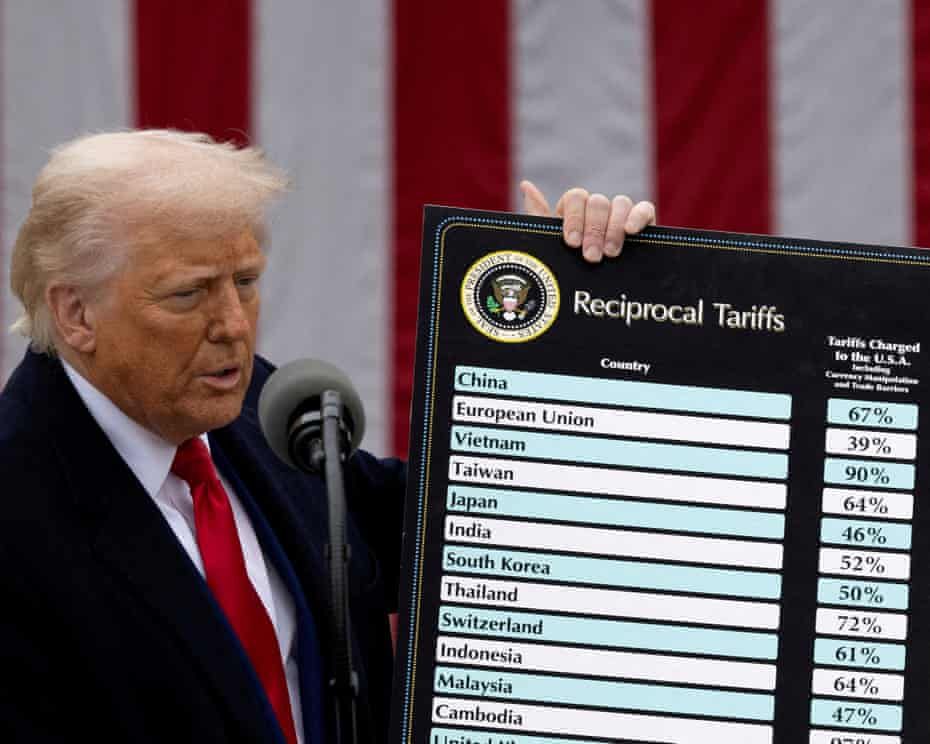
The refunds were not a choice. They were forced by a February supreme court decision that shut down much of the extra tariff authority President Donald Trump had used since returning to office last year. Now, instead of tariffs helping close budget gaps, the Treasury is paying money back — $81bn so far, compared with just $5bn in the same period a year earlier.
How The Refunds Happened
The spike in payouts shows up clearly in the numbers. For the fiscal year that began in October 2025, the Treasury has paid out $81bn (£61bn) in tariff refunds. A department official told reporters that almost all of that surge traces back to the supreme court tariffs ruling, with the bulk of payments landing in May and June.
Why The Supreme Court Stepped In
Tariffs — taxes on imported goods — were central to Trump’s second-term economic plan. The administration argued they would bring factories back to the US, force better trade deals, and help shrink the federal deficit.
But the court found that a big chunk of those additional duties exceeded presidential authority. Once the ruling came down, the government was legally required to return the money to the companies that had paid it while importing goods under those tariffs.
The timing mattered. Because the fiscal year started in October, companies had been paying the contested tariffs for months. When the court acted in February, it created a backlog that Treasury had to clear quickly, which is why most refunds hit in late spring.
The Budget Fallout: Deficit Grows Again
For a while, tariff revenue actually helped. Last year the deficit got a little smaller thanks to the extra duty income. That trend has now reversed.
In the first nine months of FY2026, the federal deficit hit $1.367tn, up 2% from the same period last year. At the same time, interest costs are climbing. The US spent over $1tn just on paying interest on its debt — a 14% jump. Military spending also rose 5%, partly due to ongoing commitments in the Middle East.
In short, the money that tariffs brought in is now flowing back out. The US tariff deficit impact is twofold: less revenue coming in, and a legal obligation to return what was already collected.
What Comes Next For US Trade Policy
The administration is not walking away from tariffs. It is recalibrating.
The current temporary 10% global tariff is set to expire on 24 July. But White House officials say new duties are being prepared. The stated reasons: lax enforcement of anti-forced labour laws and what the administration calls excess industrial capacity among trading partners.
The new proposal could hit major partners including the UK, Japan, India, Taiwan and China. The rates being discussed are between 10% and 12.5%. The goal, according to officials, is to design duties that can avoid the legal limits the court imposed on the previous round.
Brazil is also in the crosshairs, with threats of fresh levies of 25%.
Digital Services Tax Triggers New Threats
One of the most aggressive proposals targets digital taxes in Europe. Last month Trump threatened a 100% tariff on European countries, including the UK, that pursue a tax on the biggest US tech companies.
The UK currently has a 2% digital services tax on large social media platforms, search engines and online marketplaces. Companies like Apple, Google and Amazon pay it. The tax raised more than £800m in 2024-25, according to the Treasury.
France, Spain and Italy also impose a 3% digital services tax. Several other EU countries have similar policies either in place or proposed.
In a post on Truth Social, Trump warned: “any Country that imposes such a Tax will immediately be met with a 100 per cent TARIFF on any and all Goods sent to the United States of America. This TARIFF will supersede Trade Deals made with the Country, whether implemented, signed, or not.”
That language signals the administration wants to use tariff power to override trade agreements and digital tax laws it sees as discriminatory.
Who Benefits From The Chaos
While manufacturers and importers deal with uncertainty, one group is clearly winning: the professionals who navigate it. As reported in related coverage, law firms, hedge funds and AI-driven trade compliance platforms have seen a boom in demand as companies try to claim refunds, restructure supply chains, and prepare for the next round of duties.
The Trump tariff refunds 2026 process itself has created a new compliance industry. Importers are filing claims, lawyers are interpreting the court decision, and AI tools are being used to track which shipments qualify.
What This Means For Businesses And Consumers
For US companies that import goods, the refunds provide short-term cash relief. But the broader policy uncertainty makes long-term planning harder.
Three things to watch:
- Refund timelines: Most of the $81bn has already gone out, but some claims are still being processed.
- New tariff design: The administration says the next duties will be structured to survive court review. That likely means narrower, more targeted measures.
- Trade partner retaliation: Countries facing new tariffs, especially over digital taxes, may respond with their own measures, raising costs for consumers.
For consumers, the direct effect is indirect but real. Tariffs raise the cost of imported goods. Refunds lower costs for businesses, but new tariffs could push prices up again later this year.
The Bigger Picture
The episode highlights a tension at the heart of current US economic policy. Tariffs were sold as a tool to fix trade imbalances and fund the government. The supreme court tariffs ruling exposed the legal limits of that tool.
Read also: Burnham ILR exemption: UK set to retain 5-year settlement path for 1.6 million migrants
Now the Treasury faces a budget hole where tariff revenue used to be, while also managing billion-dollar payouts. At the same time, the White House is trying to relaunch a tariff agenda under new legal constraints.
Whether the new 10-12.5% duties and the threatened 100% digital tax tariffs hold up in court will likely determine if 2026 looks more like 2025 — with tariffs as revenue — or like the first half of this year, defined by refunds.
For now, the headline number is stark: US refunds $81bn in Trump tariffs after supreme court ruled them illegal, and that money is already changing the math in Washington.
About The Author


