Kyiv wakes to another deadly bombardment
The Kyiv missile attack killed at least 12 people and wounded 33 others overnight, as Russia unleashed a massive barrage against Ukraine’s capital and surrounding region.
The assault struck residential neighbourhoods, warehouses and public facilities, turning parts of the capital into scenes of fires, shattered windows and emergency rescue operations.
Kyiv mayor Vitali Klitschko said residential buildings, a medical facility and an educational institution were damaged during the latest wave of Russian attacks.
Among the locations struck was a children’s hospital in the Solomianskyi district, where explosions shattered windows and left vehicles damaged by the intense bombardment.
At least two residential buildings were also reportedly hit, while emergency workers rushed through damaged areas searching for survivors and evacuating residents trapped inside affected buildings.
The Russian missile attack began around midnight on Wednesday, unusually early compared with the timing of many previous Russian bombardments targeting Ukraine’s capital.
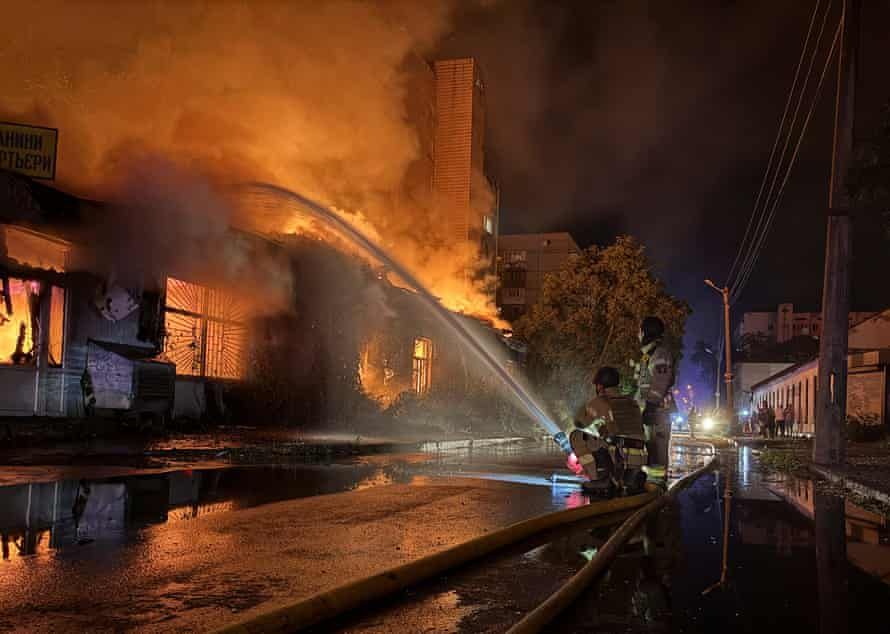
Another wave followed during the early hours of Thursday, extending the danger for residents who had already endured the first explosions and spent the night seeking shelter.
According to Ukraine’s air force, Russia launched dozens of ballistic, cruise and hypersonic missiles alongside 168 drones during the overnight assault.
Russia deploys powerful weapons
The Ukrainian military said the barrage included Kinzhal and Zircon hypersonic missiles, Iskander ballistic missiles, North Korean KN-23 missiles and Shahed drones.
The combination demonstrated the scale of Moscow’s latest assault, with multiple weapons systems deployed simultaneously against targets in and around the Ukrainian capital.
The use of hypersonic missiles is particularly significant because such weapons are designed to travel at extremely high speeds, complicating efforts to intercept them.
Ukraine’s air defences were therefore placed under enormous pressure as missiles and drones approached Kyiv from different directions during the night.
Death toll rises across the region
The Kyiv deaths were not the only casualties recorded during the wider overnight assault, with another fatal incident reported in the surrounding Kyiv region.
One man was killed and another wounded in Brovary district after an industrial facility was damaged, according to regional authorities.
Regional governor Tymur Tkachenko said emergency services were deployed to the affected facility and were working to control the resulting fire.
He described the response as an ongoing operation involving relevant emergency teams attempting to contain damage and protect surrounding communities from further danger.
Ukraine’s air force had earlier warned residents about incoming Kalibr cruise missiles after detecting weapons travelling towards the capital.
The attacks also created concern beyond Ukraine’s borders, particularly in neighbouring NATO countries monitoring the expanding aerial threat near their territory.
Poland and Romania respond
Poland’s military command activated aircraft and air-defence systems to protect its airspace, particularly along areas bordering Ukraine.
Romania also detected aerial targets near the Ukrainian border and scrambled two Spanish fighter jets assigned to NATO missions, alongside a Romanian military helicopter.
Romanian authorities said a drone entered the country’s airspace near Galati before eventually crashing in an unpopulated part of Tulcea county.
The incidents underscored how Russia’s continuing bombardment of Ukraine can create security concerns beyond the immediate battlefield and place neighbouring countries on heightened alert.
Ukraine strikes back at Russia
While Kyiv remains a frequent target of Russian attacks, Ukraine has increasingly intensified its own long-range strikes against Russian territory.
The attacks are partly intended to increase pressure on Moscow as Ukraine seeks leverage in negotiations after nearly four and a half years of war.
Russia has reported casualties and infrastructure damage from Ukrainian drones, particularly in border regions and around strategically important industrial facilities.
Moscow mayor Sergei Sobyanin said approximately 250 Ukrainian drones had moved towards the Moscow region between Wednesday night and Thursday morning.
Read also: Hind Rajab killing: Israel admits troops fired on car
Russian officials said most were destroyed before reaching the capital, although the scale of the reported drone assault illustrated the expanding reach of Ukraine’s campaign.
The war reaches deeper into Russia
Ukraine’s attacks have increasingly targeted energy infrastructure and industrial facilities, creating economic consequences alongside the immediate military pressure.
Russia has faced fuel shortages after Ukrainian strikes damaged oil refineries and storage facilities, forcing authorities to seek additional supplies to stabilise domestic markets.
Moscow has reportedly begun importing refined petroleum products despite Russia being one of the world’s major oil producers.
The development represents a striking reversal, particularly because India remains an important buyer of Russian crude despite international sanctions and restrictions.
Kyiv attack comes amid political pressure
The latest Kyiv missile attack also came as Ukrainian President Volodymyr Zelenskyy faced renewed political pressure surrounding an expanding corruption investigation.
Zelenskyy dismissed senior aide Iryna Mudra after Ukrainian media reported that authorities were searching her home as part of an alleged money-laundering investigation.
Ukraine’s anti-corruption agency said the investigation involved a suspected criminal conspiracy and “the participation of high-ranking officials from the office of the president”.
The political controversy adds another challenge for Kyiv as the government simultaneously manages Russia’s relentless military pressure and attempts to maintain international support.
For civilians, however, the immediate concern remains survival as missiles and drones continue threatening homes, hospitals and essential infrastructure.
The latest attack has once again demonstrated that despite diplomatic efforts and battlefield changes, the Ukraine war continues to carry devastating consequences for ordinary people.
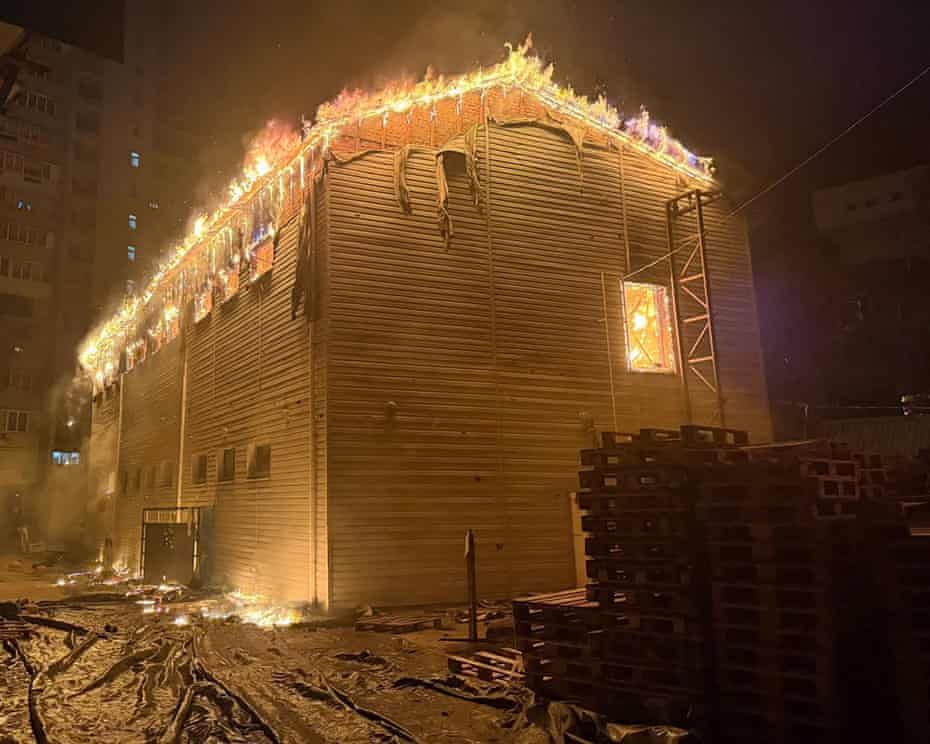
With twelve people confirmed dead and dozens wounded, Thursday began with Kyiv counting its losses, repairing damage and preparing for whatever comes next.
About The Author