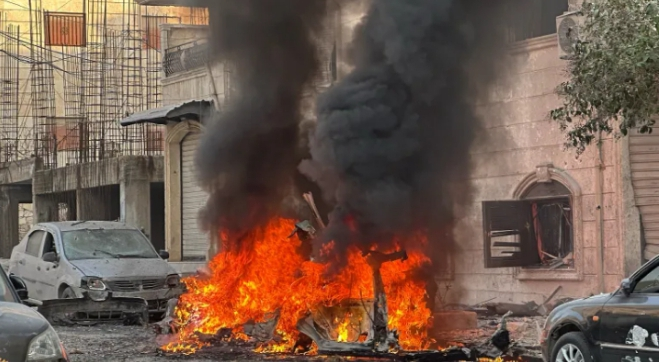
Russian war casualties in Ukraine are reaching levels that Kyiv considers unsustainable, according to Ukrainian officials, raising concerns about Moscow’s ability to continue relying on volunteer recruits.
President Volodymyr Zelenskyy revealed in a public address that in December alone, Ukrainian forces eliminated 35,000 Russian personnel, with November and October figures reported at 30,000 and 26,000 respectively.
Ukrainian commander-in-chief Oleksandr Syrskii supported this assessment, claiming the actual number of Russian losses likely exceeds confirmed video evidence, signaling a worrying trend for Moscow’s military strategy.
The December losses marked a milestone as Ukraine’s unmanned systems units neutralized nearly as many Russian soldiers as the country recruited monthly, showing the growing impact of drone operations.
Russia continues to rely on contract volunteers for its “special military operation,” keeping conscripts mostly out of active fighting, but Ukrainian intelligence suggests the current system may soon falter.
Kyrylo Budanov, head of Ukrainian military intelligence, confirmed that Russia met its 2025 recruitment target of 403,000 soldiers, averaging roughly 33,583 per month, with a slight planned increase for 2026.
If Ukrainian casualty reports are accurate, Russia may need to call on its active reserves, potentially risking domestic opposition while attempting to maintain momentum on the front lines.
The Washington-based Institute for the Study of War noted that Russian reserve units in Belgorod have begun receiving heavy weapons and all-terrain vehicles, preparing for possible frontline deployment.
Analysts warn that sending reservists or conscripts could carry political consequences for President Vladimir Putin, as he has largely shielded mainstream Russian society from the costs of the war.
Ukraine estimates nearly 420,000 Russian soldiers were killed or wounded in 2025, highlighting the intensity of fighting and the challenges Moscow faces in sustaining its military campaigns.
Zelenskyy highlighted the impact of drones in December, stating that increased production in 2025 allowed Ukraine to step up offensive capabilities, prompting his recent appointment of Mykhailo Fedorov as defense minister.
Fedorov, formerly first deputy prime minister, will oversee the drone program and the digitalization of military logistics, reflecting the growing importance of high-tech warfare in Ukraine’s defense strategy.
The previous defense minister, Denys Shmyal, moved to the energy portfolio after achieving a production target of 1,000 intercept drones per day by the end of last year.
Russia, meanwhile, claims Ukraine struggles with recruitment, with commander-in-chief Valery Gerasimov reporting that Ukrainian forces’ enlistment fell by half in 2025 to around 14,000 in November.
Russian authorities have claimed that Ukrainian prosecutors opened 160,000 cases against defectors since 2022, though these figures have not been independently verified, and both sides often exaggerate numbers.

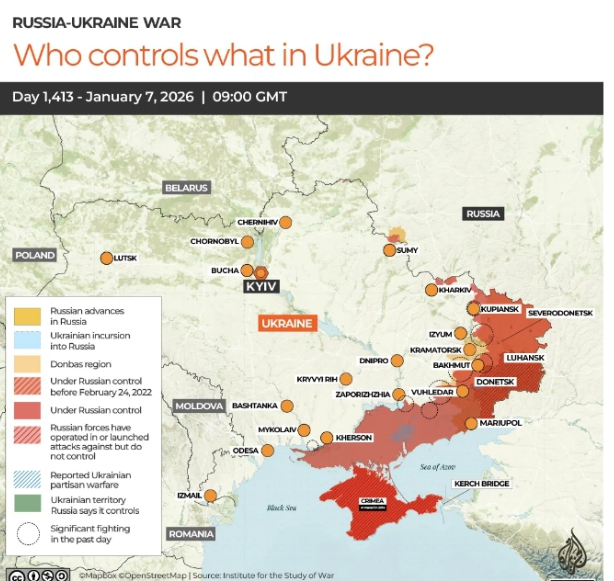
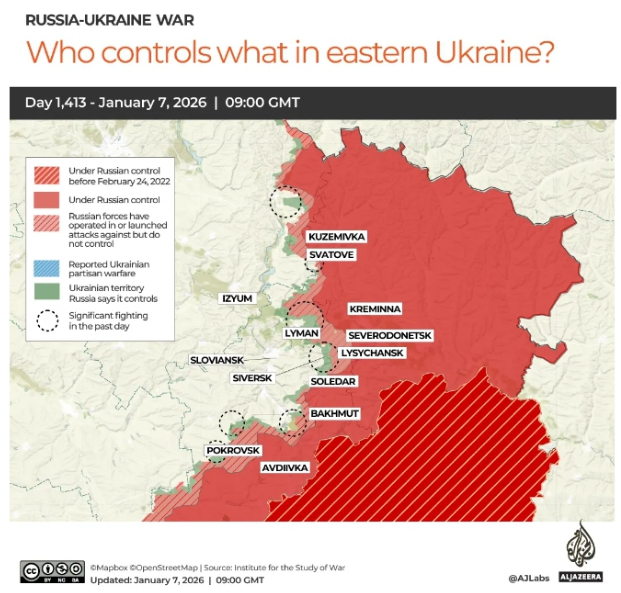
Despite Ukrainian successes, Russia has achieved territorial gains, averaging 13.24 square kilometers per day in 2025, up from 9.87 square kilometers in 2024, though gains remain inconsistent and mostly limited to villages and farmland.
Russia continues to aim for control over Donetsk, Zaporizhia, and Kherson, which it claims to have annexed, and has been experimenting with new tactics to disrupt Ukrainian supply lines and create kill zones.
Wired fiber-optic drones introduced by Russia in 2025 have resisted electronic jamming, allowing Moscow to capture Siversk and secure footholds in eastern Donetsk, highlighting the evolving drone threat in the conflict.
Syrskii noted that Russia has created separate drone system units currently numbering 80,000 personnel, with plans to double that by 2026 and reach nearly 210,000 by 2030, escalating drone-based warfare.
Russian tactics have shifted from large mechanized assaults to smaller infiltration teams, which establish bridgeheads before reinforcements arrive, reducing personnel losses while allowing Moscow to advance in contested areas.
This approach enabled Russia to capture roughly two-thirds of Pokrovsk and half of Myrnohrad by the end of 2025, showcasing the effectiveness of infiltration and drone-supported operations.
Ukraine is responding by improving training for new units to detect and destroy Russian drone units, control points, and the crews operating unmanned aerial systems along the front.
The war claimed its first civilian deaths of the year in Kyiv when a Russian drone struck a hospital, followed by another civilian fatality southwest of the capital, underlining ongoing risks.
Russian forces also targeted heating and electricity plants in Kharkiv, continuing a campaign of long-range aerial attacks aimed at disrupting civilian infrastructure across northern Ukraine.
During the first week of 2026, Russia launched 789 drones and 10 missiles against Ukrainian cities, while Ukrainian air defenses intercepted 83 percent of drones and one of the missiles, demonstrating defensive improvements.
Since President Donald Trump’s 2024 election, Russia intensified its long-range attacks, deploying 54,000 long-range drones and 1,900 missiles against Ukraine during 2025, according to the Institute for the Study of War.
New Russian drone tactics include Shahed drones equipped with Man-Portable Air Defence Systems designed to target Ukrainian anti-drone aircraft, posing a growing challenge to Kyiv’s air defense forces.
Ukrainian electronic warfare expert Serhiy Beskrestnov warned pilots to avoid head-on approaches to these drones, signaling the increasing sophistication of drone threats in the conflict.
Misinformation continues to shape the war narrative, with Russia claiming Ukraine attempted strikes on Putin’s residence and a Kherson bar, both of which Ukraine denied, illustrating ongoing information warfare tactics.
Kyiv’s intelligence service warned that Kremlin propaganda aims to prepare Russian and international audiences for further escalation, blending disinformation with conventional military campaigns.
Russia’s increasing reliance on high-tech drones and evolving tactics underscores both the intensity of the conflict and the mounting pressure on Moscow’s recruitment and logistics systems.
Ukraine’s leadership appears committed to countering these threats through improved drone production, specialized unit training, and strategic deployments, aiming to neutralize Russian advantages in technology and manpower.
The war’s human cost continues to escalate, with both military and civilian populations affected, highlighting the broader consequences of a conflict that shows no signs of abating.
Analysts predict that 2026 will see further innovation in drone warfare and high-tech defense systems, as both sides adapt to evolving tactics and the prolonged strain on personnel and resources.
Zelenskyy’s reshuffle of the defense ministry emphasizes technology-driven defense strategies, including drones, digital coordination, and rapid response units, reflecting a shift from conventional tactics to high-tech operations.
Russian advances in eastern Ukraine remain slow but persistent, with drone-supported infiltration operations challenging Ukrainian defenses, underscoring the protracted nature of the conflict and the evolving battlefield landscape.
Ukraine’s focus on drone countermeasures and special units highlights a strategic effort to regain initiative, protect civilians, and maintain momentum despite the ongoing pressure from Russian forces.
Long-range attacks, drone deployments, and territorial gains illustrate the multifaceted nature of the conflict, where conventional military operations intersect with high-tech innovations and information warfare campaigns.
Ukraine’s assessment that Russian casualties are unsustainable suggests potential future changes in Moscow’s military strategy, possibly involving conscripts or expanded mobilization to maintain operations in contested areas.
As 2026 unfolds, the conflict is expected to remain intense, with high casualties, evolving tactics, and continued technological innovation shaping both the military and political dimensions of the war.
Read also: Putin’s $12 billion internet blackout cripples Russia with 16 KB curtain
About The Author