The United States is expanding its economic and military pressure on Iran by establishing a new task force iron gate aimed at restricting Tehran’s access to weapons, sanctioned materials and commercial networks through land borders and the Caspian Sea.
Announced on Saturday, November 7, Task Force Iron Gate will build on the existing American naval blockade, extending Washington’s efforts to disrupt Iran’s ability to import military equipment and generate revenue through international trade.
The initiative will be based in Tampa, Florida, and coordinate operations with other American government agencies, including the Treasury, State and Justice Departments, as well as the intelligence community.
A US military official, who spoke anonymously, confirmed that the initiative would involve cooperation across government institutions to identify and disrupt commercial activities considered supportive of Iran’s military capabilities.
The development comes more than eight months after the United States and Israel launched a war against Iran, with Washington continuing to explore additional ways of weakening Tehran’s military and economic position.
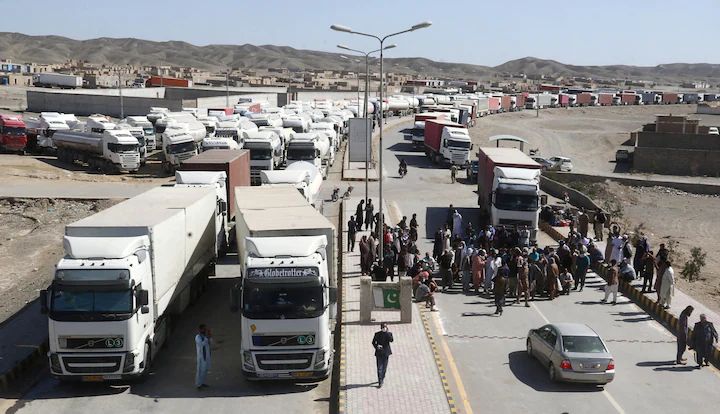
Task Force Iron Gate targets Iran’s land supply networks
The newly established Task Force Iron Gate represents an expansion of Washington’s strategy beyond maritime restrictions, with particular attention directed towards the movement of advanced weapons and other sanctioned materials across international borders.
According to the announcement, the task force will target the movement of military equipment, dual-use technologies and financial activities that Washington considers illegal revenue streams supporting the Iranian government.
Dual-use technologies are materials, equipment or technological products that can serve civilian purposes but can also be adapted for military applications.
The initiative is expected to strengthen cooperation between the US military and government agencies responsible for financial restrictions, international diplomacy, law enforcement and intelligence gathering.
US Central Command commander Admiral Brad Cooper said the arrangement would strengthen Washington’s ability to restrict Iran’s military financing and weapons production activities.
“Strengthening CENTCOM’s collaboration with US interagency partners will further constrain Iran’s ability to finance terrorism, rebuild weapons factories, and replenish their military,” Cooper said in a statement.
The American military believes that targeting these networks could make it more difficult for Tehran to replace equipment, replenish military supplies and maintain its defence industrial capabilities.
US naval blockade has cost Iran billions in oil revenue
The establishment of Task Force Iron Gate follows the American naval blockade, which has significantly restricted Iran’s ability to export crude oil through important maritime routes.
US Central Command estimates that the blockade has prevented Iran from exporting more than $25 billion worth of crude oil.
The restriction has targeted Iranian shipments through the Strait of Hormuz and the Arabian Sea, creating additional pressure on the country’s principal sources of export revenue.
However, Washington’s maritime operations have not completely prevented Iran from obtaining military-related equipment and other restricted materials.
A Reuters investigation published on October 29 found that Iran had imported at least $2 billion worth of hardware, explosives and heavy-duty trucks since January 2025 despite Western sanctions and the American naval blockade.
The investigation identified several supply routes through which the materials entered the country, demonstrating the difficulties Washington faces in completely disrupting Tehran’s international procurement networks.
Iran uses Russia, Central Asia and China supply routes
The investigation revealed that Iran had developed a network involving military agencies and commercial channels to obtain equipment despite restrictions imposed by the United States and its Western allies.
According to the findings, cargo ships transported materials from Russia across the Caspian Sea, while trucks delivered supplies through Central Asian countries.
Freight aircraft from China also featured among the transportation channels identified in the investigation.
These routes have provided alternative channels for Iran to obtain equipment and materials despite the restrictions affecting its maritime commerce.
The findings explain why Washington is now extending its pressure campaign towards land transportation networks and commercial activities across the Caspian Sea.
By coordinating military operations with financial regulators, intelligence agencies and law enforcement institutions, the United States hopes to identify additional procurement networks and restrict their activities.
The new task force will therefore focus not only on weapons shipments but also on technologies and financial arrangements that could help Iran maintain its military infrastructure.
Iran remains a regional security concern despite American strikes
The expansion of American restrictions comes amid continuing tensions between Washington and Tehran following months of military confrontation.
US strikes have inflicted significant damage on Iran’s conventional military capabilities, while the naval blockade has restricted its crude oil exports.
Nevertheless, American officials continue to regard Iran as a considerable security threat to the Middle East, particularly because of its remaining military capabilities and potential retaliation against regional targets.
Iran’s leadership has also maintained its grip on domestic power despite the military and economic pressure.
The political situation in Washington has introduced another complication for President Donald Trump’s administration following the November midterm elections.
The results dealt a setback to Trump’s Republican Party, with opposition Democrats gaining control of Congress.
Iranian officials reportedly welcomed the outcome, interpreting the Republican defeat as a political setback for the American president amid the continuing war.
Vice President JD Vance also blamed the conflict for the Republican electoral losses and appeared to question whether the war had been worthwhile.
These developments have raised questions about the domestic political consequences of the military confrontation and the administration’s ability to sustain its approach towards Tehran.
Trump threatens renewed military offensive against Iran
Meanwhile, Trump has continued to threaten another military offensive against Iran, keeping regional governments concerned about the possibility of renewed fighting.
His warnings have heightened anxiety across Gulf countries, particularly because Tehran has threatened extensive retaliation against infrastructure in the region if attacked again.
The possibility of renewed American strikes has also complicated diplomatic efforts aimed at ending the conflict.
Mediators have intensified negotiations in recent days in an attempt to secure an agreement between Washington and Tehran and prevent another escalation after the American midterm elections.
However, intelligence assessments cited by Reuters indicate that renewed military strikes would not fundamentally change Iran’s negotiating position or necessarily lead to the collapse of its government.
This assessment raises questions about whether additional military action would produce the political concessions Washington seeks.
The creation of Task Force Iron Gate suggests that the United States is also pursuing economic, financial and logistical measures rather than relying exclusively on military operations.
Washington expands sanctions enforcement beyond the battlefield
The new initiative highlights the growing importance of international supply chains in the confrontation between the United States and Iran.
While the naval blockade targets maritime commerce and crude oil exports, Task Force Iron Gate is designed to address the movement of military equipment and restricted technologies through alternative transportation networks.
Its success will depend on cooperation between American military authorities, intelligence agencies and government departments responsible for financial and legal enforcement.
Read also: Herzog gives Gadi Eisenkot government mandate to form Israel’s next administration
Iran’s ability to maintain supply relationships through Russia, China and Central Asian transportation routes demonstrates the challenges involved in enforcing international restrictions across multiple jurisdictions.
For Washington, disrupting those networks could further restrict Tehran’s ability to replenish military supplies and finance its defence infrastructure.
However, the continuing diplomatic efforts and warnings of renewed military confrontation indicate that the conflict remains unresolved.
The expansion of the American pressure campaign therefore introduces another dimension to the confrontation, combining maritime restrictions with efforts to restrict Iran’s land-based commercial and military supply networks.
About The Author