The Syrian army has intensified artillery strikes against Syrian Democratic Forces positions in the northern city of Aleppo, forcing thousands of residents to flee the embattled districts.
The fighting, centered in Sheikh Maqsoud and Ashrafieh, has escalated sharply, with civilians caught in the crossfire as both sides exchange heavy fire.
State-run Syrian media reported that the SDF targeted the al-Midan district with artillery and mortar shells, resulting in casualties among the civilian population.
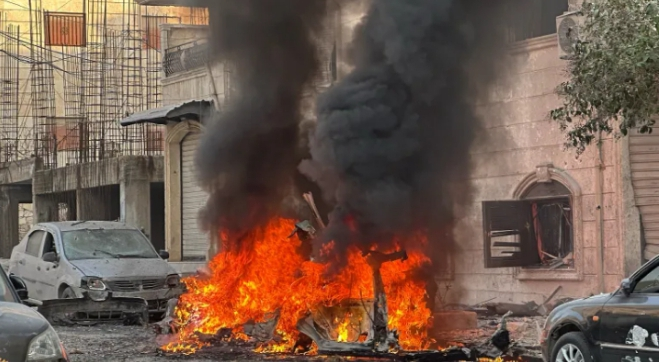
According to the Syrian Health Ministry, nine people have been killed and 55 injured by SDF attacks, as authorities continue to assess the scale of destruction across the city.
For the third consecutive day, Syrian government forces have used artillery and tanks to bombard residential areas in Ashrafieh, according to the SDF media office.
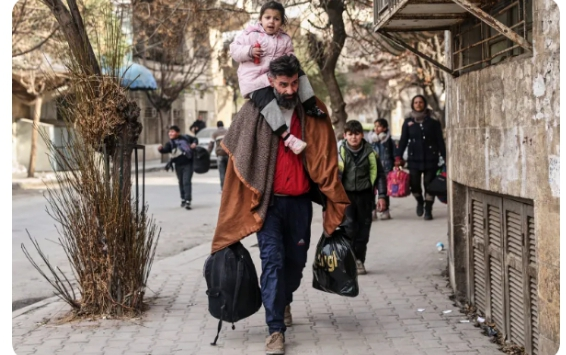
Local residents described the violence as unprecedented, with families forced to flee their homes amid the relentless shelling and fear of further escalation.
Over 100,000 civilians have reportedly fled the neighborhoods of Sheikh Maqsoud and Ashrafieh, seeking refuge in other parts of Aleppo province.
Aid groups and local authorities are struggling to provide basic shelter and humanitarian assistance as displacement increases daily.
The conflict has created a chaotic environment for those who remain, with many taking temporary shelter in churches, schools, and public buildings.
Georgette Lulu, among about 100 people sheltering at St. Ephrem Syriac Orthodox Church, described the loud explosions and constant shelling that forced her family to seek refuge for safety.
The Syrian government has indicated that negotiations are ongoing to secure safe passage for residents trapped in the affected districts.
An unnamed government source told local media that intermediaries are working to facilitate evacuations from Sheikh Maqsoud and Ashrafieh, though tensions remain high and fighting continues unabated.
The SDF has denied requesting safe passages for its forces, asserting that they are not the aggressor in the conflict.
The Kurdish-led alliance stated that the attacking party is the Syrian government, which continues to deploy tanks, artillery, and armed personnel near civilian-populated areas in a blatant act of aggression.
Turkiye has signaled its readiness to support Syrian government forces if Damascus formally requests military assistance.
A Turkish defense ministry official emphasized the potential role of Turkish forces in helping to stabilize contested areas, though it remains unclear whether any direct intervention will occur.
The European Union has expressed “great concern” over the recent clashes in Aleppo.
EU spokesperson Anouar el-Anouni urged all parties to exercise restraint, protect civilians, and prioritize peaceful, diplomatic solutions to the ongoing hostilities, highlighting the risk of further escalation in Syria’s northern regions.
Analysts have highlighted the challenges faced by Damascus in reintegrating semi-autonomous Kurdish areas into a unified Syria.
Armenak Tokmajyan, a scholar at the Carnegie Middle East Center, noted that the government must combine military force, persuasion, and inclusive national frameworks to prevent further fragmentation.
Tokmajyan warned that miscalculations by the central government could invite foreign intervention, citing the Israeli involvement in the Suwayda region as a cautionary example.
He stressed the importance of carefully balancing military strategy with diplomatic engagement to maintain national stability.
The Syrian Democratic Forces, formed in 2015, control key areas in eastern Syria, including oilfields.
Supported by the United States, the SDF has played a pivotal role in combating ISIL, dismantling the group’s final stronghold in Raqqa in 2017, and maintaining regional security alongside US military support.
Despite the March 2025 agreement between Damascus and the SDF to merge Kurdish-led forces into state institutions, disputes remain over implementation.
The stalled integration has contributed to ongoing tensions, leaving Aleppo as a focal point of renewed conflict and threatening to destabilize other parts of northern Syria.
The SDF, led by Kurdish People’s Protection Units alongside Arab fighters, continues to resist full integration with Syrian government forces, citing concerns about civilian safety and autonomy.
This resistance has intensified clashes, particularly in the densely populated districts of Aleppo, where civilian casualties are mounting.
Hospitals and local health authorities report increasing numbers of casualties, with emergency services overwhelmed by the scale of injuries.
The Aleppo Health Directorate confirmed that several civilians were killed and dozens injured, emphasizing the urgent need for humanitarian support amid continuous attacks on residential neighborhoods.
Education infrastructure has also been affected, with the SDF reportedly targeting student housing at the University of Aleppo.
The strikes have disrupted academic activities and forced students to flee, compounding the humanitarian crisis and adding further strain to the city’s already fragile services.
Residents describe a city under siege, where daily life is interrupted by relentless bombing and artillery fire.
Many civilians have resorted to sleeping in basements, churches, and community shelters, relying on aid groups for food, water, and medical care as clashes continue across Aleppo.
The Syrian conflict remains deeply complex, with multiple factions vying for control and foreign powers influencing outcomes.
US-backed SDF forces, Turkish military interests, and the Syrian government’s strategic objectives intersect in Aleppo, making it a critical battleground with broader implications for Syria’s future.
Observers warn that the humanitarian situation in Aleppo could worsen if hostilities persist.
The displacement of tens of thousands of civilians, coupled with limited access to essential services, underscores the need for urgent international attention and coordinated relief efforts to prevent further loss of life.
The ongoing violence highlights the fragility of Syria’s post-war recovery efforts.
Despite formal agreements and negotiations, mistrust and armed confrontations continue to shape daily realities for residents, leaving Aleppo’s population trapped in a cycle of fear, displacement, and destruction.
As the Syrian army presses its offensive against SDF positions, calls for restraint from the EU and human rights organizations intensify.
International observers emphasize the importance of protecting civilians and facilitating safe evacuations to prevent the crisis from deepening further.
Aleppo’s neighborhoods of Sheikh Maqsoud and Ashrafieh have become symbolic of the broader struggle for stability in northern Syria.
The persistent clashes demonstrate the challenges of unifying a country fragmented by years of conflict and highlight the human cost of unresolved political disputes.
The Syrian government faces the difficult task of combining military pressure with diplomatic strategies to regain control over contested areas.
Analysts suggest that without careful planning, efforts to enforce authority could trigger wider unrest and prolong the conflict across northern Syria.
Residents’ testimonies reflect the human toll of the fighting, with families recounting nights of terror and displacement.
Stories like that of Georgette Lulu illustrate the psychological and social impact on civilians, particularly children, who experience repeated exposure to violence and uncertainty.
The EU’s planned visit to Damascus, including high-level talks with Syrian leadership, signals continued international engagement despite ongoing hostilities.
Officials aim to encourage diplomatic solutions and assess the situation on the ground, with a focus on reducing civilian casualties and supporting humanitarian access.
Read also: Putin’s $12 billion internet blackout cripples Russia with 16 KB curtain
With the SDF remaining a powerful force in northern Syria, and external actors influencing the conflict, Aleppo is likely to remain a focal point of military and political struggle.
The outcome of these clashes may shape broader negotiations regarding Syria’s territorial and political future.
The clashes underscore the fragility of ceasefire agreements and highlight the urgent need for sustainable solutions to Syria’s complex conflicts.
Continued international attention, humanitarian aid, and strategic negotiations are essential to mitigate further civilian suffering and ensure stability.
Aleppo’s civilians continue to navigate life amid destruction, displacement, and uncertainty.
Humanitarian organizations and local authorities face the dual challenge of providing relief while maintaining security in a volatile environment where hostilities show no sign of abating.
As the Syrian army presses forward against SDF positions, the international community watches closely.
The situation in Aleppo exemplifies the ongoing humanitarian and political challenges in Syria, emphasizing the need for coordinated action to protect civilians and promote peace.
About The Author