

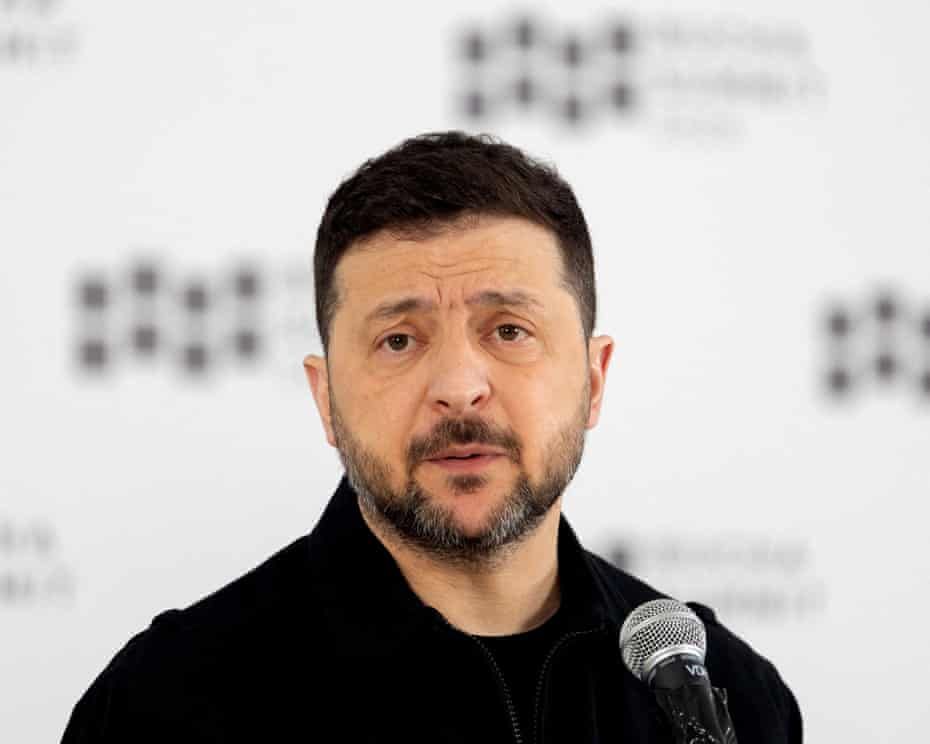
Ukrainian president Volodymyr Zelenskyy is set to meet with US negotiators today in a critical effort to advance his plan for an Easter ceasefire. Zelenskyy emphasized the need to halt the fighting as Russia attacks Ukraine, threatening civilian areas and key infrastructure.
The proposal comes with EU support for Ukraine, although Moscow has rejected any ceasefire, continuing drone attacks and artillery strikes. Zelenskyy is seeking international backing to protect civilians while highlighting the importance of diplomacy over further escalation in Europe.
The European Union has pledged to support Ukraine’s ceasefire initiative while preparing to release a €90bn loan package, although Hungary’s veto remains an obstacle. Commission officials indicated that the legal texts for the first €45bn installment are ready, signaling strong EU support for Ukraine’s economic and military resilience.
Ukraine drone production is also being accelerated, with joint projects with Romania using EU funds, aimed at strengthening defensive capabilities. These developments underscore the EU’s dual role in both financial assistance and strategic defense planning.
Despite diplomatic efforts, Russia has escalated attacks, launching 339 drones overnight against Ukrainian cities, including Lutsk. Zelenskyy condemned the aggression, stating that Russia attacks Ukraine deliberately, obstructing ceasefire prospects and prolonging hostilities.
The Kremlin has insisted that Ukrainian forces should have withdrawn from Donbas earlier, showing little willingness for compromise. This ongoing conflict highlights the difficulties in securing meaningful pauses in fighting and the continued volatility of the region.
Tensions between the US and Nato also complicate Zelenskyy’s diplomatic push. President Donald Trump criticized European allies over their reluctance to support his strategy on Iran, calling the alliance a “paper tiger” and hinting at reviewing US membership.
These US-Nato tensions intersect with the Ukrainian crisis, as European nations navigate both Middle East conflict impact and the energy supply challenges. Leaders like UK Prime Minister Keir Starmer continue to advocate for careful diplomacy while defending Nato’s role in maintaining regional security.
The economic consequences of these crises are already visible across Europe. Germany’s growth forecast has been halved due to inflation and rising energy costs, which are connected to Middle East instability.
EU leaders remain concerned about energy dependence while working to ensure timely support for Ukraine. At the same time, Ukrainian drone manufacturers are actively preparing joint production with Romania using EU funding, showing Ukraine’s commitment to reinforcing its defense infrastructure amid ongoing hostilities.
Zelenskyy’s diplomatic schedule underscores the high stakes for Ukraine. Engaging with US negotiators and other international partners aims to expand cooperation and secure support for Ukraine’s strategic initiatives.
While Russia continues to resist ceasefire proposals, EU support for Ukraine, coupled with US engagement and financial aid, offers hope for at least a temporary halt in violence.
Read also: US military draft chatter rises as Trump escalates Iran conflict
The complex backdrop of US-Nato tensions, Middle East instability, and European economic pressures highlights the interconnected challenges. Zelenskyy to discuss Easter ceasefire with US negotiators represents a crucial step in balancing military, financial, and diplomatic efforts toward peace.
Efforts to build momentum around the ceasefire proposal are expected to intensify as diplomatic channels remain active between Washington, Brussels, and Kyiv. Observers note that EU support for Ukraine could play a decisive role in sustaining negotiations, particularly if financial aid and military coordination continue to align with Kyiv’s immediate needs.
However, the persistence of Russia attacks Ukraine remains a major obstacle, as ongoing strikes undermine trust and reduce the likelihood of swift agreements. The outcome of Zelenskyy’s engagement with US negotiators may therefore shape the next phase of diplomatic strategy.
At the same time, broader geopolitical pressures continue to influence the situation, with US-Nato tensions and Middle East conflict impact adding layers of uncertainty to an already complex crisis. Ukraine drone production partnerships and defense collaborations highlight Kyiv’s preparation for prolonged resistance if diplomacy fails.
While hopes remain that negotiations could produce a temporary Easter ceasefire, the interconnected challenges facing global powers suggest that any breakthrough will require sustained cooperation and careful balancing of military and political priorities.
About The Author
