

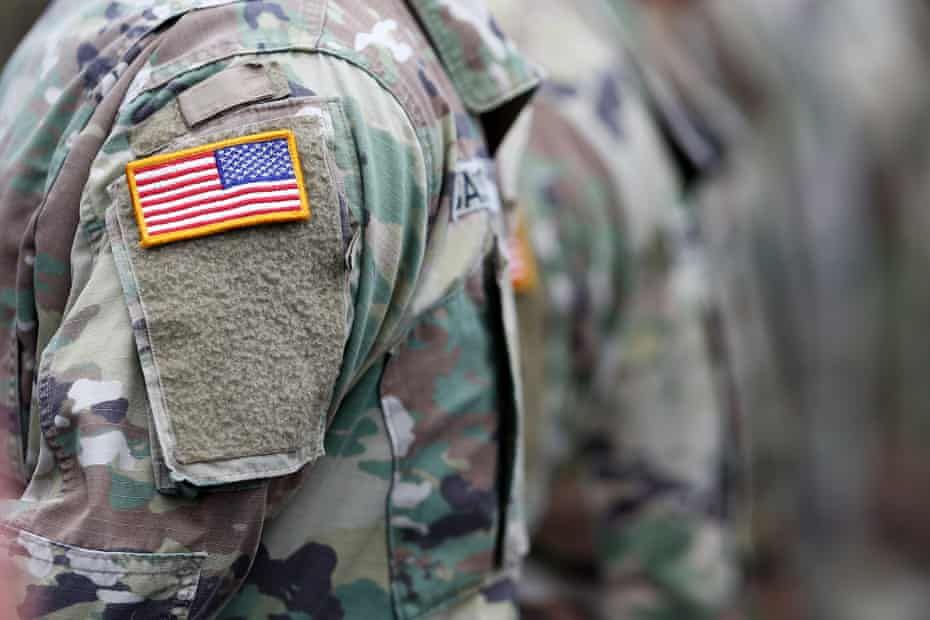
US military draft chatter– The United States is almost certainly not going to reinstate a military draft to fight in Iran. Yet, US military draft fears have surged across the country in recent weeks, fueled by troop deployments, social media speculation, and heightened anxiety over the escalating conflict in the Middle East.
For many Americans, the prospect of compulsory military service, even if unlikely, has triggered discussions about personal responsibility, national service, and the role of young people in global conflicts.
President Donald Trump has deployed marines and army paratroopers to the Middle East, signaling the possibility of a ground operation aimed at reopening the Strait of Hormuz or securing nuclear materials from Iran.
While the official purpose of these troop movements is framed as a precautionary measure, the scale and speed of deployment have led to widespread speculation.
Analysts note that a ground operation in Iran would require careful planning, significant logistics, and extensive manpower, making the idea of a draft a natural topic of discussion—even if only hypothetical.
The White House has taken a cautious approach to addressing the debate. On 8 March, press secretary Karoline Leavitt responded to questions about a potential draft in vague terms, stating that it was “not part of the current plan” but leaving options open for the future.
Her noncommittal response inadvertently fueled speculation, with media outlets such as Task and Purpose, Yahoo, and USA Today reporting in detail on how a military draft could theoretically be implemented. These articles, while largely informational, contributed to public uncertainty and anxiety about the prospect of compulsory service.
Social media has amplified this anxiety. Researchers at Clemson University tracked an influence operation by Iranian-linked accounts designed to criticize the US military response and amplify anti-war sentiment.
In addition, changes to the Selective Service program enacted under the National Defense Authorization Act have been misrepresented online. The administrative update automates registration for all eligible men but does not reinstate a draft.
Nonetheless, clickbait accounts falsely claimed that young men were “automatically drafted,” spreading misinformation rapidly across X, TikTok, and other platforms.
In addition to social media rumors, structural changes in US military recruitment have also raised questions. On 20 March, the US Army raised the maximum enlistment age from 35 to 42 and removed restrictions for applicants with minor marijuana convictions.
While these updates were designed to address recruiting challenges, they were interpreted by some as evidence of an impending draft or a military in urgent need of personnel. In reality, the army had already met its 2025 recruitment goal of 61,000 new soldiers four months ahead of schedule, demonstrating that the volunteer force remains robust.
Public commentary on the draft has ranged from satirical to serious. Shortly after US strikes on Iran, South Park writer Toby Morton launched the website DraftBarronTrump.com, satirizing the president’s willingness to send others into combat while his own family, including his son Barron, avoided military service through deferments.
Morton’s website drew attention to Trump’s personal history of avoiding military service, including the use of medical deferments for minor conditions such as bone spurs.
Meanwhile, figures such as California Governor Gavin Newsom and actor Rob Schneider have proposed voluntary or mandatory national service as a way to foster civic responsibility and shared experiences among Americans.
Governor Newsom suggested a model of compulsory service for a year, or at minimum six months, which could include overseas deployment or domestic volunteer work.
Schneider called for a two-year military service requirement at age 18, allowing young Americans to choose between domestic or overseas assignments. These proposals, while aspirational, underscore a broader conversation about national service, societal cohesion, and the role of youth in responding to national crises.
Despite the widespread chatter, there are significant political risks associated with draft discussions. During his 2024 campaign, Trump categorically rejected the idea of mandatory military service, dismissing reports in the Washington Post as “completely untrue” and reiterating that he had never considered such a policy.
Nonetheless, public perception often diverges from official statements, especially in an environment of social media amplification, partisan commentary, and online misinformation.
Experts like Lawrence Romo, a former director of the Selective Service System under the Obama administration, note that discussions about a draft are largely hypothetical unless the country faces a long-term recruitment crisis or enters a war requiring manpower beyond the capabilities of the volunteer force.
Romo emphasized that public speculation is normal in times of military escalation, but the US has successfully relied on volunteer forces for decades, and a draft is unlikely under current circumstances.
Read also:Macron visits Japan for Iran war dominated talks
The history of military drafts in the United States highlights why the topic elicits strong public interest. During World War II, the Selective Service System registered millions of young men, creating a sense of collective responsibility but also sparking resistance in some quarters.
The Vietnam War draft generated nationwide protests and deeply influenced public attitudes toward military service. Today’s debate, although occurring in a different geopolitical context, echoes those historical concerns about fairness, personal freedom, and the burden of national defense.
Social media has become a central battleground for shaping perceptions about a potential draft. Hashtags such as #SendBarron and viral posts satirizing Trump’s family history with military service have dominated online conversation.
At the same time, misinformation about automatic registration or age limits has spread, causing unnecessary anxiety among young Americans. Analysts note that these online dynamics illustrate how information—accurate or otherwise—can rapidly influence public sentiment, even in the absence of official policy changes.
The military draft fears also intersect with political debates about US engagement abroad. Critics of Trump’s strategy argue that the deployment of marines and paratroopers signals an escalation that could entangle the US in a protracted conflict with Iran.
Supporters contend that a strong military posture is necessary to protect American interests, maintain regional stability, and secure vital shipping lanes such as the Strait of Hormuz. These conflicting perspectives contribute to public anxiety about what a potential conflict could entail and whether compulsory service might ever be required.
In conclusion, US military draft fears reflect the complex interplay of military strategy, social media influence, historical precedent, and public perception. Although a draft is highly unlikely, ongoing troop deployments, administrative changes to the Selective Service, and widespread online commentary have kept the issue in public discourse. Americans continue to weigh the implications of national service, military readiness, and political decision-making amid rising tensions with Iran.
As the Trump administration navigates the evolving Middle East situation, debate over the draft will likely persist, highlighting broader questions about civic duty, national security, and the role of young people in shaping the country’s future.
Understanding these dynamics is essential for policymakers, media outlets, and the public as they confront both the realities of global conflict and the influence of digital information in shaping perceptions.