

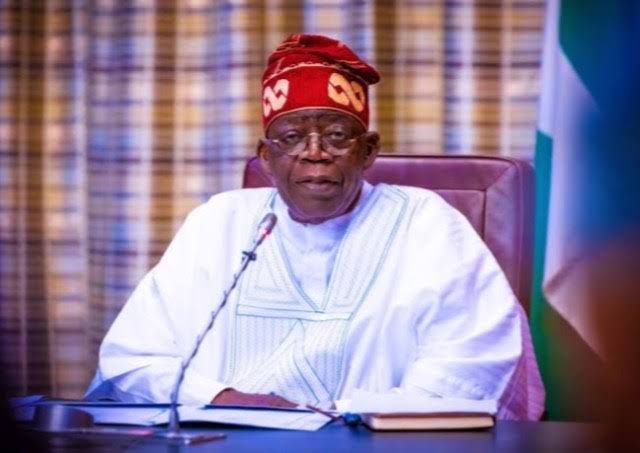
Nigeria’s fiscal outlook for 2026 is undergoing a major recalibration as the Federal Government moves to plug a widening budget shortfall through a combination of oil windfalls and fresh borrowing.
President Bola Ahmed Tinubu has formally requested legislative approval for an upward revision of the national budget, signalling a shift in strategy amid evolving global and domestic economic realities.
The proposed adjustment, which adds over N9tn to the fiscal framework, underscores the government’s renewed focus on Nigeria budget deficit funding through unconventional revenue streams and external financing.
The request was presented to lawmakers and read during plenary by Senate President Godswill Akpabio, setting the stage for extensive deliberations within the National Assembly.
Oil price gains drive Nigeria budget deficit funding strategy
At the core of the government’s plan is the expectation of increased crude oil revenues, driven by geopolitical tensions, particularly in the Middle East. These developments have pushed global oil prices upward, creating an opportunity for oil-exporting countries like Nigeria to generate additional income.
Officials say the revised fiscal framework incorporates a higher oil benchmark, which is projected to yield trillions of naira in extra revenue. This forms a critical pillar of the Nigeria budget deficit funding plan, aimed at reducing reliance on domestic borrowing while supporting priority expenditures.
However, economists warn that oil-dependent strategies carry inherent risks due to price volatility. While short-term gains may provide fiscal relief, long-term stability requires diversification of revenue sources beyond crude exports.
National Assembly expands budget beyond executive proposal
Despite the executive’s proposal, the National Assembly approved a total budget size exceeding the President’s request, pushing overall spending above initial projections. Lawmakers justified the increase by citing the need to address legacy obligations, fund critical infrastructure, and strengthen key institutions ahead of the 2027 general elections.
The approved budget reflects significant allocations across multiple sectors, including capital projects, debt servicing, statutory transfers, and recurrent expenditure. A large portion of the additional spending is tied to outstanding commitments carried over from previous fiscal years.
According to lawmakers, incorporating these obligations into the 2026 budget is essential to prevent project abandonment and escalating costs, which have historically undermined public investment outcomes.
Borrowing plays central role in financing plan
In addition to oil revenue gains, external borrowing remains a cornerstone of the Nigeria budget deficit funding framework. The Federal Government has secured legislative approval for multi-billion-dollar loan facilities aimed at bridging the fiscal gap and supporting infrastructure development.
The borrowing plan includes structured financing arrangements with international financial institutions, designed to provide liquidity while managing debt sustainability. Officials insist that the loans fall within manageable limits, although concerns persist about Nigeria’s rising debt profile.
As of the end of 2025, the country’s total public debt stood at over $100bn, raising questions about the long-term implications of continued borrowing.
Fiscal analysts argue that while borrowing is necessary to fund development, it must be accompanied by improved revenue generation and efficient utilisation of funds to avoid exacerbating debt vulnerabilities.
Infrastructure, health and judiciary get funding boost
A key feature of the revised budget is increased funding for infrastructure and social sectors. Significant allocations have been earmarked for transportation projects, including rail development across major states, as well as feasibility studies for new corridors and highways.
The health sector also received a substantial boost, with funds allocated for improving healthcare infrastructure and service delivery through bilateral partnerships. Similarly, the judiciary saw increased funding to enhance capacity, particularly in anticipation of election-related litigation.
These investments align with the government’s broader objective of strengthening institutional capacity and supporting economic growth through targeted interventions.
Telecom sector and non-oil revenues gain prominence
Beyond oil and borrowing, the government is also counting on improved performance in non-oil sectors to support Nigeria budget deficit funding. The telecommunications industry, in particular, is expected to generate significant tax revenues following recent policy adjustments and tariff reforms.
Projections indicate that major operators will contribute hundreds of billions of naira in company income tax, providing an additional revenue stream to complement oil earnings.
This shift reflects a growing recognition of the need to diversify Nigeria’s revenue base, although experts note that more structural reforms are required to unlock the full potential of non-oil sectors.
Experts call for targeted spending and reforms
Economic experts have welcomed the expanded budget but emphasised the importance of strategic spending. Development economist Aliyu Ilias stressed that security should be prioritised, noting that economic growth cannot be sustained without stability.
He also advocated targeted interventions to cushion the impact of rising fuel costs and inflation on vulnerable populations, suggesting that some form of support mechanism may be necessary.
Similarly, Professor Adeola Adenikinju highlighted the need for increased investment in the power sector, infrastructure, and agriculture. He noted that persistent challenges in electricity supply continue to constrain industrial productivity and economic expansion.
Both experts agreed that while the expanded budget provides an opportunity to drive development, its success will depend on effective implementation and accountability.
Implementation challenges remain a concern
Despite the ambitious fiscal plan, concerns linger over Nigeria’s capacity to execute large budgets efficiently. Past experiences have shown that delays in fund releases and bureaucratic bottlenecks often hinder project implementation.
Lawmakers have called for improved coordination between the executive and legislative arms of government, as well as stronger oversight mechanisms to ensure timely delivery of projects.
There are also recommendations to extend the implementation timeline for previous budgets, allowing ongoing projects to be completed without disruption.
Outlook for Nigeria budget deficit funding
As Nigeria navigates a complex economic environment, the strategy for Nigeria budget deficit funding reflects a delicate balance between opportunity and risk.
While oil windfalls and external loans provide immediate fiscal relief, sustainable growth will depend on structural reforms, revenue diversification, and prudent financial management.
The coming months will be critical in determining whether the expanded budget translates into tangible economic gains or adds further pressure to an already strained fiscal system.