

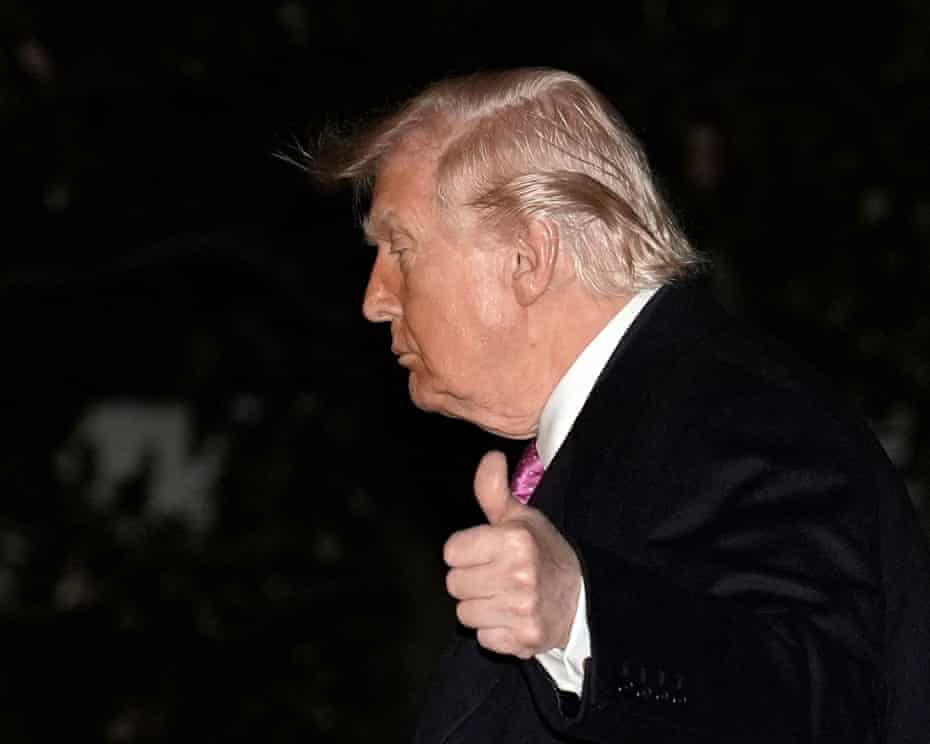
President Donald Trump has declared that Strait of Hormuz responsibility will not fall on the United States, making it clear that countries relying on the crucial oil passage must take charge of keeping it open. His remarks mark a significant shift in tone as tensions in the Middle East continue to escalate.
Speaking on Tuesday, Trump stated that US military operations in Iran would end soon, stressing that American involvement in the region is nearing its conclusion. He suggested that the mission could be completed within two to three weeks, or possibly even sooner.
The US president reiterated that Washington’s primary objective had been to neutralise Iran’s military capabilities, particularly its weapons infrastructure. According to him, those goals have largely been achieved, reducing the need for prolonged military engagement in the region.
Trump’s comments come amid heightened concerns over the security of global oil supply chains, especially through the Strait of Hormuz. The narrow passage is responsible for transporting a significant portion of the world’s oil, making any disruption a major global issue.
Despite the strategic importance of the waterway, Trump insisted that the United States would not take responsibility for ensuring its continued operation. He argued that nations benefiting from the route should be prepared to defend and maintain access to it.
“That’s not our responsibility,” Trump said, reinforcing his administration’s stance that global partners must assume greater roles in protecting shared economic interests. His statement signals a departure from traditional US foreign policy, which has often involved safeguarding international trade routes.
The ongoing standoff involving the United States, Israel, and Iran has now entered its fifth week, with tensions showing little sign of easing. Military posturing and political rhetoric from all sides have continued to raise fears of a broader regional conflict.
Trump also indicated that once US operations are concluded, Washington would step back from direct involvement, leaving regional and global powers to manage the situation moving forward. This approach aligns with his broader “America First” policy, which prioritises domestic interests over extended foreign commitments.
Analysts warn that such a shift could create a power vacuum in the region, potentially leading to increased instability. Countries heavily dependent on oil shipments through the Strait of Hormuz may now face greater pressure to invest in their own security measures.
There are also concerns about how this stance could impact relationships with long-standing allies. Many nations have historically relied on the United States to help secure critical maritime routes, and Trump’s comments may prompt a reassessment of those expectations.
In addition, the economic implications of any prolonged disruption in the Strait of Hormuz cannot be overstated. A blockage or reduced flow of oil through the passage could lead to sharp increases in global oil prices, affecting economies worldwide.
Trump’s assertion that the responsibility lies with other nations may encourage greater international cooperation, but it could also expose divisions among countries with differing interests and capabilities.
The situation remains fluid, with diplomatic efforts ongoing alongside military developments. While Trump appears confident that US objectives have been met, the broader consequences of disengagement are yet to be fully understood.
Read also:Four Israeli soldiers killed in southern Lebanon
As the crisis continues, global attention will remain fixed on how key stakeholders respond to the evolving security landscape in the region and whether alternative arrangements can ensure the stability of vital energy corridors.
Trump Strait of Hormuz responsibility highlights a major shift in US foreign policy, placing greater pressure on global partners to secure critical trade routes while raising concerns about the long-term stability of one of the world’s most important energy corridors.