Ukraine’s leader Volodymyr Zelenskyy NATO membership bid has entered a critical phase as Kyiv, signals willingness to trade alliance ambitions for binding Western security guarantees.
The announcement comes amid renewed diplomacy, battlefield exhaustion, and pressure from allies seeking an end to Europe’s most destructive conflict since World War Two.
Zelenskyy described the proposal as a compromise reflecting Ukraine’s reality after years of war, devastation, displacement, and relentless Russian military pressure across multiple regions.
For decades, NATO membership symbolised Ukraine’s strategic westward shift, promising collective defence and protection against Russian aggression and long-term regional instability.
However, resistance from some NATO members and fears of escalation with Moscow stalled Ukraine’s accession despite repeated assurances of future membership.
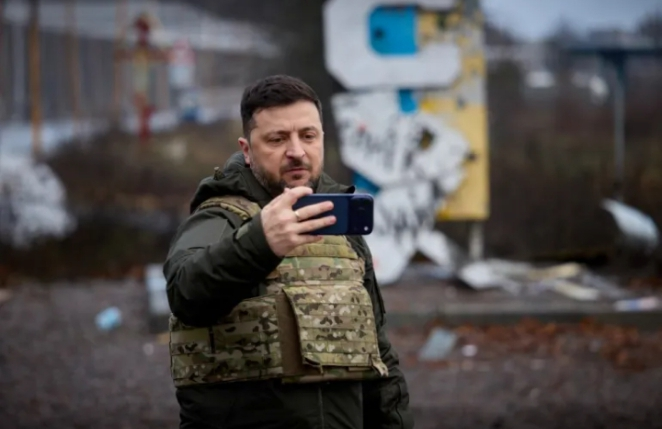
The Zelenskyy NATO membership bid concession suggests Kyiv is prioritising immediate security over symbolic alignment, aiming to prevent renewed invasions after any ceasefire agreement.
According to Zelenskyy, legally binding guarantees from the United States, European allies, and partners like Canada and Japan could substitute NATO’s Article Five protections.
Such guarantees would obligate rapid military, financial, and intelligence assistance if Russia attacks again, potentially deterring Moscow without formal alliance expansion.
Zelenskyy stressed these assurances must be enforceable under international law, not political promises vulnerable to leadership changes in Western capitals.
Ukraine’s leadership frames the shift as pragmatic realism rather than capitulation, insisting territorial integrity and sovereignty remain non-negotiable in peace negotiations.
Russia has long demanded Ukraine abandon NATO aspirations, viewing the alliance’s eastward expansion as an existential threat to its security doctrine.
By floating this concession, Kyiv signals flexibility while testing whether Moscow genuinely seeks peace or merely strategic advantage through prolonged warfare.
Diplomatic talks in Berlin involving US envoys and European representatives have intensified efforts to craft a framework for a possible ceasefire.
US President Donald Trump’s administration has increased pressure on both sides, arguing the war drains resources and destabilises global energy and food markets.
Trump’s envoy Steve Witkoff, experienced in high-stakes negotiations, has reportedly explored confidence-building measures acceptable to Kyiv and Moscow.
Despite diplomacy, Russian attacks on Ukrainian cities and infrastructure continue, undermining trust and complicating negotiations aimed at reducing civilian suffering.
Energy facilities, ports, and transport hubs have been repeatedly targeted, leaving thousands without electricity, heating, or water during harsh winter conditions.
Ukraine accuses Russia of weaponising winter, using blackouts and shortages to weaken morale and extract concessions at the negotiating table.
Moscow denies targeting civilians, claiming strikes focus on military logistics, though international observers dispute these assertions based on damage patterns.
The Zelenskyy NATO membership bid rethink occurs alongside discussions of a potential ceasefire along current front lines, freezing territorial control temporarily.
Kyiv considers such a truce acceptable only with strong guarantees preventing Russia from regrouping and launching future offensives.
Russia, however, continues demanding Ukrainian withdrawals from parts of Donetsk and Luhansk still under Kyiv’s control.
Zelenskyy has categorically rejected territorial concessions, arguing they would reward aggression and set dangerous precedents globally.
European leaders remain divided, balancing support for Ukraine with fears of prolonged conflict spilling beyond its borders.
Some governments quietly welcome Kyiv’s flexibility, seeing an opportunity to de-escalate without formally expanding NATO.
Others worry abandoning the NATO path could weaken Europe’s security architecture and embolden authoritarian states elsewhere.
Türkiye has urged restraint, particularly in the Black Sea, where recent attacks threatened shipping, grain exports, and regional economic stability.
President Recep Tayyip Erdogan proposed a limited ceasefire covering ports and energy facilities to protect civilian supply chains.
Control of the Bosphorus Strait gives Türkiye significant leverage, underscoring its role as a critical mediator between warring parties.
Ukraine’s population remains deeply scarred, with millions displaced, cities destroyed, and families separated by ongoing hostilities.
Public opinion within Ukraine largely supports peace but not at the cost of sovereignty, independence, or future vulnerability.
Zelenskyy faces domestic pressure to secure guarantees stronger than previous agreements violated by Russia.
The failure of the 1994 Budapest Memorandum, which offered security assurances without enforcement, looms large in Ukrainian political memory.
This history fuels Kyiv’s insistence on legally binding commitments rather than diplomatic goodwill.
Western allies must now decide whether they are prepared to shoulder such obligations without NATO’s institutional framework.
Failure to provide credible guarantees could leave Ukraine exposed and undermine trust in Western security commitments worldwide.
Conversely, success could establish a new model for security arrangements outside traditional alliances.
The Zelenskyy NATO membership bid shift may redefine postwar European security if implemented credibly and collectively.
Russia’s response remains uncertain, as internal calculations balance battlefield costs against strategic objectives.
Some analysts argue Moscow may accept guarantees as face-saving alternatives to NATO expansion.
Others warn Russia could exploit pauses to rearm unless constraints are strictly monitored and enforced.
As negotiations continue, Ukraine’s willingness to compromise tests the international community’s resolve and unity.
The outcome will shape not only Ukraine’s future but global norms governing aggression, deterrence, and collective security.
For now, Zelenskyy’s message is clear: peace is possible, but only with guarantees strong enough to prevent history repeating itself.
Read more: Thailand-Cambodia border clashes intensify as fighting enters second week
About The Author