Kyiv missile attack has once again brought the war to the heart of Ukraine’s capital. At least eight people were killed and dozens injured after Russia fired a large-scale barrage of ballistic missiles, cruise missiles, and drones into Kyiv overnight into Thursday, 2 Jul 2026. Residential buildings, a hotel, and multiple city districts were hit, with the first to sixth floors of an apartment block collapsing after a direct strike.
The overnight assault was described by Kyiv mayor Vitali Klitschko as a “furious enemy attack.” Residents spent the night in metro stations and shelters as air raid alerts covered most of Ukraine. Ukrainian President Volodymyr Zelenskyy cut short a trip to Dublin after intelligence warnings of the strike, underscoring how the “Kyiv missile attack” is shaping both civilian life and wartime diplomacy.
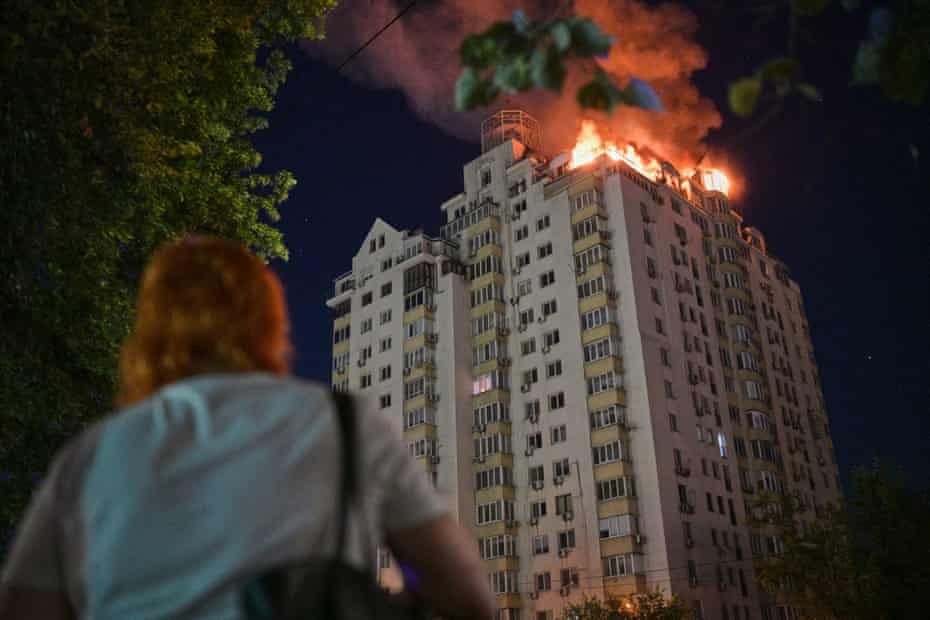
What Happened During the Kyiv Missile Attack
The strike was one of the most intense on Kyiv since mid-June. It affected all 10 districts of the city, on both sides of the Dnipro River. The Russian defence ministry said it used “long-range, high-precision air-, land-, sea-launched weapons and drones,” claiming it targeted military and energy facilities around Kyiv and military airports in Poltava and Dnipropetrovsk.
Casualties and Civilian Impact
Tymur Tkachenko, head of the capital’s military administration, confirmed eight people killed, with about three dozen locations across the city damaged. Klitschko said 34 people were injured. In a nine-storey residential building, people were reported “trapped” after the hit. The roof of another high-rise apartment building was on fire, and a hotel on a central boulevard was also ablaze.
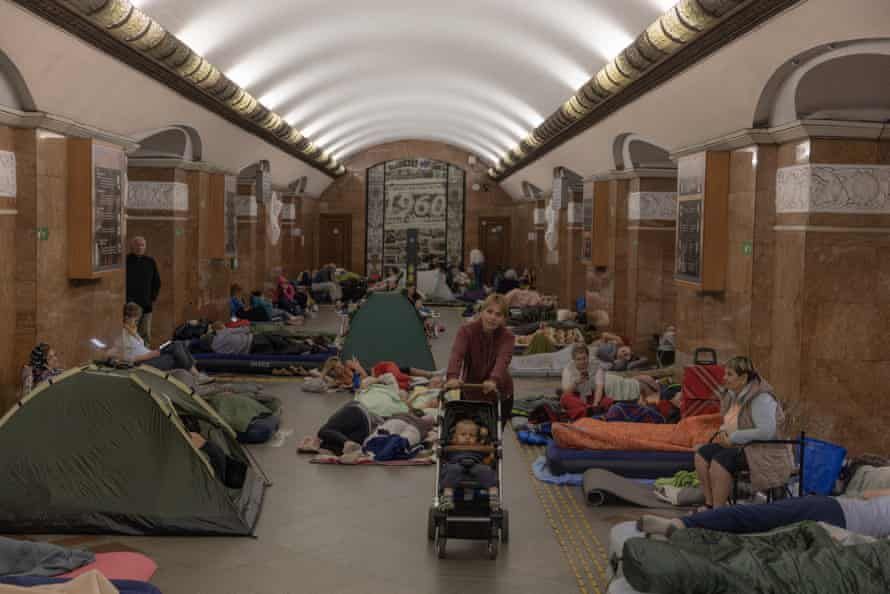
“Another horrific night for the residents of the city, who were forced to spend it in shelters,” Ukraine’s ambassador to the US, Olha Stefanishyna, posted on X. Images showed families carrying children, pets, tents, and belongings into metro stations as alerts sounded.
Scale of the Russian Drone Strikes
Officials said the barrage combined ballistic and cruise missiles with waves of drones. Russia has “intensified its attacks on Kyiv in recent weeks,” even as Ukraine’s own long-range drone campaign has hit Russian military sites and energy infrastructure, causing fuel shortages and supply disruptions inside Russia.
Poland, a Nato member, scrambled fighter jets as a “preventive measure” to secure airspace near the threatened regions, according to the Polish armed forces on X.
Kyiv Residential Damage and the Human Toll
The most harrowing scenes came from apartment blocks. Klitschko reported that the first to sixth floors of one building “collapsed after a direct hit.” Another high-rise had its roof on fire. Emergency crews worked through the night to pull people from rubble.
Shelter Life Under Air Raid Alerts
For many Kyivans, the night followed a familiar pattern: warnings from Zelenskyy and local authorities, then a rush underground. Metro stations filled quickly. “Carrying children, belongings, tents and pets, people crowded into underground stations,” as alerts were issued across most of Ukraine’s territory.
The psychological toll is mounting. This was “Russia’s worst attack on the country since mid-June,” and it landed on a capital already strained by weeks of intensified strikes. Residents described “another horrific night” spent listening for explosions from concrete platforms instead of bedrooms.
Infrastructure Hit Beyond Homes
Beyond housing, the attack damaged energy and transport-adjacent sites. The Russian ministry said it hit “military and energy facilities around Kyiv.” While Ukraine has not detailed all targets, the pattern matches earlier waves that sought to degrade power and logistics ahead of winter. A burning hotel on a central boulevard also showed how tourism and civic life remain in the line of fire.
Volodymyr Zelenskyy Responds to Ukraine War Escalation
Zelenskyy was in Dublin for the start of Ireland’s six-month EU presidency when intelligence reports indicated an overnight attack was “likely.” He cut his visit short to return to Kyiv.
Diplomatic Fallout in Europe
The timing matters. With Ireland taking the EU’s rotating presidency, Kyiv’s push for more air defenses and sanctions was meant to be a centerpiece. Instead, the “Kyiv missile attack” shifted focus to immediate protection. EU leaders are expected to discuss faster deliveries of interceptors and drone-jamming systems.
Russia’s Stated Retaliation
Moscow framed the barrage as retaliation for Ukraine’s attacks on “civil infrastructure.” The defence ministry’s Telegram post claimed strikes on military airports in Poltava and Dnipropetrovsk alongside the Kyiv targets. Kyiv has not confirmed the extent of damage at those bases.
The tit-for-tat dynamic is escalating. Ukraine’s drone campaign has disrupted Russian fuel and supply lines. Russia has responded with heavier salvos on the capital. Civilians are caught in the middle.
Why the Kyiv Missile Attack Signals a New Phase
Three developments stand out.
First, the breadth: all 10 districts were affected. That level of citywide coverage forces more people into shelters and strains emergency services. Second, the mix: ballistic missiles, cruise missiles, and drones together complicate air defense. Third, the timing: it came just as diplomatic activity increased in Europe, giving the strike both military and messaging weight.
The Road Ahead for Air Defense
Kyiv has repeatedly asked partners for more Patriot batteries and modern interceptors. The collapse of apartment floors and hotel fires will likely add pressure to deliver. Ukraine’s ambassador in Washington is already amplifying the “horrific night” narrative to maintain urgency in US policy circles.
Civilian Resilience vs. Escalation Risk
Read also: Trump crypto corruption sparks “disgusting” backlash over $2bn earnings
Residents are adapting, but adaptation has limits. Metro life, packed shelters, and interrupted sleep are not sustainable. At the same time, Nato’s preventive jet scrambles show how closely neighbors are watching. One miscalculation near Polish airspace could widen the conflict.
For now, the count is stark: at least eight dead, 34 injured, dozens of sites damaged, and a capital that spent the night underground. As Klitschko put it, the city faced a “furious enemy attack.” With both sides trading long-range blows, the “Kyiv missile attack” may be a sign of how the war will be fought in the months ahead: louder, wider, and closer to home.
About The Author