The Iran war could continue for another six months, former US defense secretary Leon Panetta has warned, saying Donald Trump faces a difficult path out of the conflict and risks becoming trapped in another prolonged Middle East war.
Panetta, who previously served as US defense secretary and CIA director, said the confrontation between Washington and Tehran had reached a dangerous stalemate, with neither side appearing capable of securing a decisive outcome.
According to Panetta, the central problem is that the United States has yet to establish a clear and achievable route toward ending the conflict. He warned that without a major change in strategy, the fighting could continue well into the coming months.
“It’s no mystery that the United States and Iran are caught in a terrible stalemate,” Panetta said, arguing that there are now “very few options available” for bringing the conflict to an end.
He went further by warning that the Donald Trump Iran war could eventually resemble previous lengthy US military interventions in the Middle East, including Iraq and Afghanistan.
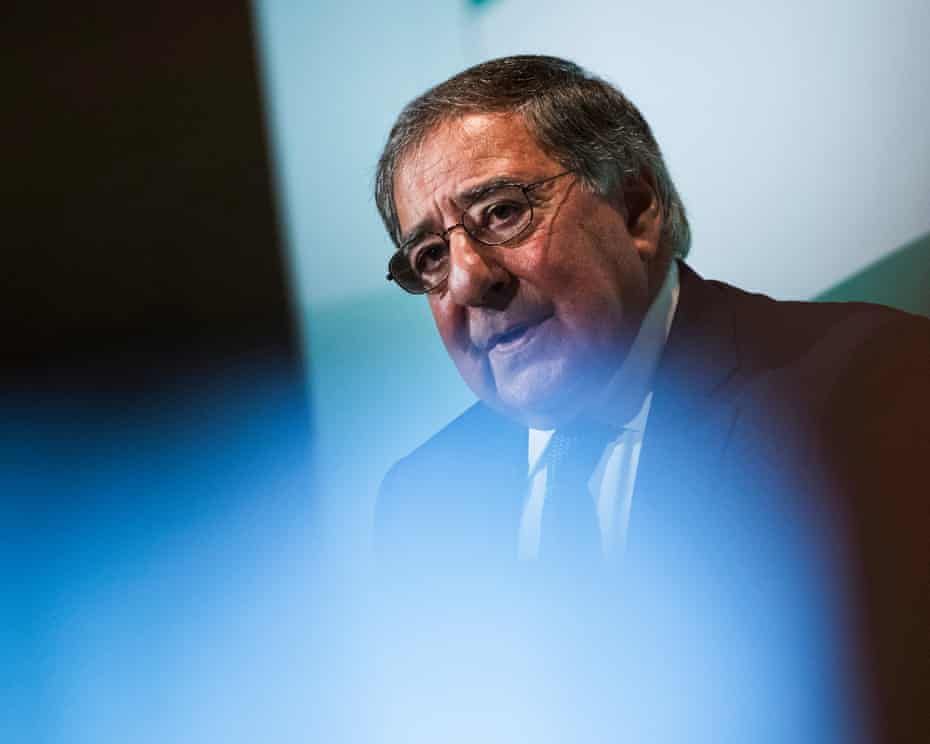
“I think the likelihood is this war is going to continue for another six months without being resolved,” Panetta said.
Panetta Warns Of Another ‘Forever War’
The former defense secretary expressed concern that the conflict could become another “forever war in the Middle East” if Washington fails to establish a realistic endgame.
His warning comes after months of military confrontation involving the United States, Israel and Iran, with the strategic importance of the Strait of Hormuz adding another major complication to the conflict.
Panetta argued that Trump is effectively boxed into a difficult position because withdrawing without achieving a clear objective could be portrayed as failure, while continuing the military campaign risks producing an increasingly expensive and dangerous stalemate.
“He’s boxed himself in,” Panetta said when asked whether Trump remained caught between expanding the campaign and attempting to walk away.
The Leon Panetta Iran warning centres heavily on the Strait of Hormuz, a crucial global trade route whose disruption could have consequences far beyond the Middle East.
Panetta identified three broad choices facing the US president. The first would be to withdraw and accept that the military campaign had failed. The second would be to maintain the existing stalemate, with both sides continuing periodic attacks while attempting to prevent a wider conflict.
The third option, according to Panetta, would involve taking decisive action to reopen the Strait of Hormuz and remove what he described as Iran’s most significant leverage over the United States.
Strait Of Hormuz Becomes Central To The Conflict
The Strait of Hormuz crisis has emerged as one of the most important dimensions of the wider confrontation because of the waterway’s significance to international trade and energy supplies.
Panetta argued that the United States must make reopening the strait a central objective if Trump wants to demonstrate that the campaign can still produce a meaningful strategic outcome.
“It’s only winnable if there is a dramatic change in the attitude of the United States,” Panetta said, arguing that reopening the Strait of Hormuz should become the primary US objective.
His comments highlight the enormous strategic dilemma facing Washington. Military action alone may not produce a sustainable resolution, while negotiations could be difficult if neither side believes it has sufficient incentive to compromise.
Panetta also criticised what he sees as repeated claims from Trump that an agreement to end the conflict is approaching and that the waterway is open.
He questioned whether the president could restore his credibility by moving from statements and threats to concrete action.
“So the real question is, is he going to make a decision to actually deliver?” Panetta asked.
The former CIA director argued that Trump’s difficulty is compounded by the perception among some adversaries that Washington’s threats are no longer carrying the same weight.
Pentagon Turmoil Raises Fresh Questions
The warning about the duration of the conflict comes amid questions surrounding the leadership and stability of the US defence establishment.
Panetta pointed specifically to turmoil at the Pentagon and the departure of Army Secretary Dan Driscoll, whose resignation came amid reports of tensions involving Defence Secretary Pete Hegseth.
The situation has contributed to what Panetta described as a troubling perception among America’s rivals.
“US service members are going to war at a time when there’s tremendous turmoil at the Pentagon, in the command structure,” he said.
Panetta argued that the situation could create an impression that “there’s nobody in charge,” potentially encouraging America’s adversaries to test Washington’s resolve.
His criticism was strongly rejected by the Pentagon, which insisted that the department remained fully operational under Hegseth’s leadership.
Pentagon spokesperson Sean Parnell described the claim that the department was in disarray as “completely baseless” and said it was an insult to military personnel working to defend the United States.
The Pentagon maintained that the changes taking place were part of a broader reform effort rather than evidence of institutional weakness.
Trump Faces Difficult Political And Military Choices
The Donald Trump Iran war also carries significant domestic political implications as Americans increasingly debate whether the military campaign was necessary and whether it should continue.
Vice-president JD Vance recently declined to describe the confrontation simply as a “war” and admitted uncertainty over whether the conflict would end before the November midterm elections.
Asked whether he expected the fighting to be over by then, Vance said: “I think the reality is I don’t know the answer to that question. You would have to ask the Iranians.”
That uncertainty reinforces Panetta’s argument that Washington currently lacks a clearly defined exit strategy.
Panetta said many Americans had “lost faith” in Trump’s ability to manage the conflict, pointing to polling indicating substantial public concern over US involvement.
For the administration, the challenge is therefore not only military. The longer the conflict continues, the more difficult it may become to convince Americans that the costs are justified by achievable strategic objectives.
US Troops Also Face The Cost Of A Prolonged War
Panetta’s concerns extend beyond strategy and politics to the wellbeing of American military personnel deployed in support of the campaign.
He pointed to the extraordinary deployment of the USS Abraham Lincoln, which spent more than 260 days supporting US operations without a port visit before eventually arriving in Thailand.
The deployment raised concerns about living conditions and the psychological pressure experienced by service members during an unusually long period at sea.
Panetta said military personnel should not be kept indefinitely in a war zone without proper rotation arrangements.
“Bottom line is, you do not deploy people endlessly into a war zone without making some kind of plans for rotation,” he said.
For Panetta, the issue represents a broader question about whether the United States is adequately supporting troops while simultaneously asking them to sustain an open-ended military campaign.
No Easy Exit From The Iran Conflict
The Iran war has therefore reached a point where every available option carries serious consequences for the Trump administration.
Walking away could be interpreted as an admission that the campaign failed. Continuing the current pattern of attacks could create a prolonged stalemate. Escalating to secure the Strait of Hormuz could trigger an even wider confrontation.
Panetta’s assessment is that none of these options offers an easy victory.
Read also: US military strikes three Iranian tankers after missile attacks
His prediction that the conflict could continue for another six months provides a stark warning about the potential consequences of failing to establish a diplomatic or military endgame.
The former defense secretary believes the United States needs to clarify exactly what it wants to accomplish and how it intends to bring the confrontation to a conclusion.
Without such clarity, he fears Washington could find itself repeating the mistakes of earlier Middle East conflicts.
The immediate challenge for Trump is consequently not simply how to maintain military pressure on Iran, but how to translate that pressure into a sustainable outcome.
As Panetta’s warning makes clear, the longer the conflict continues without a decisive resolution, the greater the possibility that a campaign launched with specific objectives could evolve into the kind of prolonged conflict the United States has spent years trying to avoid.
About The Author