The Seyi Makinde traditional rulers controversy has generated serious conversations across Oyo State and beyond, particularly over the governor’s warning that traditional rulers should stay away from partisan politics.
The principle itself is understandable. A traditional ruler is expected to be a father to everyone, irrespective of political affiliation. The palace should remain a respected institution where members of different political parties can seek counsel, prayers and support without feeling excluded because of their political choices.
However, recent political discussions and social media posts surrounding the Olubadan of Ibadanland have raised an important question: should the same standard apply to everyone when it comes to politics and traditional institutions?
The concern becomes even more significant following social media posts shared by individuals allegedly associated with the APM, which some people have interpreted as insinuating the possible removal of the Olubadan.
In one of the Facebook posts shared, the author wrote:
“Senator, he no complete am. Gomina, he no complete am. This?…… I won’t be surprised.”
The post has generated concern because of its apparent reference to political offices and the possibility that the next level of political ambition or influence could extend to the traditional institution.
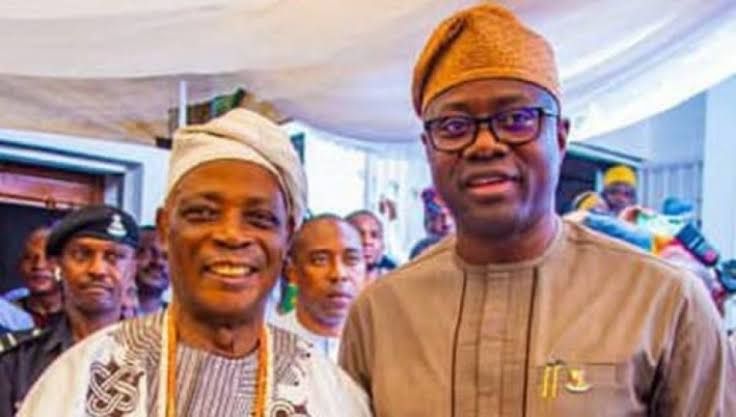
In another post, the author referred to the experience of the Emir of Kano, stating:
“Sanusi Lamido Sanusi was dethroned, heaven didn’t fall…”
For many observers, such comments are troubling, particularly when placed within the wider political conversations surrounding traditional institutions.
Let it be clearly stated that social media comments or insinuations do not, on their own, prove that there is an official plot to remove or dethrone the Olubadan. Any such allegation must be supported by verifiable evidence before it can be presented as an established fact.
Nevertheless, the growing willingness of political actors and their supporters to make comments that could be interpreted as discussing the removal of a revered traditional ruler deserves serious reflection.
The Olubadan Stool Must Not Become a Political Battleground
The Olubadan stool is not an ordinary political office.
Governors come and go. Senators come and go. Political parties win elections and lose elections. But traditional institutions represent history, culture and the collective identity of their people.
The Olubadan is therefore bigger than the political interests of any individual, government or political party.
This is why the political atmosphere surrounding traditional institutions must be handled with extreme caution, particularly as the Seyi Makinde Olubadan controversy continues to generate debate.
If Governor Seyi Makinde believes traditional rulers should remain neutral and should not openly involve themselves in partisan politics, then that principle should be applied fairly and consistently.
But there is another equally important question: should politicians and political supporters also be allowed to drag traditional institutions into political battles?
If a monarch is expected to remain above partisan politics, then politicians must equally respect the boundaries of the traditional institution.
It cannot be acceptable to demand political neutrality from traditional rulers while political actors make insinuations, threats or comments that place the continued security of a traditional stool into public political debate.
One Rule for Every Traditional Ruler
The question should not be about the Olubadan alone.
If a traditional ruler in Oyo State is perceived to be sympathetic to a particular political candidate, will the government respond?
If the answer is yes, then Nigerians must ask whether the same standard would apply to every other traditional ruler across the country.
Would the same strong condemnation be directed at every Emir, Oba or other traditional ruler perceived to have political preferences?
Or will some traditional institutions be treated with greater caution because of political influence, while others are subjected to public criticism and political pressure?
Consistency is the true test of leadership.
Traditional rulers should indeed be fathers to all. They should be careful not to turn their palaces into campaign grounds or partisan political offices.
But politicians must also recognise that they have a responsibility not to politicise, intimidate or unnecessarily drag traditional institutions into partisan conflicts.
Seyi Makinde and the Test of Consistency
Governor Seyi Makinde’s position on traditional rulers and partisan politics may be based on a legitimate desire to protect the neutrality of traditional institutions.
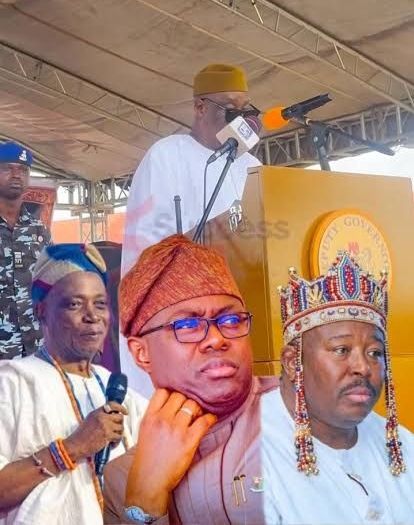
However, the same principle must be accompanied by equal respect for those institutions.
A traditional ruler should not be insulted or politically targeted simply because politicians believe the monarch is sympathetic to an opposing candidate.
Likewise, supporters of any political party—whether APC, PDP or any other party—should exercise restraint when discussing highly respected traditional institutions.
The traditional rulers and partisan politics debate should therefore not be reduced to whether one monarch supports one politician or another. It should instead focus on the larger principle of protecting the dignity and independence of traditional institutions.
The insinuations contained in the Facebook posts now circulating should therefore be treated as a warning about the direction political discourse is taking.
Nigeria must be careful not to create a political environment where the removal of traditional rulers becomes something casually discussed whenever political disagreements arise.
Protect the Throne From Politics
The Olubadan of Ibadanland occupies a traditional institution with enormous historical and cultural significance.
Read also: 2027: Oyo APC unveils Senator Sharafadeen Alli, Soji Adedeji, 49 other candidates
Political leaders may disagree with traditional rulers. Traditional rulers may hold views that politicians do not like. There may even be misunderstandings between governments and royal institutions.
But disagreement must never automatically become a reason to weaken, threaten or politicise a traditional stool.
The Olubadan stool must remain respected regardless of political circumstances.
If traditional rulers are being told to stay away from partisan politics, then politicians must also stay away from using traditional institutions as weapons in political battles.
The message must therefore be clear:
The Olubadan is not a political opponent. The throne is not a campaign office. And traditional institutions should not become casualties of political disagreements.
Why Oyo State Needs Restraint
The debate over traditional institutions in Oyo State deserves a level of maturity that rises above party politics.
Oyo State has a long and important traditional history, and its royal institutions remain significant to the identity and social structure of communities across the state.
That is why every political actor has a responsibility to avoid statements or actions that could unnecessarily undermine confidence in the traditional system.
Governor Seyi Makinde’s position presents an opportunity for a broader conversation about the relationship between elected political authorities and traditional rulers.
The question is not simply whether traditional rulers should support political candidates.
The bigger question is whether politicians will also respect the neutrality, dignity and independence of traditional institutions—even when those institutions are perceived to be politically inconvenient.
That is the real test.
Because when politics begins to determine which traditional ruler deserves respect and which one can become the subject of removal insinuations, the danger is no longer limited to one throne.
It becomes a danger to the traditional institution itself.
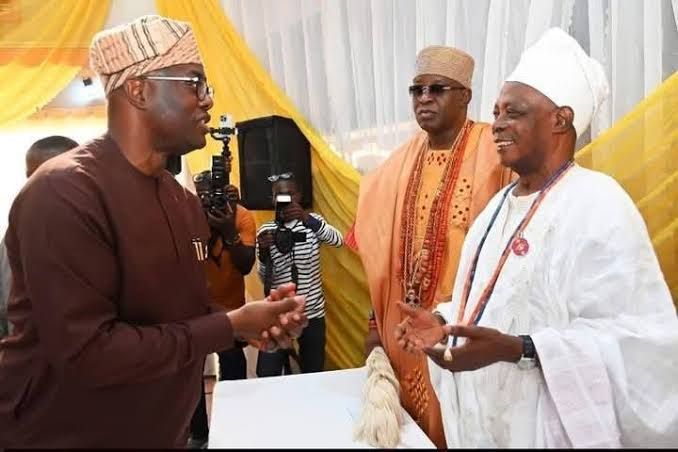
The Seyi Makinde traditional rulers debate should therefore be approached with restraint, fairness and consistency. Traditional rulers must understand their responsibility to remain above partisan politics, while political leaders must recognise their own responsibility to protect the dignity of the institutions they seek to influence.
Ultimately, the Olubadan should not become a casualty of political competition.
The palace must remain a place where everyone can find dignity, regardless of political affiliation.
And if the government insists that traditional rulers must stay away from partisan politics, then the same principle should encourage politicians to stay away from politicising the throne.
That is how the dignity of the Olubadan can be protected, the integrity of traditional institutions preserved, and political disagreements prevented from becoming threats to the cultural heritage of Oyo State.
About The Author