President Donald Trump’s Iran war plan is coming under intense scrutiny as the United States faces mounting challenges in the Middle East. Critics argue that the strategy lacks a clear endgame, relying heavily on airstrikes and missile campaigns without sufficient ground support.
As the first week of operations concludes, the president continues to push forward, despite warnings from military leaders about limited munitions stockpiles and the potential for escalating casualties among U.S. forces and civilians.
Congress, while possessing constitutional authority to declare war, has rarely exercised it in modern history, leaving legal checks such as the War Powers Resolution largely symbolic.
Trump appears to have sufficient Republican support in Congress to bypass potential constraints, meaning that efforts to restrict the campaign may have little immediate effect. Lawmakers in both the Senate and House are publicly recording their positions on the Iran conflict, turning this into a moment of rare formal accountability.
The campaign, conducted jointly with Israeli forces, has successfully targeted Iran’s central command, naval installations, and missile infrastructure.
Yet Iran continues to launch ballistic missiles and drones, causing significant damage to U.S. bases and allied forces, demonstrating that even advanced precision attacks cannot fully neutralize the threat.
The president’s stated objectives are ambitious: removing Iran’s leadership, preventing the country from obtaining nuclear weapons, and neutralizing its missile forces that threaten U.S. troops and regional allies.
Although the U.S.-Israeli military effort has achieved early tactical gains, the humanitarian and economic consequences are already substantial.
Military casualties remain relatively low, but civilian losses in Iran and allied nations could rise sharply. Meanwhile, the Strait of Hormuz, a key chokepoint for global oil shipments, is contested, contributing to rising energy prices and economic uncertainty worldwide.
Observers warn that regime change cannot be accomplished solely through missile strikes and air campaigns. History shows that dismantling entrenched regimes often requires sustained ground presence and long-term political strategy.
Questions are emerging about whether the Trump administration has adequately planned for the post-strike scenario or if it has underestimated Iran’s capacity to rally nationalist sentiment.
Calls for large-scale protests within Iran have yet to materialize, and analysts suggest that heavy bombardment may strengthen the population’s resistance rather than weaken it.
Military leaders have reportedly warned President Trump that the U.S. may not have sufficient stockpiles to sustain a long-term campaign. Anti-missile defenses, including Patriot, Aegis, and THAAD systems, are being closely monitored to gauge the ability to withstand incoming attacks.
Discussions are underway regarding the transfer of interceptors from American bases in South Korea to the Middle East to reinforce defenses.
Despite public displays of confidence, internal concerns persist about whether available resources are adequate to meet strategic objectives.
Iran’s population of 92 million, combined with mountainous terrain, presents a formidable challenge. The Islamic Revolutionary Guard Corps has invested heavily in missile systems and medium-range drones, which have proven effective in other conflicts, such as Russia’s war in Ukraine.
While U.S. and Israeli forces have degraded some capabilities, Iran’s arsenal remains largely intact. The Trump administration’s reluctance to deploy ground troops reflects concerns over casualties and electoral implications, yet without boots on the ground, sustained regime change may remain unattainable.
Historical precedent, including the Gulf War II deployment of over 400,000 troops to remove Saddam Hussein, underscores the limits of airpower alone.
In the coming weeks, the trajectory of the conflict will become clearer. Casualties among combatants and civilians alike are likely to increase, emphasizing the urgent need for a clear exit strategy.
Metrics of success remain vague: Will victory be measured by destroyed missile sites, leadership removal, or political stabilization? Speculation also surrounds potential U.S. reliance on Kurdish forces in Syria and Iraq for an on-the-ground presence inside Iran, though previous abandonment of allies raises questions about feasibility.
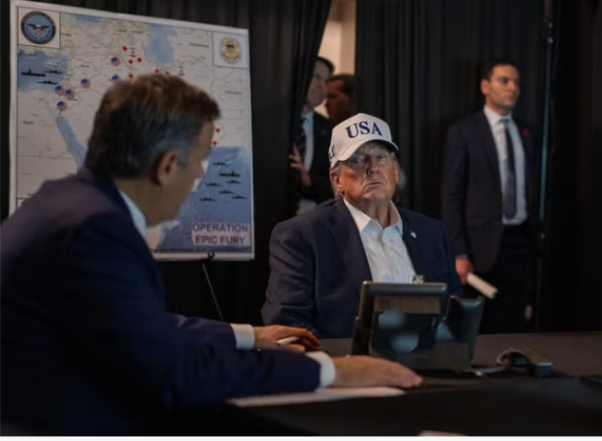
The conflict is already affecting global markets. Oil prices are rising as the Strait of Hormuz becomes contested, threatening energy security and international supply chains. Humanitarian concerns continue to grow, with the potential for mass displacement and civilian suffering.
Increasing casualties are likely to amplify domestic and international pressure for accountability and justification of the military campaign.
Trump’s Iran war plan reflects the complex interplay between military capability, political strategy, and international law.
The president’s reliance on missile and air campaigns, rather than direct engagement, demonstrates a calculated attempt to minimize U.S. casualties, but it leaves many long-term questions unresolved.
Analysts warn that underestimating Iran’s resilience and nationalist sentiment could prolong the conflict, creating lasting instability in the region.
Ultimately, Donald Trump’s Iran war plan represents a high-stakes gamble. While initial strikes show operational capability, sustaining pressure without a defined strategy risks increasing casualties and destabilizing the region.
Clarity on objectives, coordination with allies, and a coherent exit plan are urgently needed. The outcomes of this conflict will likely define U.S. foreign policy and Middle East stability for years to come.
Read also: NATO joins Iran-US war as alliance backs American operations in the Gulf