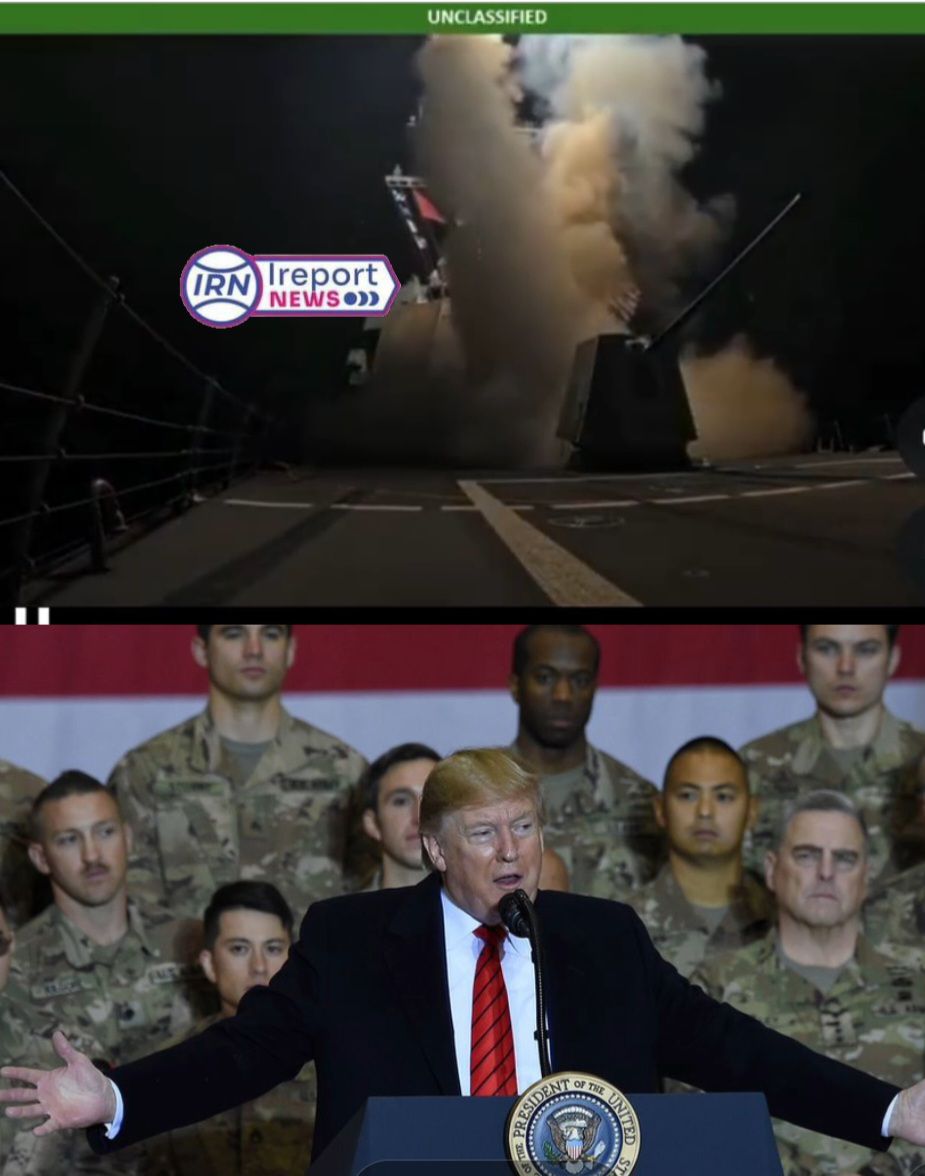

President Donald Trump says U.S. forces struck ISIS targets in Nigeria after months of concern over Christian persecution and rising extremist violence.
United States President Donald Trump has confirmed that American forces carried out a military strike against Islamic State (ISIS) fighters operating in northwest Nigeria, citing escalating attacks against Christian communities as the primary motivation for the operation.

The announcement, made on Christmas Day, has drawn international attention to Nigeria’s long-running security challenges and the growing concern over religiously motivated violence.
In a message on his Truth Social, Trump said the strike was ordered directly by him in his capacity as Commander in Chief.
He described the operation as decisive and forceful, aimed at dismantling ISIS elements accused of targeting civilians, particularly Christians.
According to the president, the scale and brutality of the attacks linked to Christian persecution had reached alarming levels, necessitating urgent action.
The U.S. leader stated that the extremists had been warned repeatedly to halt their attacks but failed to do so.
He claimed the military operation was conducted with precision and effectiveness, crediting the U.S. Department of War for what he described as flawless execution.
Trump emphasized that the United States would not stand by while extremist groups carried out violence against religious communities.
The strike comes amid heightened global concern over insecurity in Nigeria, Africa’s most populous nation. Over the past decade, various militant groups — including Boko Haram and Islamic State West Africa Province (ISWAP) — have carried out attacks across parts of the country.
While the violence has affected people of all backgrounds, Christian leaders and human rights organizations have repeatedly raised alarms over targeted killings, abductions, and the destruction of places of worship linked to Christian persecution.
Trump has made the situation of Christians in Nigeria a recurring theme in his recent public statements.
In November, he disclosed that he had instructed his defense secretary to prepare contingency plans should the situation deteriorate further.
At the time, he warned that the United States would take strong measures if extremist violence against Christians continued unchecked.
Security analysts say the U.S. action signals a shift toward a more assertive international posture on Nigeria’s internal security crisis.
While Nigeria has long cooperated with Western allies on counterterrorism, direct U.S. military involvement is rare and politically sensitive.
Experts note that the strike could reshape discussions around sovereignty, regional security partnerships, and foreign intervention in West Africa.
Nigerian authorities have yet to issue a detailed public response on the reported strike.
In the past, the federal government has acknowledged the threat posed by terrorist groups while stressing that Nigeria remains capable of addressing its security challenges with support from international partners.
Officials have also maintained that violence in the country is complex, driven by factors such as poverty, criminality, and local conflicts, not solely religion.
Despite this, advocacy groups argue that the pattern of attacks points to a sustained campaign of Christian persecution, especially in rural communities where security presence is limited.
They say international pressure has been crucial in drawing attention to the issue and preventing it from being overlooked amid other global crises.
Trump, in his Christmas message, framed the military action as both a security measure and a moral stance.
He praised the U.S. armed forces and reiterated his administration’s commitment to confronting radical Islamist groups wherever they operate.
He also warned that further strikes could follow if attacks against Christians persisted, reinforcing his broader message that extremism would not be tolerated.
The development has sparked mixed reactions globally. Supporters of the move say it demonstrates leadership and a willingness to protect vulnerable communities facing extremist violence.
Critics, however, caution that military action alone may not resolve the underlying causes of instability in Nigeria and warn of potential diplomatic fallout.
As Nigeria continues to grapple with insurgency, banditry, and communal violence, the issue of Christian persecution remains a sensitive and divisive topic.
Observers say lasting peace will require not only security operations but also dialogue, economic development, and inclusive governance.
For now, Trump’s announcement has placed Nigeria’s security crisis firmly back on the international agenda, highlighting the intersection of counterterrorism, religious freedom, and global power politics.
Whether the strike will lead to lasting improvements on the ground remains to be seen.