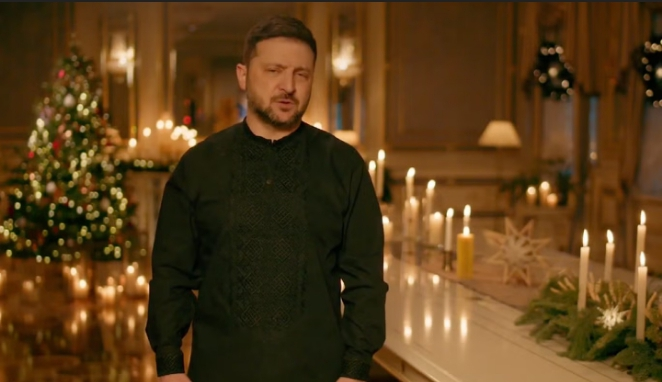
Zelensky’s Christmas message – Ukraine’s president Volodymyr Zelensky used his Christmas address to combine defiance, mourning, and diplomacy, delivering remarks that reverberated globally amid continued Russian attacks.
Speaking in a video released on Christmas Eve, Zelensky addressed Ukrainians after weeks of intensified missile and drone strikes targeting cities, energy facilities, and civilian infrastructure.
He argued that despite relentless bombardment, Russia remained incapable of destroying what truly mattered: Ukraine’s shared identity, unity, and belief in eventual victory.
Zelensky framed the war as a moral struggle rather than a purely military confrontation, insisting Ukrainian resilience had become stronger through collective suffering and sacrifice.
A striking passage of the address drew international attention, as Zelensky spoke of a shared wish that many Ukrainians might privately harbour amid devastation.
Without naming Vladimir Putin directly, he said Ukrainians might think, “May he perish,” while ultimately praying to God for something greater: peace for Ukraine.
The phrasing was widely interpreted as a veiled wish for the Russian president’s death, prompting sharp reactions across diplomatic and media circles worldwide.
Zelensky immediately contextualised the remark, emphasising that Ukraine’s true objective remained peace, justice, and the restoration of national sovereignty.
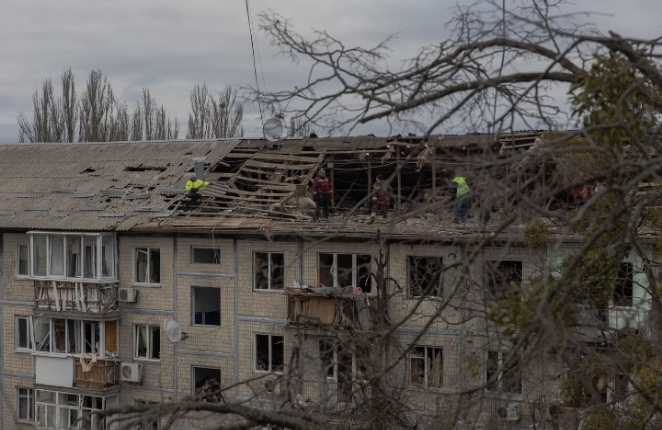
His comments followed renewed Russian strikes earlier in the week, which killed civilians and forced emergency power outages across multiple regions during freezing temperatures.
Ukrainian officials confirmed fatalities in several cities as air defence systems worked continuously to repel waves of missiles and Iranian-designed drones.
Further overnight attacks on Christmas night struck Odesa and Kharkiv, where drone debris caused additional deaths and injuries, deepening humanitarian pressures.
In his address, Zelensky paid tribute to fallen soldiers, displaced families, and civilians living under occupation, portraying endurance as Ukraine’s defining strength.
He spoke of standing “shoulder to shoulder” in darkness, suggesting unity itself had become a strategic weapon against attempts to fracture Ukrainian society.
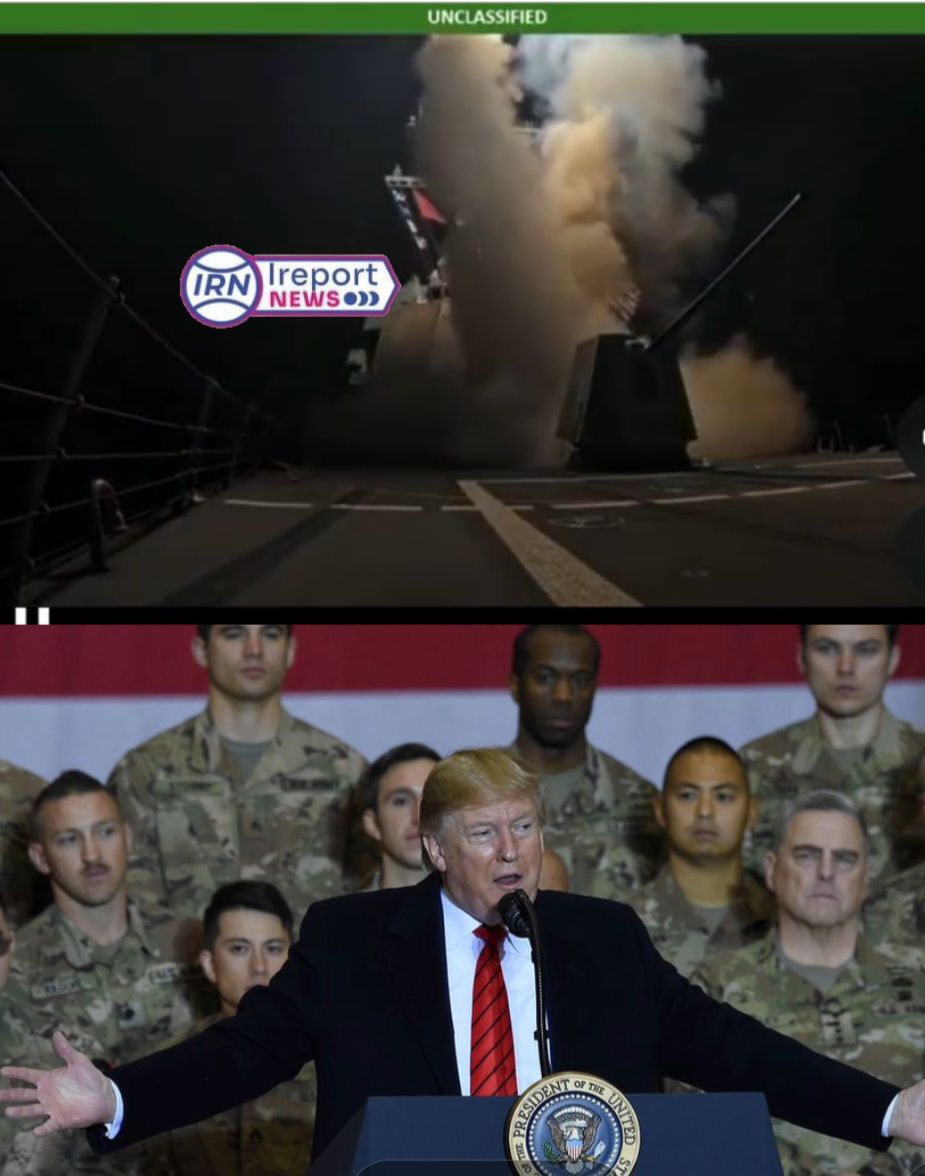
The Christmas message came amid heightened diplomatic activity following a peace proposal advanced last month by US president Donald Trump.
That proposal was widely criticised for appearing to favour Moscow, prompting Ukraine and its European allies to push for significant revisions.
American negotiators have since held separate talks with Ukrainian and Russian officials, while European governments worked to align the framework with Kyiv’s position.
Russian foreign ministry spokesperson Maria Zakharova acknowledged what she described as slow but steady progress in discussions, despite continued fighting.
Zelensky has outlined conditional concessions, including a willingness to withdraw Ukrainian troops from parts of the eastern industrial heartland.
He stressed such a move would only occur if Russia also withdrew forces and the territory became a demilitarised zone monitored by international peacekeepers.
Read also: Trump-backed Asfura declared president of Honduras
The Ukrainian leader also referenced a proposed “free economic zone” supported by Washington, insisting it must remain demilitarised to prevent renewed conflict.
A similar arrangement has been suggested for areas surrounding the Zaporizhzhia nuclear power plant, currently under Russian control and a persistent safety concern.
Zelensky has repeatedly insisted any peace deal involving territorial changes would require approval through a national referendum.
He argued democratic legitimacy was essential, warning that imposed compromises would undermine long-term stability and national unity.
Moscow reacted coolly to the Christmas address, with Kremlin spokesperson Dmitry Peskov highlighting Putin’s holiday greetings to Trump instead.
Russian officials accused Kyiv of inflammatory rhetoric while maintaining Ukraine was prolonging the conflict with Western military backing.
On the battlefield, Russian air defence units reportedly intercepted dozens of Ukrainian drones targeting Moscow, according to city officials.
Ukraine’s military, meanwhile, claimed successful strikes on Russian industrial and military-related facilities, including drone storage sites and refineries.
Regional Russian authorities confirmed fires caused by falling debris, though details remained limited amid tight information controls.
The exchange of long-range strikes underscored the conflict’s widening geographic reach and its implications for regional security.
Poland scrambled fighter jets after intercepting a Russian reconnaissance aircraft near its airspace over the Baltic Sea.
Polish officials also reported unidentified objects entering from Belarus, increasing vigilance along NATO’s eastern flank.
Despite the violence, scenes of cultural resilience unfolded across Ukraine, including Christmas Eve processions featuring traditional Didukh decorations.
Images of children in traditional dress circulated widely, contrasting sharply with wartime destruction and reinforcing narratives of endurance.
Analysts noted Zelensky’s address balanced hardline rhetoric for domestic audiences with pragmatic signals aimed at sustaining diplomatic momentum.
Supporters praised his candour, arguing it reflected authentic wartime emotions during a holiday marked by loss and uncertainty.
Critics warned the wording risked escalating tensions or complicating negotiations at a delicate stage of peace efforts.
Western governments largely avoided direct comment on the controversial line, focusing instead on calls for de-escalation and humanitarian access.
As winter deepens, civilians continue to face power shortages, displacement, and psychological strain from prolonged conflict.
Humanitarian agencies warn that sustained infrastructure damage could worsen living conditions, particularly for vulnerable populations.
Zelensky’s Christmas message ultimately captured Ukraine’s wartime posture: defiant yet prayerful, resolute yet open to conditional peace.
Whether the speech accelerates negotiations or hardens positions remains uncertain, but it reaffirmed Ukraine’s refusal to surrender agency or identity.
About The Author