Ukraine-US talks in Geneva are set to take place on Thursday as part of broader diplomatic efforts to prepare for a potential trilateral meeting with Russia, President Volodymyr Zelenskyy has said.
The announcement signals renewed momentum in negotiations aimed at advancing a framework for peace after months of stalled progress on the battlefield and in diplomatic channels.
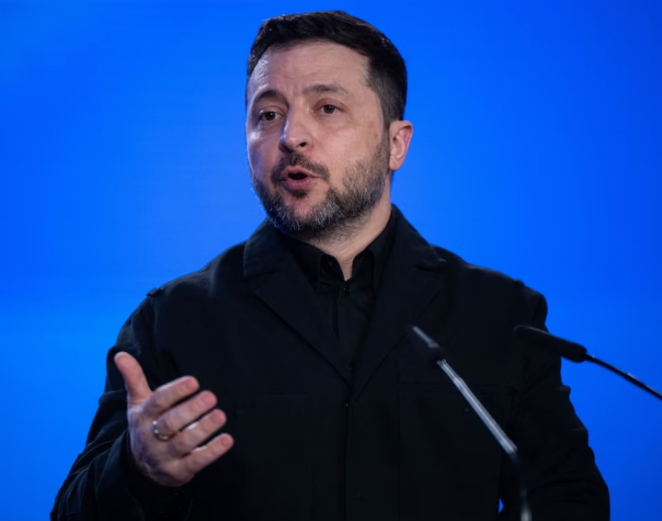
Speaking about the evolving state of negotiations, Zelenskyy explained that Thursday’s discussions between Ukrainian and United States officials would serve as groundwork for what Kyiv hopes will become a trilateral meeting involving Russia in early March.
According to the president, the preparatory nature of the Geneva talks underscores the seriousness of the diplomatic push and the need for coordinated positions before sitting at the same table as Moscow.
The planned meeting in Geneva reflects the city’s long-standing role as a neutral venue for high-stakes international diplomacy.
For decades, Geneva has hosted critical summits and negotiations, making it a symbolic and practical choice for discussions seeking to de-escalate one of Europe’s most significant conflicts in recent history.
Zelenskyy indicated that one of the primary objectives of the talks will be to clarify expectations and potential formats for a trilateral dialogue.
While Kyiv has consistently insisted on preserving its territorial integrity and sovereignty, it has also emphasized the importance of securing concrete commitments before engaging directly with Russia in any expanded diplomatic setting.
Beyond preparations for the trilateral meeting, Zelenskyy outlined additional items on the agenda. Among them are discussions on prisoner-of-war exchanges, a humanitarian issue that has remained central to negotiations since the early stages of the conflict.
Both sides have previously conducted exchanges, but Kyiv continues to push for broader and more systematic agreements to secure the release of captured Ukrainian service members.
Another key focus will be what Zelenskyy described as a “prosperity package” for the reconstruction of Ukraine. The initiative aims to align post-war rebuilding efforts with long-term economic resilience, ensuring that reconstruction is not merely about infrastructure repair but also about modernisation and integration with Western markets.
The concept of a prosperity package suggests a strategic vision extending beyond immediate ceasefire arrangements.
Ukrainian officials have repeatedly argued that sustainable peace requires economic security, investment guarantees, and strengthened institutions. By placing reconstruction alongside ceasefire planning, Kyiv is signalling that peace and recovery must proceed hand in hand.
Earlier in the week, US envoy Steve Witkoff confirmed that talks were in motion. Witkoff said the aim was to “explore different iterations about how we might get to a peace deal,” highlighting the exploratory nature of the upcoming discussions.
His remarks suggest that multiple scenarios remain under consideration, ranging from phased ceasefires to broader political agreements.
Witkoff’s comments point to the complexity of designing a viable peace framework. Any agreement would need to address security guarantees, territorial questions, sanctions, and accountability issues.
The exploratory tone reflects both cautious optimism and recognition that significant gaps remain between Kyiv and Moscow’s positions.
For the United States, participation in the Geneva talks underscores its continued diplomatic engagement in support of Ukraine.
Washington has provided extensive military and economic assistance since the start of the conflict, and officials have repeatedly stressed that any negotiated outcome must respect Ukraine’s sovereignty and international law.
The anticipated trilateral meeting with Russia in early March, if realised, would mark a significant diplomatic development. Direct engagement among the three parties could create opportunities for breakthroughs but would also require careful coordination to avoid missteps.
Zelenskyy’s framing of Thursday’s meeting as preparatory suggests Kyiv intends to approach such talks from a position of clarity and unity with its allies.
Observers note that timing is critical. With shifting dynamics on the battlefield and growing international pressure to seek a negotiated settlement, diplomatic windows can open and close rapidly.
The Geneva meeting may therefore serve as a testing ground for whether meaningful progress is achievable in the coming weeks.
At the humanitarian level, prisoner-of-war exchanges remain one of the few areas where practical cooperation has occurred despite broader hostilities. Expanding these exchanges could build confidence and demonstrate tangible benefits of continued dialogue, even if comprehensive peace remains elusive.
Meanwhile, the proposed prosperity package highlights Ukraine’s determination to link peace efforts with long-term strategic planning. By foregrounding reconstruction in discussions with US officials, Kyiv is seeking assurances that international support will endure beyond any immediate ceasefire.
Read also: Syria faces twin battles as Assad loyalists and ISIL launch coordinated attacks
As Ukraine-US talks in Geneva approach, expectations remain measured. Officials on all sides acknowledge that exploratory discussions do not guarantee swift resolution.
Yet the willingness to convene, clarify positions, and consider multiple pathways toward agreement reflects a shared understanding that diplomacy remains an essential component of the broader effort to end the conflict.
About The Author