Clashes erupted across Syria’s west and east as security forces confronted armed groups, marking a critical moment where Syria faces twin battles as Assad loyalists and ISIL launch coordinated attacks. The violence threatens the fragile stability of a nation still recovering from years of civil war and political fragmentation.
In the coastal province of Latakia, members of the Saraya al-Jawad militia, loyal to remnants of the former Assad regime, targeted government positions, killing multiple security personnel in early Tuesday clashes. Security units responded quickly, neutralising several key commanders during intense firefights near Hamam al-Qarahleh.
Analysts highlight that Saraya al-Jawad represents a shift from disorganised loyalist resistance to structured military action. Formed in August 2025, the group is reportedly loyal to Brigadier-General Suheil al-Hassan, former commander of the elite Tiger Forces, notorious during the previous regime.
The Ministry of Interior condemned the militia’s attacks as part of a broader campaign of destabilisation. Officials allege targeted assassinations, bombings, and assaults on public events are being orchestrated to undermine the new transitional government’s authority in the coastal heartland.
Meanwhile, in the eastern province of Deir Az Zor, ISIL carried out a series of coordinated attacks on security checkpoints. Ambushes in Al-Mayadin and Al-Sabahiyah resulted in several soldiers’ deaths, underscoring the persistence of extremist threats across the country’s desert regions.
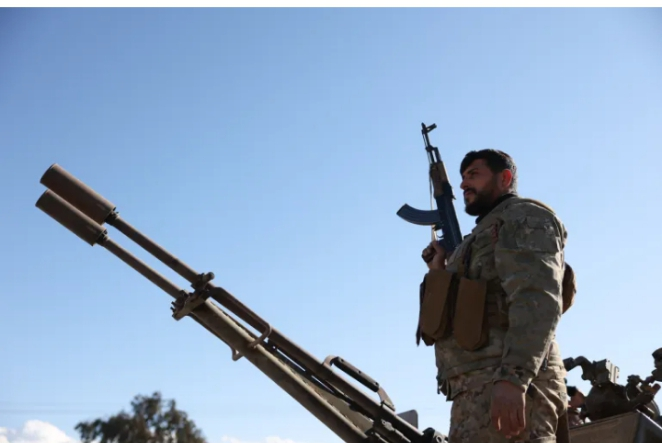
Interior Minister Anas Khattab linked both fronts in a statement on X, claiming remnants of the old regime and ISIL were attempting to “tamper with the country’s security and target its successes,” signalling a convergence of threats that challenges central authority.
Brigadier General Munir al-Hariri, a strategic security expert based in Amman, described the simultaneous flare-ups as “suspicious,” pointing to possible external actors exploiting dormant loyalist networks to destabilise Syria and project weakness internationally.
“There is something suspicious in this story,” al-Hariri told Al Jazeera Mubasher. He suggested Iran, losing influence in Syria, may be mobilising residual intelligence operatives and supporting ISIL activity, feeding chaos to undermine the new government.
The violence illustrates the transitional government’s struggle to dismantle entrenched “deep state” armed cells, which continue to operate with local knowledge and historical ties to former intelligence networks across Syria.
Without strong intervention, these cells risk further destabilising key regions.
Bassam al-Suleiman, a political researcher in Damascus, noted that the spike in violence is partially a consequence of natural friction during a regime change, as international forces withdraw and the security apparatus realigns under new authority.
“The organisation [ISIL] is exploiting the state of security imbalance resulting from the change in control and the withdrawal of US forces,” al-Suleiman told Al Jazeera. He warned of the vast Syrian Badia desert becoming a safe haven for militants if not properly monitored.
The Syrian Badia constitutes nearly 40 percent of the country’s territory. Analysts warn that without swift government action, the region could serve as a staging ground for regrouping insurgents, threatening national security and border stability simultaneously.
Al-Suleiman recommended engaging local Arab tribes in Deir Az Zor to serve as auxiliary support against the resurgence of both loyalist militias and extremist cells, a strategy aimed at combining community intelligence with formal security operations.
The Latakia confrontations reveal that Saraya al-Jawad is capable of organised strikes, signalling a significant evolution from sporadic loyalist activity into a coordinated rebellion, particularly in areas historically aligned with the Assad family.
Experts argue the coordination between western loyalist attacks and eastern ISIL operations is unlikely coincidental. The timing suggests deliberate planning, potentially aided by regional actors seeking to exploit Syria’s transitional fragility for geopolitical leverage.
Government sources insist that security units remain vigilant, highlighting successful counteroperations that eliminated senior militia commanders and foiled further attacks, demonstrating an ongoing commitment to stabilising key territories.
The transitional government faces dual pressure: it must maintain order in Latakia while also preventing ISIL from consolidating power in the Badia desert. Both fronts require carefully balanced military and political responses.
Observers stress the importance of intelligence-led operations, including pre-emptive raids and the use of surveillance technology, to disrupt loyalist and extremist networks before they can coordinate further attacks against security forces.
International actors continue monitoring the situation closely. The withdrawal of US forces from the northeast has created a vacuum that insurgents could exploit, while neighbouring states watch developments for implications on regional security and refugee flows.
Civilian populations in both eastern and western Syria face heightened risks. Residents report sporadic clashes, disruptions to transportation, and increased security checkpoints, reflecting the widespread impact of coordinated loyalist and extremist attacks.
Humanitarian groups warn that continued violence could hinder aid delivery, complicate reconstruction efforts, and delay the return of displaced Syrians, further exacerbating Syria’s fragile recovery from years of conflict.
Political analysts note that Saraya al-Jawad’s presence indicates enduring loyalty networks tied to the previous regime, suggesting that dismantling such networks will require long-term intelligence operations beyond immediate tactical responses.
Read also: Humans need managing in Venice lagoon, not Mimmo the dolphin, say scientists
In Deir Az Zor, local tribes are being engaged to assist security forces, providing vital information on militant movements and supply routes, representing a key element of the government’s strategy to prevent ISIL resurgence.
The situation demonstrates the complexity of Syria’s transitional phase, where internal power struggles, residual loyalist networks, and extremist groups converge, testing the effectiveness of the new government’s control mechanisms.
Syria faces twin battles as Assad loyalists and ISIL launch coordinated attacks, highlighting the ongoing challenge of stabilising a nation emerging from prolonged conflict while securing its borders and population centers.
About The Author