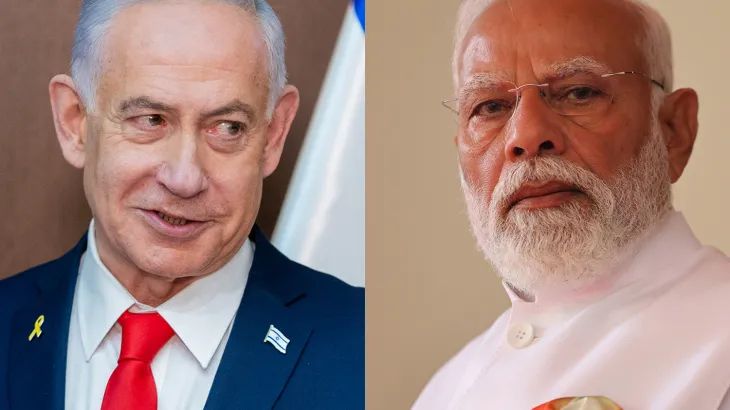
Narendra Modi in Israel this week marks a high-profile visit by India’s Prime Minister to deepen ties with Israeli Prime Minister Benjamin Netanyahu.
The trip highlights strengthened India-Israel relations amid global scrutiny. Modi in Israel includes a Knesset address, signaling both strategic partnership and the challenge of balancing India’s traditional support for Palestinian self-determination during ongoing Gaza conflicts.
During the visit, Modi in Israel will focus on economic, technological, and security cooperation. Israeli officials describe India-Israel relations as a “tremendous alliance,” spanning research, innovation, and defense projects.
Former diplomat Ilan Fluss emphasized partnerships in artificial intelligence, involving government and private sectors, highlighting mutual benefits of innovation and strategic collaboration between the two countries.
Critics in India have condemned Modi in Israel as a betrayal of the nation’s anti-colonial principles. CPIM leader Marian Alexander Baby called the trip “an indelible blot on our nation’s soul,” criticizing India for partnering with Israel during the Gaza conflict.
Protests erupted across India, demanding the visit’s cancellation, reflecting public concern over ethics and the humanitarian implications of close bilateral cooperation.
Political analysts note that Modi in Israel reflects India’s pragmatic diplomacy. By compartmentalizing contentious issues into multilateral frameworks, New Delhi sustains strategic ties while signaling alignment with international consensus on Palestinian rights.
Lauren Dagan Amos, a political science lecturer, described India-Israel cooperation as “under constraint, not unconditional alignment,” balancing strategic and reputational considerations effectively.
Security and defense cooperation is a major focus of Modi in Israel. Documents indicate India has exported rockets and military components to Israel, raising ethical concerns amid the Gaza conflict.
Analysts highlight that these transfers underline the practical dimension of India-Israel relations, showing New Delhi’s willingness to support strategic partnerships even amid controversial military operations.
Israel’s internal politics complicate Modi in Israel. Opposition lawmakers plan to boycott the Knesset speech over the Supreme Court President’s exclusion, while Knesset Speaker Amir Ohana pledged to fill seats with former lawmakers.
These tensions illustrate domestic challenges even as Netanyahu emphasizes international alliances and Israel’s ability to maintain partnerships despite criticism.
Economic cooperation also drives Modi in Israel, particularly through the Abraham Accords and I2U2 frameworks with India, the US, Israel, and the UAE. Strengthening trade, investment, and technology exchange remains a priority for India, signaling the visit’s dual purpose: deepening economic ties while positioning India as a reliable global partner.
Humanitarian concerns persist. Investigations reveal Israeli forces fired hundreds of bullets at Palestinian aid workers in Gaza last year, killing 15. Indian MPs urge Modi in Israel to address these atrocities, reaffirming India’s historical support for Palestinian rights and demanding accountability for civilian casualties in the conflict.
Modi in Israel also emphasizes technology and innovation. Israeli experts at the AI Impact Summit encouraged collaboration in artificial intelligence, citing joint research opportunities and government-private sector projects.
These initiatives illustrate the forward-looking strategic dimension of India-Israel relations, extending beyond defense and trade.
Observers note Modi in Israel balances multiple priorities: enhancing defense, economic, and technological partnerships, while maintaining careful public messaging on Palestinian issues.
Nicolas Blarel, international relations expert, emphasized that India’s cooperation demonstrates the resilience of alliances despite reputational or ethical scrutiny from the international community.
Public reactions in India remain polarized. While officials stress pragmatic strategy, civil society criticizes Modi in Israel for compromising ethics. Protests outside consulates called for halting weapons transfers and questioned India’s alignment with a state engaged in armed conflict during Gaza hostilities.
Netanyahu welcomed Modi in Israel with ceremonial pomp, highlighting shared economic and strategic goals. Photographs captured handshakes and statements emphasizing friendship, attracting global attention while sparking ethical and geopolitical debates over India’s role in supporting a controversial ally.
Defense and security discussions during Modi in Israel include intelligence sharing, counter-terrorism, and missile technology.
Reports suggest India is exploring advanced Israeli defense systems to enhance its own security. Critics argue these discussions indirectly support Gaza military operations, while Modi’s messaging stresses balanced, independent foreign policy objectives.
Modi in Israel underscores evolving bilateral relations amidst regional conflict. Beyond defense and economic cooperation, the visit highlights New Delhi’s engagement in global diplomacy, opening pathways for multilateral collaboration on technology, climate, energy, and security initiatives.
Read also: Europe condemns Moscow’s dirty bomb claim as Ukraine marks four-year war anniversary
The visit illustrates India’s balancing act: strengthening relations with Israel while maintaining ties with countries critical of Israeli policies, including Iran.
Modi in Israel reflects a careful diplomatic strategy, aiming to preserve strategic flexibility while adhering to international norms and multilateral frameworks.
Modi in Israel exemplifies modern diplomatic complexity: advancing defense, technology, and economic ties while addressing global scrutiny over Palestinian rights and humanitarian concerns. The visit is symbolic and practical, shaping the long-term trajectory of India-Israel relations.
About The Author