Europe has strongly dismissed Moscow‘s dirty bomb claim, stating it is entirely baseless and a diversion from Russia’s aggressive actions as Ukraine marks the fourth anniversary of its full-scale invasion.
The Russian Foreign Intelligence Service (SVR) alleged, without evidence, that Ukraine’s allies in the United Kingdom and France were preparing to supply nuclear components to Kyiv, prompting immediate denials.

A UK government spokesperson said, “This is a clear attempt by Vladimir Putin to distract from his heinous actions in Ukraine. There is no truth to this claim whatsoever.”
Ukraine’s foreign ministry also rejected the allegations, emphasizing Russia’s long history of spreading misinformation. Spokesperson Heorhii Tykhyi called the “dirty bomb” accusation entirely fabricated and demanded global condemnation.
“The international community must not entertain or legitimise Russia’s false information campaigns. Ukraine continues to defend its sovereignty against blatant aggression from Moscow’s forces,” Tykhyi stated firmly.
Meanwhile, the fourth anniversary of the war highlighted the ongoing humanitarian and military toll. Children in Ukraine have endured more than six months of their lives under continuous air raid sirens, data shows.
Veronika, a mother of an eight-year-old in Kyiv, explained, “The emotional strain is constant. Children feel it more than adults, leaving their nervous systems exhausted and instilling persistent fear in daily life.”
Ukrainian forces have leveraged technology to shift battlefield dynamics. Drones dominate operations, blurring frontlines and making conventional tank advances increasingly dangerous for Russian forces.
Military analyst Emil Kastehelmi explained that this drone-centric battlefield “demechanises” frontlines, forcing Russia to rely on costly infantry-heavy tactics despite plans to expand its army to 1.5 million soldiers.
Ukraine has also benefited from SpaceX and Elon Musk’s decision to cut Starlink access to Russian forces, significantly reducing drone operations and enabling Kyiv to regain strategic territory in contested regions.
Brigadier General Andrii Biletski said, “After blocking Starlink for Russian troops, their efficiency dropped sharply. Starlink is irreplaceable as a combat communication system, providing Ukraine a considerable strategic advantage.”
The UK has drawn lessons from Ukraine’s resilience. British Ambassador Neil Crompton called the conflict “the issue of our lifetime,” highlighting Europe’s stake in the war’s outcome and security implications.
“Ukrainians have shown remarkable fortitude. Predictions of Kyiv’s rapid fall were wrong. Four years on, their defense demonstrates innovation and technological ingenuity offsetting numerical disadvantages,” Crompton observed.
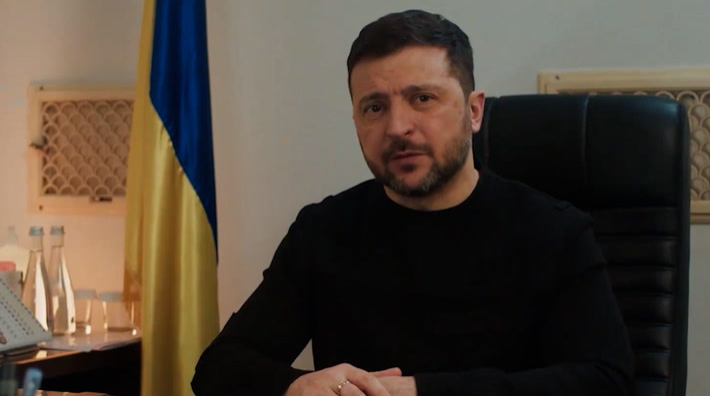
President Volodymyr Zelensky stressed the importance of international engagement, calling for Donald Trump to visit Ukraine to see the war’s impact firsthand and understand the scale of civilian suffering.
“Only by witnessing Ukraine personally can one grasp who the aggressor is and who must be pressured. Russia is the cause and obstacle to peace. Seeing it matters,” Zelensky stated.
Ukraine’s stance on territorial concessions remains firm. Deputy Foreign Minister Mariana Betsa affirmed the country will never recognize occupied areas or compromise sovereignty, condemning Moscow’s totalitarian ambitions.
“The Kremlin aims for complete control. Negotiations are only a cover. Our sovereignty and territorial integrity are non-negotiable. Concessions are not an option for a free nation,” Betsa emphasized.
Diplomatic efforts continue. US and Ukrainian officials plan another round of talks in Geneva, with Trump’s envoy Steve Witkoff and Jared Kushner engaging Ukrainian lead negotiator Rustem Umerov, along with separate discussions involving Iran.
Witkoff stressed the importance of continuous dialogue with Umerov, highlighting near-daily communications aimed at exploring potential pathways toward a durable peace settlement.
The UN Security Council remains deadlocked on Ukraine due to Russia’s veto power, while the US abstained from a recent ceasefire resolution. Deputy UN envoy Tammy Bruce cited distracting language in the proposal.
“While the call for a ceasefire is welcome, the resolution contained language that could undermine ongoing diplomacy. Focus should remain on avenues enabling long-term, durable peace,” Bruce explained.
Tensions also emerged regarding China’s role in supporting Russia. Washington accused Beijing of sustaining Moscow’s war efforts through imports of dual-use goods and Russian oil purchases, which Beijing strongly denied.
China’s UN ambassador, Fu Cong, said, “The US fabricates excuses and lies to create division and conflict. Shifting blame will not achieve peace or resolve the war in Ukraine.”
Former Trump envoy Keith Kellogg criticized the US abstention, framing it as a moral failure. “Four years of war, missing children, and shelling cities are not a business deal—they are human tragedies requiring decisive action,” he said.
Children’s experiences remain harrowing. They have spent over 4,000 hours under air raid sirens, leaving deep psychological scars. Continuous alerts have made everyday life an ongoing struggle for safety and stability.
Technology and innovative tactics have redefined combat. Ukrainian drone operations, supported by real-time intelligence, have allowed smaller units to neutralize larger Russian formations, demonstrating innovation’s decisive role in modern warfare.
Despite Russian pressure, Ukraine remains resolute, combining military resilience with diplomacy to ensure long-term security and defend territorial integrity against Moscow’s ambitions.
Zelensky stressed accountability as key to peace. “Putin initiated this war and remains its primary obstacle. Until Russia is confronted, constrained, and held accountable, genuine peace cannot be achieved,” he said.
The situation underscores Europe’s strategic interest in Ukraine’s success. Kyiv’s defense and innovative approaches provide crucial lessons for NATO and broader European security planning.
Read also: Trump longest State of the Union: Defiant victory lap mixes boasts, barbs, and spectacle in marathon address
As the war enters its fifth year, both military and civilian communities endure unprecedented pressures, balancing survival, defense, and engagement with global diplomatic efforts to end the conflict.
About The Author