Pope Leo XIV‘s visit to Argentina is expected to expose deep ideological differences between the pontiff and President Javier Milei, particularly over poverty, disability support, workers’ rights and the role of government in society.
The pope begins his first full day in the country on Monday, November 9, with a visit to Cottolengo Don Orione, a Catholic-run home for people with disabilities in Claypole, about 26 kilometres from Buenos Aires.
The facility houses approximately 400 residents, many of whom depend on institutional assistance and public support. However, its management says government funding cuts have created serious difficulties in providing essential services.
Fernando Montero, the facility’s coordinator, said the government had stopped supplying important items, including medications, special foods and diapers.
“[The government] cut off the supply of medications, special foods and diapers. They haven’t delivered any since last November. The matter is in court,” Montero said.
He described the ideological differences between the pope and Milei as fundamental, arguing that the pontiff believes human dignity should not depend on economic productivity.
Milei, whom Montero described as a “hyper-capitalist”, is accused by his critics of prioritising competition and market performance over the needs of vulnerable members of society.
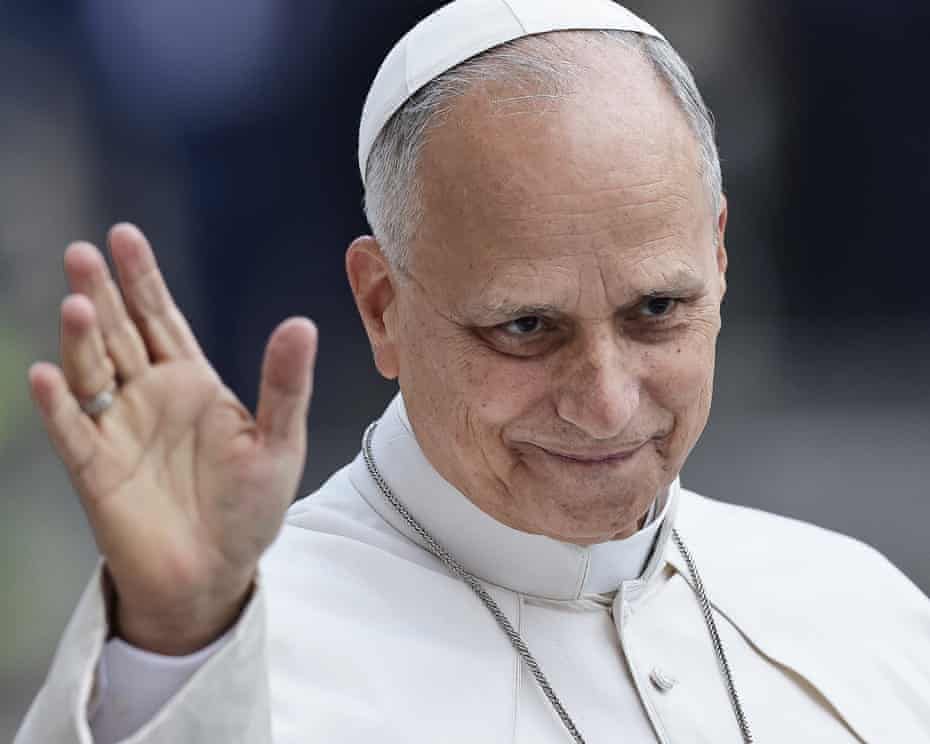
Pope Leo XIV’s visit to Argentina brings church-state tensions into focus
The three-day visit will be the first papal trip to Argentina since Pope John Paul II travelled to the country in 1987. Pope Francis, who was born in Argentina, never returned during his pontificate.
Leo’s visit is part of a wider South American tour that began in Uruguay on Friday and will conclude with six days in Peru.
However, the Argentine leg is attracting particular attention because of the strained relationship between the Catholic Church and Milei’s administration.
The president, a far-right libertarian economist, campaigned on an aggressive programme of public spending reductions and famously used a chainsaw as a symbol of his proposed cuts.
His previous remarks about Pope Francis have also contributed to expectations of an uncomfortable encounter with the current pontiff.
In 2020, Milei called Francis an “imbecile” and “the representative of the Evil One on Earth”, while accusing him of promoting communism and describing social justice as theft.
Milei later claimed to have apologised when he met Francis at the Vatican in February 2024.
Since assuming office in December 2023, the president has pursued sweeping reductions in public expenditure, arguing that the measures were necessary to control inflation and stabilise Argentina’s economy.
However, the consequences have generated criticism from social organisations, religious institutions and groups representing vulnerable citizens.
Disability funding cuts deepen criticism of Milei’s government
The treatment of people with disabilities has become one of the most contentious issues between Argentina’s government and Catholic institutions.
Organisations providing care have raised concerns about reductions in public assistance, arguing that the cuts have affected their ability to provide essential services and support residents.
At Cottolengo Don Orione, the reported interruption of supplies has become a particularly sensitive issue ahead of the pope’s arrival.
The dispute is also part of a wider disagreement over a disability funding law that has remained unresolved amid tensions between Milei’s administration and Congress.
Argentina’s conference of bishops intervened in the controversy, writing to Health Minister Mario Lugones on April 1 to denounce what it described as “the serious situation facing numerous institutions dedicated to the care and support of people with disabilities in our country”.
The health ministry subsequently met representatives of the bishops in April and again on October 5, but the discussions did not resolve the disagreement.
The economic consequences of Milei’s spending policies have also affected retirees.
The Mate thinktank estimates that pensioners receiving the minimum payment, representing 63 per cent of all retirees, have lost approximately 30 per cent of their purchasing power.
At a weekly demonstration outside Congress last Wednesday, one protester displayed a cardboard message appealing directly to the visiting pontiff.
“Save us Pope Leo XIV – Milei is killing us,” the sign read.
Buenos Aires Archbishop Jorge García Cuerva has also warned that the pope will encounter a deeply divided country with widespread poverty.
He said Leo would find “a divided Argentina and a large number of very poor brothers and sisters.”
Artificial intelligence creates another ideological divide
The differences between Leo and Milei extend beyond traditional disagreements about poverty, social protection and economic policy.
Artificial intelligence and the future relationship between technology and humanity have also emerged as areas of contrasting positions.
In May, Leo called for the “disarming” of artificial intelligence, reflecting concerns about the potential consequences of increasingly powerful technologies.
Milei, however, has opposed regulating AI and has promoted proposals to establish datacentres across Argentina.
His administration has also supported bills seeking to grant legal status to “no-human corporations”, while a minister responsible for reducing the size of government, Federico Sturzenegger, has said he used AI to draft legislation.
Milagros Miceli, a sociologist and computer scientist who leads the Critical AI Lab in Berlin, described the contradiction between the two positions as evident.
She welcomed the pope’s intervention, saying the pontiff wanted to place human beings at the centre of discussions about technological development.
Miceli praised the idea of “stripping these technologies of the values that are presented to us as taking precedence over humanity.”
Juan Grabois, a left-wing Peronist lawmaker and social leader who previously served in the Vatican’s Dicastery for Promoting Integral Human Development, also criticised the administration’s approach.
“The idea of absolute deregulation is at the heart of the president’s agenda, and the replacement of the human element with these forms of algorithmic power has clearly also become a policy priority for the government,” Grabois said.
Pope’s itinerary highlights concerns over labour and social justice
Milei’s administration has attempted to minimise expectations that the pontiff will directly challenge the president over domestic policies.
Sandra Pettovello, the minister responsible for social policy, recently said: “There’s no way the pope is going to come here to comment on local politics.”
Nevertheless, the programme for Pope Leo XIV’s visit to Argentina includes several locations and engagements closely connected to the country’s economic and social disagreements.
After visiting the disability home, Leo will travel to Buenos Aires, where he is scheduled to meet business and union leaders.
On Tuesday, he will celebrate Mass at the grounds of FAdeA, Argentina’s state-owned military aircraft factory in Córdoba.
Workers at the facility have protested against Milei’s spending reductions, making the location particularly significant in the context of the country’s wider labour disputes.
Juan Cruz Esquivel, director of Buenos Aires University’s Barometer of Religions and Beliefs, said the itinerary carried an important message.
“I don’t want to speculate [about what the pope will say], but clearly any mention of defending domestic production, labour, disability or social justice in the pope’s rhetoric naturally clashes with the ideology that Milei’s government has been promoting,” Esquivel said.
Catholic priest Mariano Oberlin, who works in an impoverished neighbourhood of Córdoba, expects the disagreement to remain largely diplomatic.
He said Leo has continued to defend the Church’s social doctrine without necessarily confronting political leaders directly.
“If Milei wants to use him, he’ll probably have to do a lot of juggling to make him say the opposite of what he’s been saying – and of what he’ll surely say when he comes: that the Gospel invites us to feel like brothers, to respect each person’s deep, inherent dignity, and to fight so that this dignity becomes real in access to rights,” Oberlin said.
Social movements maintain close relationship with Catholic Church
The relationship between the Catholic Church and social movements in Latin America has evolved significantly since Francis became pope.
Argentina has been part of that development, with organisations representing poor communities increasingly engaging with the Church’s social teachings and humanitarian activities.
Grabois, who participated in the process, believes the relationship influenced both the Church and the communities involved.
He argued that Francis was not simply a religious leader who offered assistance to disadvantaged people but also learned from their experiences and struggles.
“[Francis] wasn’t the ‘good priest’ who came to help the poor,” Grabois said, arguing that those exchanges helped the former pope “develop his social thinking”.
He added: “Without the cartoneros (cardboard pickers) and the villeros (people from impoverished neighbourhoods), Francis would not have been Francis.”
Grabois believes Leo’s connection with social movements also reflects the influence of his previous experiences.
“Francis took notice of Leo because he saw him supporting the Peruvian indigenous movement,” he said.
However, the Catholic Church‘s relationship with Argentine society is not without disagreements, particularly over LGBTQIA+ rights.
LGBTQIA+ community questions whether Church attitudes have changed
The pope’s arrival coincides with Buenos Aires’ 35th Pride March, scheduled for Saturday, November 7, bringing attention to continuing disagreements between the Church and LGBTQIA+ organisations.
María Rachid, a member of the march’s organising committee, said the Church’s position on same-sex families had not fundamentally changed.
“The church’s dogma regarding our families has not changed at any time, neither under the previous pope nor under this one,” Rachid said.
Nevertheless, she acknowledged that Francis’ statements on gay rights had provided some reassurance to families and their communities.
Meanwhile, religious identification in Argentina has undergone significant changes, with evangelical Christianity gaining ground as Catholic affiliation declines.
Buenos Aires University research found that 57.7 per cent of Argentines identify as Catholic, while 17.4 per cent identify as evangelical.
Nearly 20 years earlier, Catholic identification stood at 76.5 per cent, compared with nine per cent for evangelical Christians.
Milei recently inaugurated an evangelical temple in Neuquén, where he delivered a political speech and promised to seek re-election next year.
Read also: US expands pressure on Iran with new task force iron gate targeting land trade routes
Esquivel said Catholicism remains the country’s largest religious tradition but has lost much of its former cultural dominance and influence over the legislative agenda.
Despite these changes, many Argentines expect Leo to deliver a message centred on social protection, human dignity and humanitarian concerns.
Grabois said even some people who had previously been strongly opposed to the Church were now expressing enthusiasm about the pontiff’s arrival.
“In the face of dehumanisation, ordinary people are taking refuge in the only global voice that’s speaking out about this today – which is Francis and Leo’s,” he said.
The visit therefore presents Milei with a delicate diplomatic moment, as the pope’s emphasis on human dignity, social justice and support for vulnerable communities could sharpen public scrutiny of the president’s economic policies.
About The Author