Pope Leo historic Turkiye meeting has captured global attention as the first American pope visits a Muslim-majority nation to promote dialogue, peace, and Christian unity amid international conflicts.
“This gathering is a beacon of hope for the world,” Pope Leo said, addressing attendees in Iznik, emphasizing reconciliation over centuries-long religious divisions and promoting interfaith understanding.
The main event, held near the underwater ruins of the fourth-century Basilica of Saint Neophytos, commemorates the 1,700th anniversary of the First Council of Nicaea, central to Christian history.
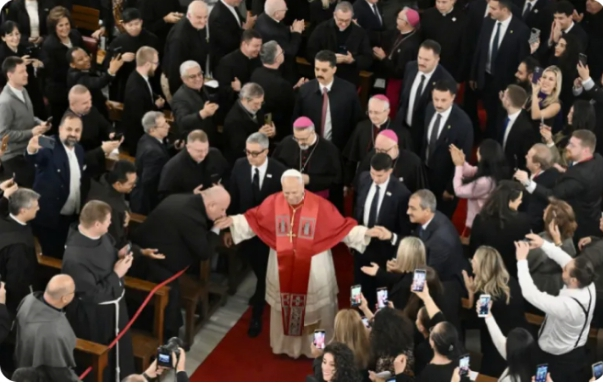
“Violence and wars justified by religion must be rejected,” the pope declared. “Our mission is fraternal encounter, dialogue, and cooperation to mend historical rifts and human suffering worldwide.”
Pope Leo chose Turkiye as his first overseas destination, followed by Lebanon, signaling a commitment to bridge-building and advocating peace amid ongoing crises in the Middle East region.
The ceremony included prayers in English, Greek, and Arabic, with candles lit near the sunken basilica, demonstrating an inclusive approach to faith that transcends denominational boundaries and cultural differences.
Al Jazeera correspondent Jonah Hull noted, “Both the pope and Patriarch Bartholomew are dedicated to uniting Christians. Such ecumenical encounters are vital for fostering lasting harmony and understanding.”
The pontiff emphasized the urgency of the message in Lebanon, where he plans to continue promoting interfaith dialogue and highlighting the humanitarian needs of vulnerable populations affected by ongoing conflicts.
Earlier, Pope Leo participated in a prayer service at Istanbul’s Catholic Cathedral of the Holy Spirit, warmly greeting parishioners who arrived before dawn to witness his historic visit firsthand.
Catherine Bermudez, a Filipino migrant worker, said, “Being here with the pope is a dream. His visit shows that the Church truly values all communities, including migrants and refugees.”
“The logic of littleness is the church’s true strength,” Pope Leo said to the faithful in Istanbul, urging them to persevere in small acts of service, particularly for migrants numbering nearly three million.
The pontiff highlighted that the Church in Turkiye, though small, has a significant impact, particularly in supporting refugees and marginalized groups who face social and economic challenges daily.
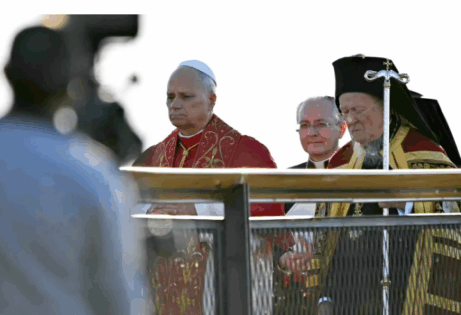
In Iznik, Pope Leo met Patriarch Bartholomew I of Constantinople, the spiritual leader of Orthodox Christians, reaffirming a shared commitment to overcome historical divisions between Catholic and Orthodox traditions.
“This collaboration is a historic milestone,” the Patriarch said. “It reflects our desire to work together to ensure Christianity’s enduring presence and relevance in the modern world.”
The ecumenical prayer service commemorated the creation of the Nicene Creed, a doctrinal statement still central to Christian faith, underlining the importance of unity in doctrine and practice despite historical separations.
Pope Leo was flown by helicopter to Iznik, reflecting the high level of security and the significance of the papal visit, marking only the fifth papal journey to Turkiye in history.
The pontiff’s presence underscores a focus on dialogue and reconciliation, illustrating how religious leadership can address global tensions and promote humanitarian principles beyond political borders.
Security measures included the removal of Mehmet Ali Agca, the man who attempted to assassinate Pope John Paul II, highlighting ongoing sensitivities surrounding the papacy and its historic encounters.
Throughout the visit, the pope emphasized that Christianity’s mission is rooted in service, urging attention to migrants, refugees, and marginalized populations, demonstrating faith in action and global moral leadership.
The visit also aims to strengthen bonds with local Christian communities, ensuring their presence in predominantly Muslim countries remains recognized, respected, and protected in a region marked by historical upheavals.
Pope Leo historic Turkiye meeting draws attention to the Church’s evolving role in geopolitics, showing religious leaders can act as mediators and advocates for peace amid violence and regional instability.
Observers noted that the pope’s efforts are symbolic of broader interfaith dialogue, fostering cooperation between Catholics, Orthodox Christians, and Muslim communities in Turkiye and neighboring countries.
By addressing issues of migration, conflict, and religious extremism, Pope Leo highlights how moral and spiritual leadership intersects with contemporary humanitarian concerns, promoting practical solutions in real-world contexts.
The celebration of the First Council of Nicaea’s anniversary emphasizes continuity and tradition within Christianity, linking contemporary dialogue with foundational moments that shaped the faith globally over centuries.
The pope’s itinerary, including Lebanon, further reflects a strategy of targeted diplomacy, bringing messages of peace, interfaith cooperation, and humanitarian advocacy directly to regions affected by conflict and displacement.
“This is a moment for all Christians to reflect on unity and shared purpose,” Pope Leo said. “We must commit to dialogue and solidarity in times of division and strife.”
Public reception in Istanbul and Iznik was enthusiastic, with parishioners, pilgrims, and local communities expressing hope that the pope’s visit will lead to long-term initiatives fostering interreligious understanding.
Pope Leo historic Turkiye meeting not only commemorates a milestone in Christian history but also demonstrates the potential for faith to act as a catalyst for reconciliation, peacebuilding, and shared humanitarian action.
The pontiff’s words emphasized moral responsibility in global affairs, urging leaders and citizens alike to reject violence, extremism, and political exploitation of religion while promoting compassion and dialogue.
“By uniting our efforts, Christians can stand as a model for peaceful coexistence,” Pope Leo concluded, urging communities to build bridges rather than walls amid contemporary geopolitical and social challenges.
Through his visit, Pope Leo signals that the Church’s engagement is not limited to liturgical observance but extends to active participation in societal issues, migration crises, and interfaith dialogue.
As the pope departs Turkiye, the historic visit leaves a legacy of hope, interreligious cooperation, and a renewed focus on Christianity’s relevance in addressing modern challenges of peace, justice, and reconciliation.
About The Author