Gadi Eisenkot has secured his first coalition partner as Israel government formation efforts gather momentum following October’s election, with his Yashar party agreeing to sign a coalition pact with Avigdor Lieberman’s Our Home party.
The agreement could strengthen Eisenkot’s position in negotiations to replace Benjamin Netanyahu, although securing the parliamentary majority required to govern remains a major challenge.
The political alliance represents the first agreement of its kind since the election, potentially reshaping opposition negotiations as competing parties explore ways to form Israel’s next government. Despite the breakthrough, disagreements over cooperation with Arab parties and the possibility of a unity government with Likud could complicate Eisenkot’s efforts to bring different political interests together.
Eisenkot secures Lieberman’s backing
Eisenkot’s Yashar party announced on Tuesday that it had agreed to sign a coalition pact with Lieberman’s Our Home party following a meeting between the two political leaders.
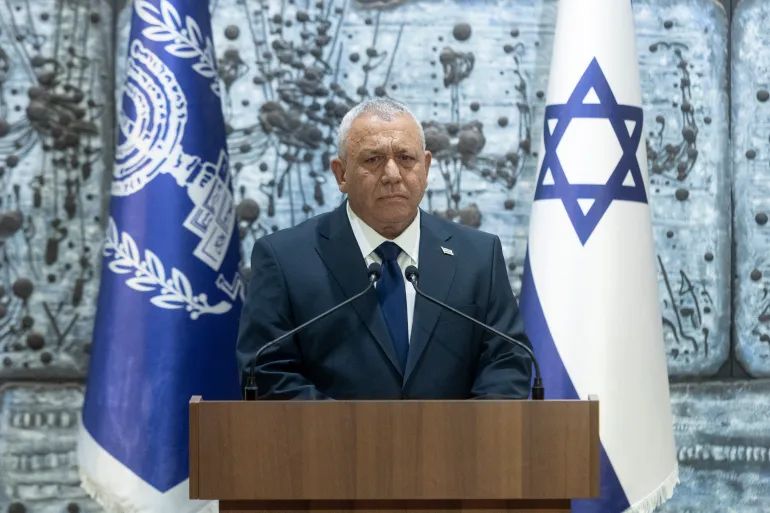
The agreement is significant because Lieberman has been outspoken in his opposition to forming a government dependent on Arab parties. His decision to enter an alliance with Eisenkot introduces a new dimension to the opposition’s efforts to build a political alternative to Netanyahu.
Lieberman previously served as foreign minister under Netanyahu but has since become a strong critic of the prime minister. He has also opposed the idea of a unity government involving Netanyahu, placing him among politicians seeking a different political direction for Israel.
Yashar secured 21 seats in the October election, while Lieberman’s Our Home party won seven. Their combined 28 seats could provide an important foundation for Eisenkot’s coalition negotiations, although the alliance remains far from securing the numbers required to govern.
The agreement also raises expectations that other opposition parties could consider joining Eisenkot’s efforts as negotiations continue over the composition and direction of a potential government.
Israel government formation faces parliamentary hurdles
Netanyahu’s bloc falls short of majority
The October 27 election failed to produce a clear parliamentary majority, leaving Israel’s political parties scrambling to negotiate alliances and determine who will lead the next government.
Netanyahu’s right-wing Likud alliance, which includes far-right and ultra-Orthodox parties, secured 53 seats in the 120-member Knesset. Although the bloc performed better than some election expectations, it failed to reach the 61 seats needed to command a majority.
Eisenkot’s centre-right Yashar party and its potential coalition partners currently hold 48 seats, leaving them equally short of the required parliamentary threshold.
However, parties representing Israel’s Arab minority collectively hold 19 seats and are aligned with Eisenkot in their opposition to Netanyahu. Their parliamentary strength could become decisive if the opposition leader seeks to assemble a coalition capable of taking power.
The numbers underscore the complicated nature of Israel government formation, as political leaders must negotiate beyond their existing alliances to secure sufficient support in parliament.
Arab parties could become decisive
The Arab parties’ 19 seats offer Eisenkot a potential route towards a parliamentary majority, but securing their support could create complications within his emerging alliance.
Lieberman has been vocal about his opposition to forming a government with Arab parties, meaning Eisenkot would have to navigate competing positions among potential coalition partners.
The challenge is not simply assembling enough parliamentary seats but ensuring that the parties involved can agree on the political conditions, priorities and arrangements necessary to sustain a government.
A coalition involving Arab parties could strengthen Eisenkot’s numbers, but it could also test the unity of the alliance he is attempting to build with Lieberman and other opposition figures.
Eisenkot’s mandate expires in December
President Isaac Herzog tasked Eisenkot with forming a government after Netanyahu lost his parliamentary majority following the election.
Eisenkot has until December 6 to complete the process under his 28-day mandate, although he could request an additional 14 days to continue negotiations.
If Eisenkot fails to form a government, Netanyahu could receive another opportunity to assemble a parliamentary majority. If neither politician succeeds, Israel could face another election next year.
The deadline places considerable pressure on Eisenkot to make progress with potential coalition partners while balancing the political disagreements that have complicated negotiations.
His agreement with Lieberman may provide a stronger negotiating position, but the remaining time could prove insufficient if discussions with other parties fail to produce a workable arrangement.
Unity government talks add another complication
Negotiations are also continuing between Eisenkot, some of his change-bloc partners and Likud over the possibility of forming a unity government.
The discussions have introduced another layer of uncertainty into the opposition’s efforts, particularly among parties that want Netanyahu removed from power and are unwilling to participate in an arrangement that could keep him in government.
The Democrats party, which won eight parliamentary seats, has suspended talks with Eisenkot following his discussions with Netanyahu’s Likud over a possible unity government.
Democrats leader Yair Golan said he preferred a government without Netanyahu but with Arab parties, underscoring the divisions within Eisenkot’s potential partners over the best route to political change.
The disagreements could complicate the opposition’s strategy, as some parties may prefer a coalition built around cooperation with Arab political groups, while others could reject such an arrangement.
Lieberman alliance could reshape opposition negotiations
Lieberman’s agreement with Eisenkot represents a significant development in the negotiations, particularly given his opposition to Netanyahu and his reluctance to cooperate with Arab parties.
The alliance could strengthen Eisenkot’s ability to attract additional partners, but it also leaves important questions about the composition of a future coalition unanswered.
Read also: Jensen Huang reinstatement sparks US lawmakers’ national security concerns
With Netanyahu’s bloc holding 53 seats and Eisenkot’s potential partners commanding 48, neither side currently has the parliamentary numbers required to govern independently.
The coming weeks will therefore be crucial as political leaders attempt to bridge their differences, negotiate coalition agreements and determine whether Israel can avoid another election.
Eisenkot’s first coalition pact provides a foothold in the race to form the next government, but the difficult negotiations ahead mean the outcome remains uncertain.
About The Author