South Korea shelter alert was issued on Tuesday morning after Russian military aircraft approached Ulleungdo, prompting authorities to warn residents to take cover amid fears of a possible airspace violation.
The emergency warning was triggered after several Russian aircraft entered South Korea’s air defence identification zone over the East Sea, also known internationally as the Sea of Japan, and approached the remote island.
South Korea’s military scrambled fighter jets as the Russian aircraft moved close to Ulleungdo, anticipating a possible violation of the island’s airspace before the planes eventually departed.
The incident prompted Seoul to announce plans to summon Russia’s defence attaché to lodge a strong protest over the military aircraft’s approach.
Russian aircraft approach triggers emergency alert
South Korea’s Joint Chiefs of Staff said the Russian military aircraft entered its air defence identification zone and approached Ulleungdo, a volcanic island located approximately 120km off the country’s eastern coast.
Military spokesperson Jang Do-young said the aircraft came dangerously close to the point of violating the island’s airspace, prompting authorities to issue a pre-emptive warning.
He explained that military aircraft travel at high speeds, making it necessary for the military to anticipate a potential airspace violation before it actually occurred.
The military therefore activated precautionary measures, including scrambling South Korean fighter jets to monitor the approaching aircraft and respond if necessary.
Although the Russian aircraft eventually left the area without a reported airspace violation, their approach was considered sufficiently serious to trigger an emergency alert for residents.
Residents ordered to seek shelter
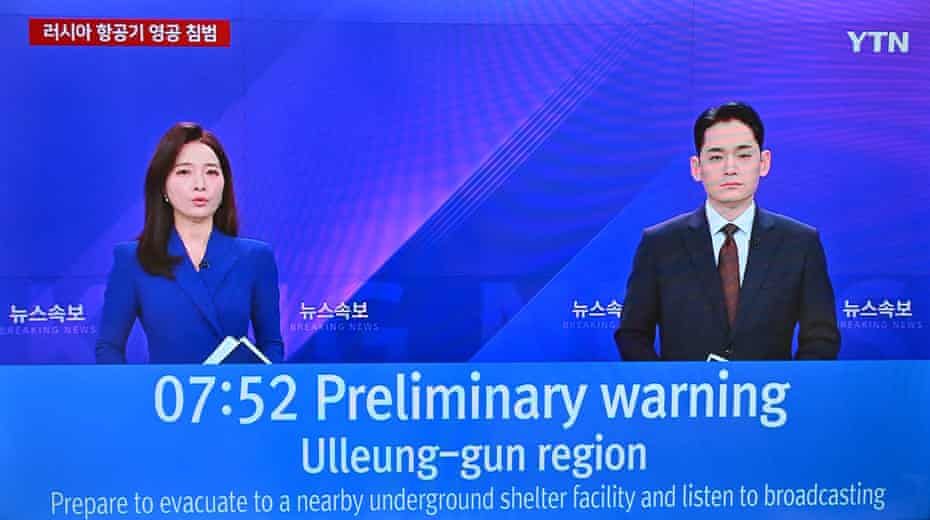
The interior ministry issued an emergency notification at 7.52am on Tuesday, instructing residents of Ulleungdo to take shelter.
The English portion of the message read: “EVACUATION, AIR RAID.”
Television broadcasts were interrupted by warnings advising residents to prepare to evacuate to nearby underground shelter facilities and listen carefully to official announcements.
Sirens sounded across parts of the island, while residents reportedly heard fighter jets operating overhead. The alert was lifted at 7.55am, approximately three minutes after it was issued.
Ulleungdo has a population of about 8,700 people, making the sudden warning particularly alarming for residents unfamiliar with such emergency situations.
Residents describe confusion and fear
The emergency notification caught residents off guard, with some immediately leaving their workplaces and others struggling to understand what was happening.
Jeong Hae-seung, a 41-year-old construction worker, told the Hankyoreh newspaper that he ran outside after receiving the emergency message.
He said he initially struggled to understand the situation because the civil defence broadcast was playing, but he could not clearly make out its instructions.
Another resident, Baek Un-bae, told broadcaster YTN that an elderly islander had called him in fear, asking whether a war had broken out.
Baek said older residents who had limited access to news could become particularly frightened when they heard emergency sirens and shelter instructions without understanding the circumstances.
Some residents also reportedly failed to hear the sirens because their windows were closed against the cold weather and strong winds.
Confusion over a separate provincial warning
North Gyeongsang province, which administers Ulleungdo, also issued a message warning residents about a flying object presumed to be a North Korean aircraft.
However, provincial authorities later explained that the wording had been mistakenly taken from routine military drill messages, with only the time changed before it was sent.
The clarification added to the confusion surrounding the emergency response, although the initial shelter alert had been triggered by the approach of Russian military aircraft.
The incident exposed the challenges of communicating emergency information quickly and accurately to residents during a potential military threat.
Russia’s military aircraft have repeatedly entered the zone
Tuesday’s incident marked the fourth known entry by Russian military aircraft into South Korea’s air defence identification zone this year and the second occurrence within a week.
An air defence identification zone is not the same as sovereign airspace. Countries establish such zones beyond their territorial skies to identify and monitor approaching aircraft before they reach national airspace.
Although submitting flight plans before entering such zones is standard international practice, entering an identification zone without prior notification does not automatically constitute a violation of international law.
Russia does not recognise South Korea’s authority over the air defence identification zone and argues that the zone has no legal basis under international law.
Consequently, Russian military aircraft have repeatedly entered the area without notifying South Korean authorities, contributing to tensions between the two countries.
Read also: Kremlin response: Russia threatens Ukraine with painful consequences over Libya strikes
Seoul prepares diplomatic protest
South Korea’s Defence Ministry said it would summon the Russian defence attaché on Tuesday afternoon to formally protest the aircraft’s approach.
The planned diplomatic action followed concerns that the Russian aircraft had moved dangerously close to Ulleungdo, creating the possibility of an airspace violation.
South Korea has previously protested similar Russian military activities. In March 2025, Seoul summoned Russia’s defence attaché after eight aircraft entries into its identification zone within 10 days.
That episode marked the first such summons since a Russian military aircraft violated South Korean airspace in July 2019, prompting South Korean fighter jets to fire warning shots.
Russian and Chinese aircraft activity in South Korea’s air defence zone
Data submitted to South Korea’s parliament showed that approximately 60 Russian military aircraft entries without prior notification were recorded over five years through 2024.
Chinese aircraft, meanwhile, accounted for approximately 430 similar entries during the same period, highlighting the frequency of military aviation activity around South Korea.
The latest Russian approach to Ulleungdo has renewed concerns over regional security and the possibility that unannounced military flights could trigger dangerous encounters.
While Tuesday’s incident ended without a reported violation of South Korean airspace, the emergency alert, fighter jet deployment and planned diplomatic protest underscored Seoul’s concerns about Russian military activity near its territory.
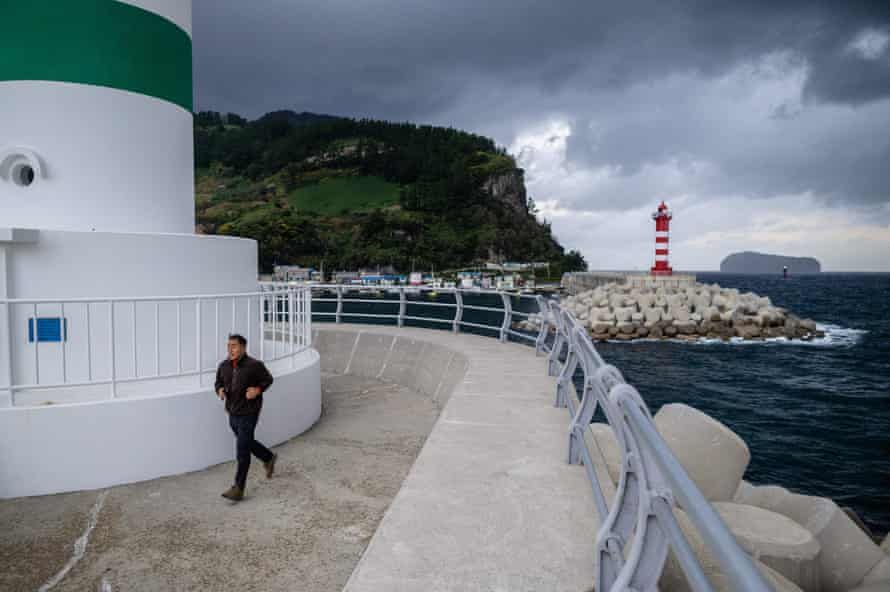
The Guardian reported that the Russian aircraft left the area after approaching Ulleungdo, while South Korea’s military maintained precautionary measures against a possible airspace violation.
About The Author