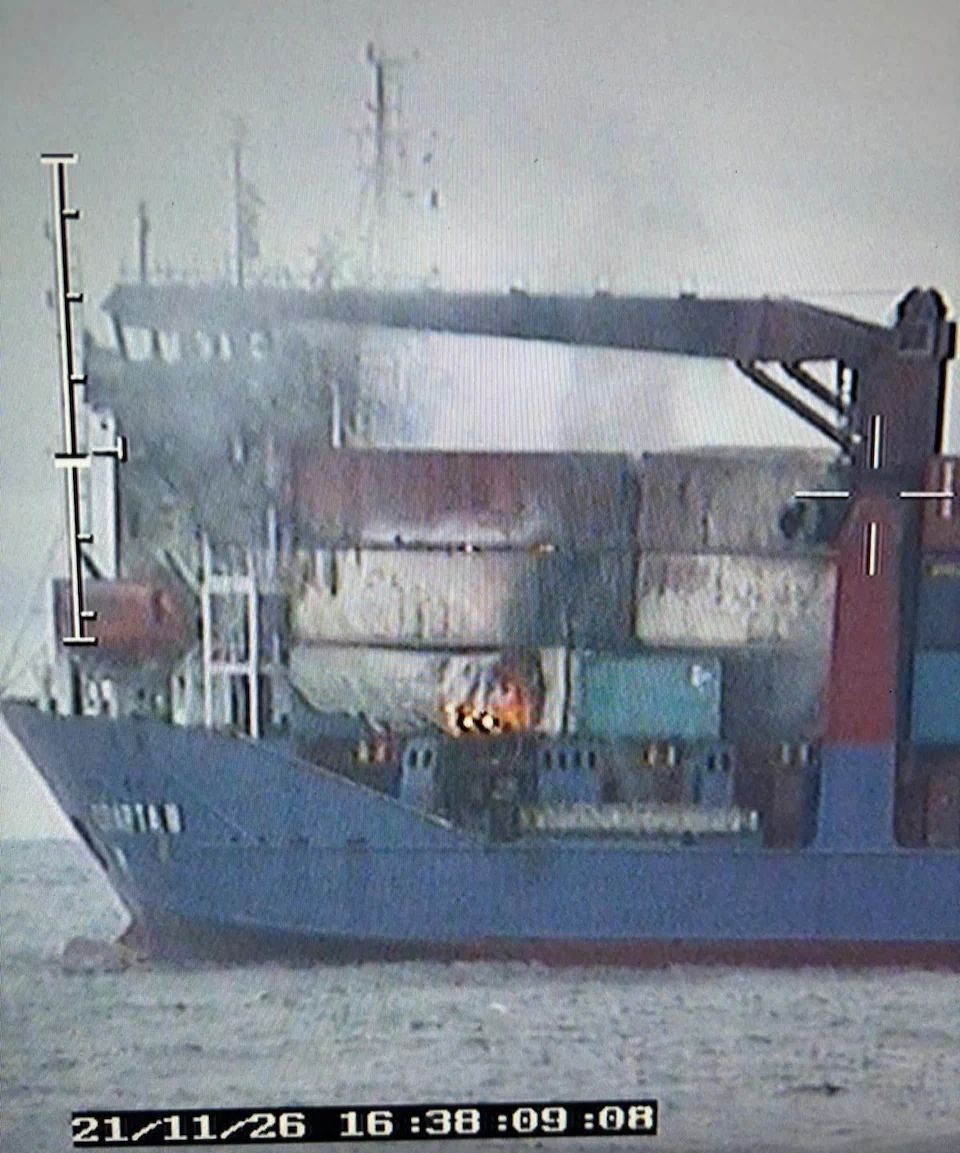

A Russian cargo ship drone attack in the Baltic Sea has triggered a rescue operation after the vessel caught fire following a suspected Ukrainian drone strike, forcing its 16-member crew to evacuate as the damaged ship drifted into Finnish waters.
The Sparta II, a Russian-flagged cargo vessel with links to military logistics, was struck by drones on Saturday, November 21, 2026, while sailing through international waters in the Gulf of Finland. The ship was heading towards Russia’s Kaliningrad exclave when the incident occurred.
Finnish authorities said the vessel was damaged west of Russia’s Gogland island before drifting into Finnish waters, where it remained on fire as rescue and emergency operations continued.
The crew abandoned the burning vessel in lifeboats and subsequently transferred to another Russian ship. Finnish Border Guard Commander Ilja Iljin told public broadcaster Yle that the crew was returning to Russia.
Finland suspects Ukraine behind Russian cargo ship attack
Finnish authorities believe Ukraine may have been responsible for the drone attack, although Kyiv had not officially commented on the incident at the time of reporting.
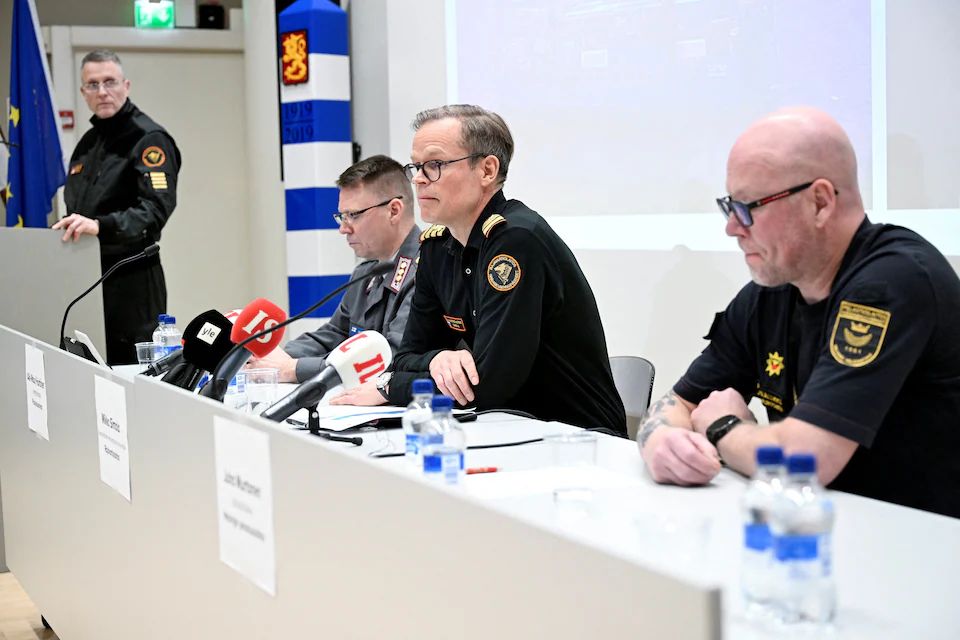
Finnish armed forces spokesperson Aki-Mauri Huhtinen said the attack was likely carried out by Ukraine but acknowledged that authorities had not established why the Russian vessel was targeted.
The incident has raised fresh concerns about the expanding geographical consequences of the Russia-Ukraine war, particularly around the Baltic Sea, where drone operations have increasingly heightened security concerns among neighbouring countries.
Ukraine has repeatedly launched drone attacks against Russia’s northwestern Leningrad region this year, with some drones reportedly straying into Baltic airspace and raising concerns about potential violations of NATO territory.
The damaged Sparta II was reportedly struck while operating in international waters, according to Finnish and Russian accounts of the incident.
Finland leads rescue operation as vessel burns
Finland took the lead in coordinating the rescue operation after the damaged ship drifted into its waters, with authorities attempting to manage the fire and prevent further danger.
The vessel remained ablaze late on Saturday and was anchored in Finnish waters. Authorities said Russian vessels could eventually tow the damaged ship back to Russia if conditions permitted.
Finnish officials also introduced temporary maritime and aviation restrictions in the eastern Gulf of Finland to protect civilians and provide operational space for authorities in case drones needed to be intercepted.
The restrictions were intended to ensure that emergency responders could operate safely while reducing the possibility of further incidents in an area increasingly affected by military activities connected to the war.
A Russian helicopter was also suspected of briefly violating Finnish airspace during the rescue operation, according to Gulf of Finland Coast Guard Commander Mikko Simola.
Finland warns war is spilling into neighbouring areas
Finnish Prime Minister Petteri Orpo warned that the conflict was increasingly affecting areas surrounding Russia and creating security challenges for countries that were not directly involved in the fighting.
“The war is spilling over into our neighbouring areas,” Orpo wrote on X, referring to the drone strike on the Russian merchant vessel and the ongoing response in the Gulf of Finland.
He also said Ukraine had the right to defend itself against Russia, which launched its full-scale invasion in February 2022.
The incident has highlighted the delicate security situation facing Finland, which shares a lengthy border with Russia and joined NATO in 2023 following Moscow’s invasion of Ukraine.
Read also: South Korea AI cheating scandal forces education minister to resign after university entrance exams
Sweden also participated in the security response, with combat aircraft operating under Finnish command to help safeguard Finland’s and NATO’s territorial integrity, Swedish Defence Minister Pal Jonson said.
Estonia deployed a naval vessel to assist with the rescue operation, including firefighting and pollution response, according to its government.
Estonian Prime Minister Kristen Michal described the incident as another indication of the consequences of Russia’s aggression against Ukraine, insisting that support for Kyiv would continue.
The involvement of Finland, Sweden and Estonia underscored the regional significance of the incident and the growing coordination among NATO countries bordering the Baltic Sea.
Sparta II linked to Russian military logistics company
The Sparta II is a 121-metre Russian-flagged cargo vessel owned by Oboronlogistika, a shipping company linked to Russia’s military supply operations.
The company provides logistics services to the Russian Defence Ministry, according to information published on its website, making the vessel’s ownership and operational connections a significant factor in the investigation.
The ship is also subject to United States sanctions, according to the US Treasury Department.
Finnish authorities said they had not confirmed the cargo aboard the damaged vessel, although they did not rule out the possibility that military equipment could have been on board.
Ilja Iljin said investigators were still working to establish the nature of the cargo, adding that there was no confirmed information about what the ship was transporting.
The uncertainty has heightened attention surrounding the incident, particularly given the vessel’s military-linked ownership and its route towards Kaliningrad, a strategically important Russian territory located between Poland and Lithuania.
Russia reports drone attacks across Leningrad region
Russian authorities also reported a wave of drone attacks targeting the Leningrad region on the same night as the cargo ship incident.
Governor Aleksandr Drozdenko said two drones attacked the vessel in international waters approximately three nautical miles from Russia’s border.
He also claimed that Russian air defence systems had shot down 80 drones over the Leningrad region overnight, although the reported figures could not be independently verified.
Finland’s military had reported detecting a strike on a Russian warship in the same general area the previous week, during another wave of Ukrainian drone attacks targeting the region.
The repeated incidents have increased concerns about the security of shipping routes and military installations around the Gulf of Finland, a narrow extension of the Baltic Sea connecting Finland and Estonia to St Petersburg.
Kaliningrad Governor Alexei Besprozvannykh said the latest incident would not threaten supplies to the Russian exclave.
However, Russia has previously described attacks on commercial vessels outside its territorial waters as acts of terrorism and maritime piracy, raising the possibility of further diplomatic tensions over the latest incident.
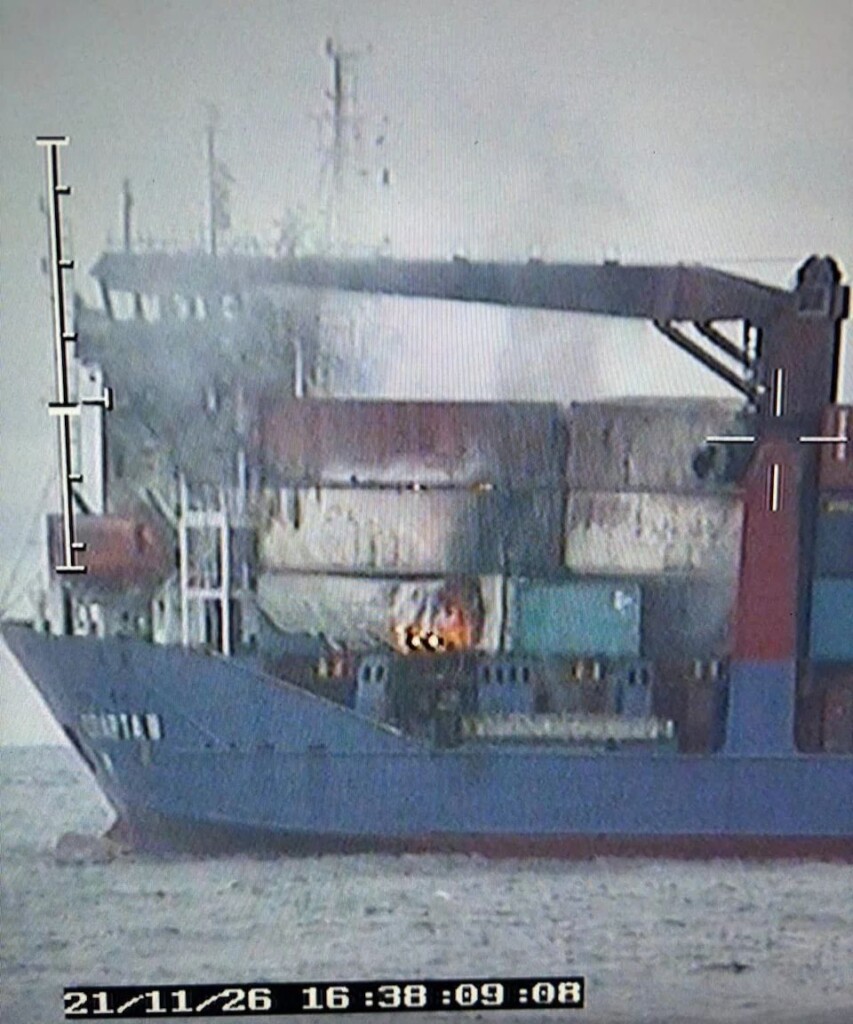
The fire aboard the Sparta II, the suspected drone strike and the involvement of neighbouring NATO countries have added another dimension to the Russia-Ukraine conflict, with the Baltic region increasingly exposed to the consequences of military operations.
About The Author