Trump-class battleships cost increases are threatening to significantly inflate the US Navy’s long-term shipbuilding budget, with a congressional report warning that the proposed fleet could cost billions of dollars more than earlier estimates as the Iran war continues to stretch American naval capacity.
The Congressional Budget Office (CBO) has found that the US Navy’s 2027 shipbuilding plan underestimates the cost of expanding the fleet, partly because of increasingly complicated ship designs and unrealistic earlier projections.
The report comes amid growing pressure on the US Navy, whose ships have been subjected to prolonged deployments, delayed maintenance and mounting operational demands across the Middle East, Europe and the Indo-Pacific.
According to The Guardian, the navy is seeking to expand its fleet from 286 battle-force ships to 381 over the next three decades, as Washington attempts to counter China’s rapidly growing naval capabilities.
However, the proposed expansion could cost substantially more than anticipated, raising questions about whether the United States can sustain its ambitions while simultaneously managing an ongoing war and commitments to international allies.
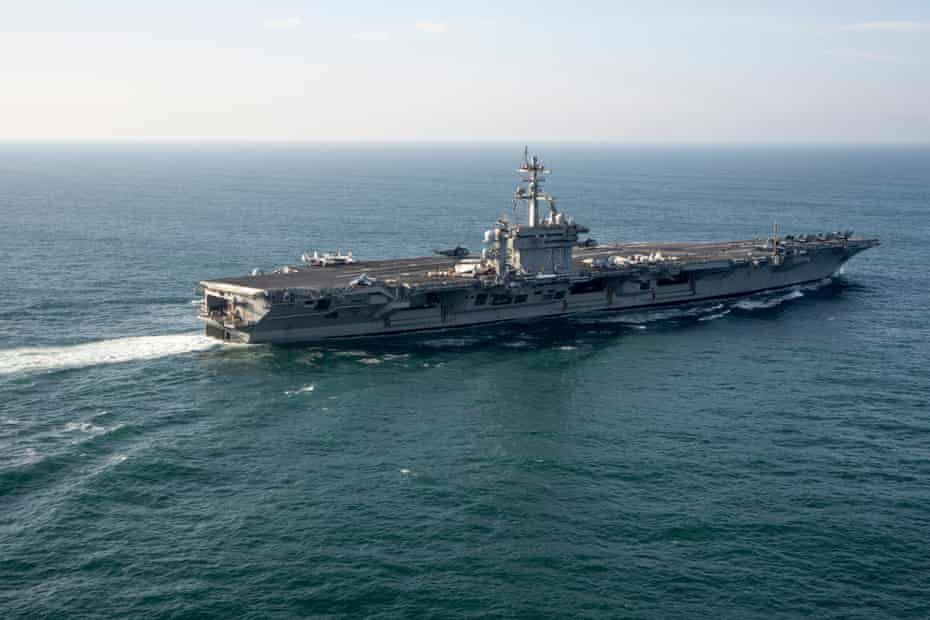
Trump-class battleships cost projections exceed Navy estimates
The Congressional Budget Office’s analysis of the Navy’s 2027 shipbuilding plan estimates that building the proposed fleet would require an average of $54bn annually over the next 30 years, measured in 2026 dollars.
That figure represents approximately 18 per cent more than the Navy’s own projections, reflecting concerns that the costs of constructing several vessels have been underestimated.
The CBO attributed much of the additional spending to increasingly complicated ship designs and previous estimates that failed to accurately account for the expenses involved in developing and building the vessels.
A major contributor to the projected increase is the Navy’s decision to purchase 15 large, heavily armed battleships under the proposed Trump-class programme.
The vessels are expected to concentrate substantial firepower into fewer, larger ships, an approach that the budget office says conflicts with the Navy’s broader stated objective of distributing combat capabilities across a larger number of platforms.
The proposed battleships have become a major component of President Donald Trump’s naval expansion ambitions.
Trump has previously described the new vessels as being 100 times more powerful than any warship previously operated by the US fleet, arguing that they would inspire fear among America’s enemies around the world.
However, the programme is facing financial and political scrutiny, with Senate appropriators proposing to eliminate the $1bn the Navy requested for advanced procurement of Trump-class battleships during the current fiscal year.
The proposal signals growing concerns among lawmakers over the financial implications of committing substantial resources to a new class of warships while existing vessels are already struggling to meet operational requirements.
Iran war stretches US naval capacity beyond sustainable limits
The financial concerns surrounding the shipbuilding programme coincide with mounting pressure on the US Navy as the Iran war continues to demand extensive deployments and operational resources.
Acting Secretary of the Navy Hung Cao acknowledged during a Senate confirmation hearing on Wednesday that the conflict was stretching the Navy’s capacity.
Cao’s remarks highlighted the growing strain on America’s naval forces, which have been required to maintain an extensive presence in the Middle East while continuing to fulfil commitments in other strategic regions.
His acting appointment has also attracted criticism from Democratic senators because he requires a special waiver to be permanently appointed, owing to his recent active military service.
Senator Richard Blumenthal criticised the administration’s handling of the conflict, arguing that the war had made the world less safe and weakened America’s international relationships.
Blumenthal also accused the Navy of deteriorating under the current administration, arguing that its operational demands had pushed the fleet beyond sustainable limits.
Michigan Senator Elissa Slotkin estimated that the Iran war had cost the United States approximately $260bn, raising concerns about the financial burden of the conflict and its implications for America’s military readiness.
She also questioned whether the United States had achieved the freedom of navigation it previously enjoyed despite the enormous military resources committed to securing maritime routes.
Strait of Hormuz shipping remains severely disrupted
The Strait of Hormuz remains a major concern for international shipping, with commercial traffic still significantly below pre-war levels despite the extensive naval presence deployed to the region.
According to the latest weekly report from the United Kingdom Maritime Trade Operations, shipping traffic through the contested waters remains approximately 65 per cent below the levels recorded before the United States and Israel launched strikes against Iran on February 28.
The disruption has affected international trade and contributed to increased costs for vessels attempting to navigate the strategically important waterway.
Cao told senators that the cost of insuring a commercial ship for a single passage through the Strait of Hormuz had increased dramatically.
He said insurance that cost approximately $54,000 a year earlier had risen to $64m for a single crossing under the prevailing security conditions.
The increased costs are ultimately passed on to consumers through higher prices for fuel, fertiliser and food, further extending the economic consequences of the conflict beyond the Middle East.
The situation has also raised questions about the effectiveness of the naval resources deployed to protect shipping and maintain access to one of the world’s most important maritime routes.
US warships face extended deployments and maintenance delays
The Iran war has forced American naval vessels to remain at sea for significantly longer periods than the Navy’s traditional deployment schedule.
Ships that would ordinarily spend approximately seven months deployed are now reportedly spending between 10 and 11 months away from their home ports.
Several vessels have exceeded 300 days at sea, raising concerns about the physical and psychological wellbeing of sailors and the long-term condition of the ships.
The USS Abraham Lincoln reportedly spent 265 consecutive days at sea, marking the longest period a Navy ship had gone without visiting a port during the current conflict.
The extended deployments have also resulted in maintenance and repair work being postponed, as vessels are kept operational to meet military requirements.
During the Senate hearing, Cao rejected reports suggesting sailors aboard American ships were experiencing food shortages.
Responding to testimony that a sailor had lost 45 pounds, equivalent to approximately 20.4 kilograms, over six months because of insufficient food, Cao dismissed the complaint as an issue of personal preference.
He compared the situation to children opening a refrigerator and claiming there was nothing to eat despite the presence of food.
Cao also disputed reports of a mental health crisis aboard the USS Abraham Lincoln, describing eight reported suicide attempts as suicide mitigations.
His comments have drawn attention to the welfare of sailors operating under increasingly demanding conditions and the challenges of maintaining morale during prolonged deployments.
US carrier absence exposes pressure on Pacific operations
The pressure on the US Navy has also affected its ability to maintain a continuous aircraft carrier presence in the Pacific.
For only the second time in two decades, the United States had no aircraft carrier operating in the Pacific between August and November, highlighting the difficulty of balancing deployments across multiple theatres.
The USS George Washington returned from the Middle East on Wednesday, ending the unusual period during which the US had no aircraft carrier across the entire Pacific region.
The vessel has since returned to the control of the US Pacific Fleet and is conducting routine operations in the Asia-Pacific region.
The absence of an American aircraft carrier in the Pacific has raised concerns among allies, particularly countries located along the first island chain off mainland China and regional partners such as Australia.
These countries rely heavily on the presence of American naval forces as part of their security arrangements and deterrence strategies.
Professor Kevin Rowlands, editor of the journal at the Royal United Services Institute, described the Navy’s overstretch as critical but manageable for now.
However, he warned that the longer the war continued, the greater the consequences would become for maintenance schedules, personnel and future operational readiness.
China’s shipbuilding advantage raises strategic concerns
The US Navy’s expansion plans are also driven by China’s rapidly growing shipbuilding capabilities and its increasing influence across the Indo-Pacific.
American naval intelligence estimates suggest China’s overall shipbuilding capacity is approximately 232 times greater than that of the United States.
According to the World Defense Shipbuilding report, Chinese shipyards delivered more than twice the naval tonnage produced by American shipyards during 2024 and 2025.
The disparity has intensified pressure on Washington to accelerate its naval expansion programme and improve its ability to construct ships at a competitive pace.
However, the growing cost of the Trump-class battleships and the strain caused by the Iran war have complicated those ambitions.
Rowlands warned that the United States was approaching a situation in which it could barely manage its existing international commitments, leaving little spare capacity to respond to additional crises.
Read also: Israel opposition bloc unity faces test as Netanyahu seeks to exploit divisions
He explained that naval planners generally operate according to a rule of threes, meaning that three ships are required to keep one platform permanently available for deployment.
One vessel is deployed, another prepares and trains for replacement, while a third undergoes maintenance and recovers from its previous mission.
Consequently, an unexpected conflict can disrupt the entire system, affecting deployments, maintenance and personnel across multiple regions.
With commitments under AUKUS, NATO, Indo-Pacific security arrangements and the ongoing Middle East conflict, the United States is facing growing pressure to share more of its military responsibilities with allies.
The combination of rising shipbuilding costs, prolonged deployments, China’s naval expansion and the Iran war could make America’s maritime dominance increasingly expensive to maintain.
About The Author