South Korea AI cheating scandal has triggered the resignation of Education Minister Choi Kyo-jin following growing public anger over preparations for the country’s highly competitive university entrance examinations, which were overshadowed by fears of artificial intelligence-assisted cheating.
Choi resigned on Sunday, November 22, accepting responsibility for what he described as inadequate preparations to protect the integrity of the examinations. President Lee Jae Myung accepted his resignation, according to the presidential office.
The controversy erupted after revelations that a top scorer in a national tax accountant examination had used a miniature camera and smartphone to cheat, raising concerns that similar technology could undermine the credibility of South Korea’s university entrance examinations.
The scandal prompted authorities to introduce emergency security measures ahead of the annual examination, including restrictions on electronic devices, inspections for concealed cameras and the blocking of public Wi-Fi networks in examination centres.
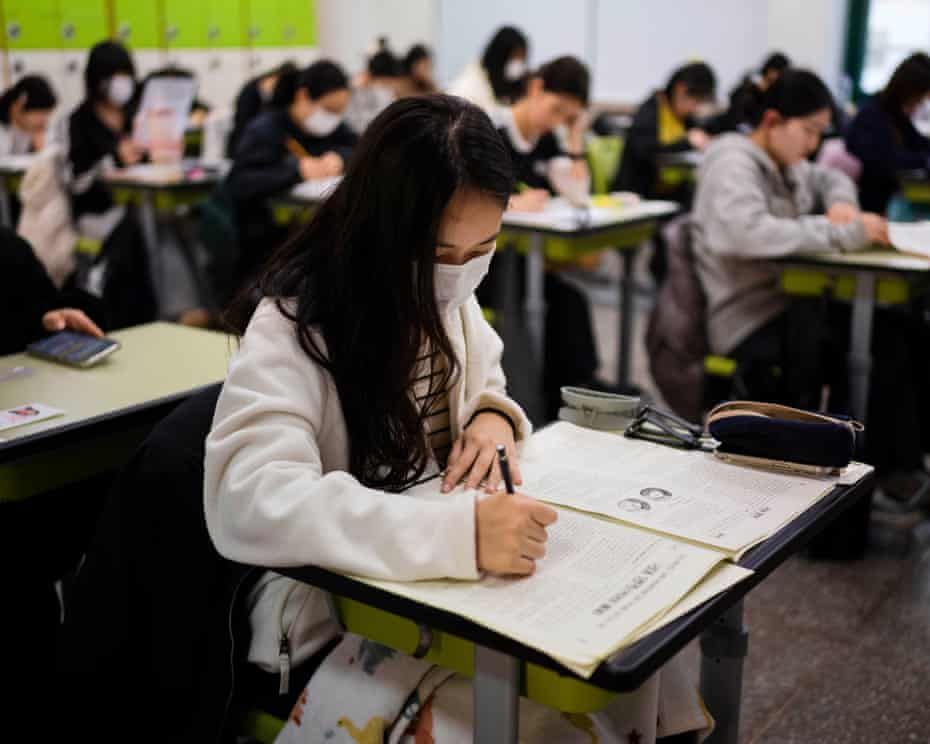
South Korea AI cheating scandal puts education authorities under pressure
The South Korea AI cheating scandal intensified after a candidate who achieved an almost perfect score in a national tax accountant examination confessed to using a miniature camera and smartphone to facilitate cheating.
The confession reportedly came just four days before the country’s major university entrance examination, known as the Suneung, creating widespread anxiety among students, parents, teachers and education officials.
The revelations raised questions about how candidates could exploit modern technology, particularly artificial intelligence, connected devices and discreet recording equipment, to obtain unfair advantages in examinations.
Authorities were subsequently forced to introduce additional safeguards, with critics questioning why stronger protections against technology-assisted cheating were not established before the scandal emerged.
Teachers’ unions also criticised the government’s response, describing the preventive measures as late and questioning whether the authorities had adequately anticipated the growing threat posed by sophisticated electronic devices.
Minister accepts responsibility for inadequate preparations
Choi Kyo-jin, who served as South Korea’s education minister, acknowledged that the government had faced criticism over its preparedness for the examination security challenges.
In a statement published on X, he said the examination had concluded without major incidents but admitted that he could not escape criticism over the government’s failure to prepare adequately beforehand.
“As the minister in charge, I do not believe I am immune from public criticism that we failed to prepare adequately in advance,” Choi wrote.
He subsequently announced his decision to resign, explaining that he was taking responsibility for the situation after the examinations had concluded.
“Now that the exam is over, I take full responsibility and hereby offer my resignation,” he added.
President Lee Jae Myung accepted the resignation, marking a significant political consequence of the controversy that placed the education ministry under intense public scrutiny.
South Korea introduces unprecedented examination security measures
The government responded to the controversy by introducing several security measures designed to prevent candidates from using electronic devices or concealed technology to cheat during the Suneung.
Students were required to switch off their smartphones, tablets and other smart devices before handing them over to examination officials. Authorities also directed officials to inspect bags left in corridors for electronic equipment that might remain switched on.
Examination officials were instructed to carefully examine candidates’ glasses, watches, collars, sleeves and buttons for concealed cameras or other devices capable of recording examination materials.
The measures were intended to prevent candidates from secretly capturing questions and transmitting them to external contacts or artificial intelligence systems capable of supplying answers.
Public Wi-Fi networks were also blocked in examination areas, limiting opportunities for candidates to connect devices to the internet and communicate with individuals outside examination centres.
Emergency phone alerts expose hidden devices
One of the most unusual measures introduced by authorities involved emergency alerts sent to mobile phones throughout the country.
The alerts were designed to sound at full volume and could not be silenced, allowing officials to identify candidates who had failed to surrender their electronic devices before entering examination halls.
According to officials, the emergency alerts proved particularly useful in detecting concealed phones that candidates might have attempted to keep despite the restrictions.
Authorities identified 111 cases of misconduct involving electronic devices during Thursday’s examination, with nearly half of the cases reportedly detected through the emergency alert system.
The discovery demonstrated how electronic devices could still pose a challenge to examination integrity despite extensive security arrangements and restrictions introduced before candidates entered examination centres.
Suneung remains one of South Korea’s most important examinations
South Korea’s university entrance examination, known as the Suneung, is regarded as one of the most consequential academic assessments in the country.
The annual examination lasts approximately eight hours and plays a decisive role in determining the universities candidates can attend, influencing their future career opportunities, social prospects and professional advancement.
Because of the importance attached to the examination, the country traditionally implements extraordinary arrangements to ensure students can complete their papers without disruptions.
The government routinely coordinates transportation, aviation, financial markets and public activities around the examination timetable, reflecting the enormous pressure placed on candidates and their families.
Aircraft take-offs and landings are rescheduled during the English listening examination, which lasts approximately 25 minutes, to reduce noise and prevent distractions.
Artillery firing exercises and tank movements are also suspended, while the stock market opens an hour later than usual on examination day.
Vehicles are restricted from approaching within approximately 200 metres of examination centres, helping to reduce traffic noise and ensuring candidates can arrive without unnecessary disturbances.
Students face intense competition for university admission
The Suneung is deeply embedded in South Korea’s education system, where admission into prestigious universities is often regarded as a major determinant of future opportunities.
Read also: Trump-class battleships push raises US Navy fleet costs by billions as Iran war stretches capacity
Students frequently spend years preparing for the examination, attending additional lessons and undertaking intensive study programmes designed to improve their performance.
The pressure surrounding the examination has also contributed to widespread concerns about fairness, academic integrity and the lengths some candidates might go to secure competitive advantages.
The emergence of AI-assisted cheating has further complicated the situation, forcing authorities to reconsider whether traditional examination security arrangements remain adequate in an era of increasingly sophisticated technology.
The South Korea AI cheating scandal has therefore raised questions extending beyond the immediate incident, particularly about how examination systems should adapt to technological developments without undermining students’ access to legitimate learning tools.
Education authorities face growing scrutiny over AI and examination integrity
The resignation of Choi Kyo-jin is likely to intensify discussions about the government’s responsibility for safeguarding examinations against increasingly sophisticated cheating methods.
Although Thursday’s examination reportedly concluded without major incidents, the discovery of 111 electronic-device violations has highlighted the difficulties authorities face in ensuring that every candidate complies with strict regulations.
The controversy also raises questions about whether future examinations will require more comprehensive surveillance, stronger electronic-device restrictions, improved candidate screening or changes to examination formats.
Education authorities must now balance the need to protect academic integrity with concerns about privacy, the psychological pressure on students and the practical challenges of implementing increasingly stringent security procedures.
Artificial intelligence is becoming increasingly accessible, creating new possibilities for learning while also presenting opportunities for candidates to misuse technology during assessments.
The scandal has placed South Korea’s examination system under renewed scrutiny and highlighted the growing challenge of preventing technology-assisted cheating in highly competitive academic environments.
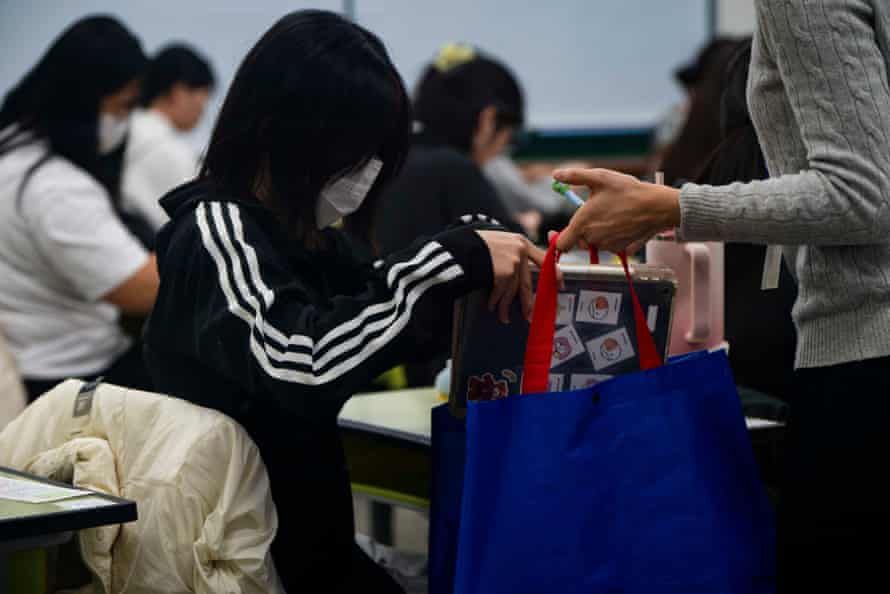
With the education minister stepping down and public confidence shaken, authorities will face increasing pressure to ensure that future university entrance examinations remain fair, secure and credible.
About The Author