

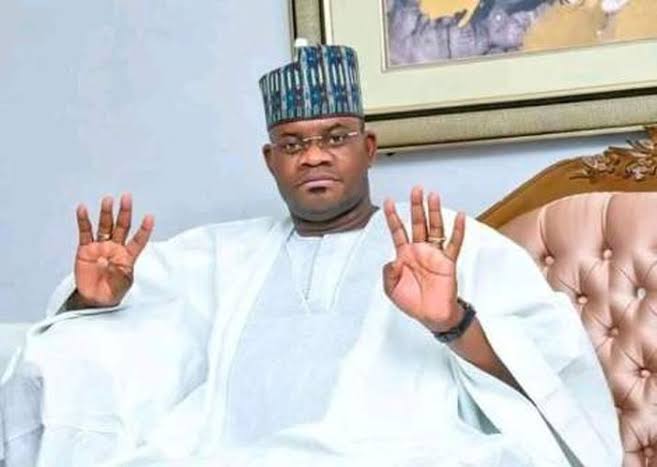
Former Kogi State Governor, Yahaya Bello, has weighed in on the political situation surrounding former Kaduna State Governor, Nasir El-Rufai, advising him to exercise greater caution in his public engagements and find more constructive ways of resolving disagreements within the political space.
Bello believes that political differences should not automatically translate into prolonged confrontations, particularly when those involved have shared interests and a history of working within the same political platform.
The former governor made his position known during an interview on a national television programme on Friday, where he discussed El-Rufai’s political disposition and how he believes the former Kaduna governor could have approached his disagreements differently.
According to Bello, his preferred approach would have been for El-Rufai to maintain a lower profile, avoid making excessive public comments about political issues and remain in the All Progressives Congress (APC), rather than allow disagreements to develop into a more difficult situation.
He argued that patience and private discussions could have offered a better opportunity to address whatever reservations El-Rufai might have had, particularly concerning the direction of political affairs under President Bola Ahmed Tinubu.
Bello suggested that the former Kaduna governor should have waited for an opportunity to engage directly with the President, allowing him to communicate his concerns and hear the President’s position before taking further steps.
He maintained that giving Tinubu sufficient room to respond could have helped prevent unnecessary tension and created an opportunity for political understanding.
Although Bello was critical of the manner in which El-Rufai had handled certain political disagreements, he did not dismiss his contributions or personal convictions.
Instead, he described him as a respected politician whose commitment to his beliefs was never in doubt.
The former Kogi governor acknowledged that El-Rufai was known for standing firmly behind his opinions and principles.
However, he stressed that political leadership also requires the ability to accommodate opposing views, recognise different interests and manage disagreements without allowing them to become damaging confrontations.
Bello’s position reflects his belief that being outspoken and maintaining strong political convictions must be balanced with diplomacy, particularly when dealing with individuals who occupy influential positions within the same political establishment.
He indicated that El-Rufai could have benefited from exercising more restraint, especially in situations where public statements might further complicate already sensitive political relationships.
For Bello, the ability to manage disagreements is an important quality in politics, where alliances, negotiations and competing interests frequently shape relationships between prominent political figures.
He also expressed concern about the possibility of El-Rufai experiencing further setbacks, making it clear that he would not want the former Kaduna governor’s present difficulties to result in the loss of his political standing or future prospects.
“I don’t want him to go down the drain,” Bello said, expressing his hope that El-Rufai would overcome the challenges currently confronting him.
His statement suggested that, despite their differences in political approach, he remained concerned about the former Kaduna governor’s situation and wished to see him emerge from his present difficulties.
Bello’s advice was particularly focused on what he believed El-Rufai could have done differently before his current legal challenges.
He maintained that remaining within the APC, limiting public confrontations and seeking an opportunity to speak with Tinubu would have been preferable.
The former Kogi governor’s comments also draw attention to the difficulties politicians face when managing disagreements within established political parties.
While differences in opinion are common, the manner in which they are communicated and addressed can influence the stability of relationships and the ability of political organisations to maintain internal cohesion.
El-Rufai, who previously served as Kaduna State governor, remains a prominent figure in Nigerian politics.
His political disagreements and current legal challenges have continued to attract attention, particularly because of his previous influence within the APC and the wider political establishment.
Bello’s intervention adds another perspective to the discussions surrounding the former Kaduna governor, with his message largely centred on patience, political accommodation and the need to avoid actions that could deepen existing divisions.
Ultimately, the former Kogi governor believes that political disagreements are better handled through dialogue and restraint than through prolonged public exchanges.
He also expressed hope that El-Rufai would successfully overcome his current difficulties and retain the opportunity to contribute to Nigeria’s political development.
About The Author
