Israel opposition bloc unity is facing a serious test as former military chief Gadi Eisenkot attempts to build a coalition capable of removing Benjamin Netanyahu from power while managing deep ideological disagreements among his allies.
With the first deadline for negotiations over Israel’s next government approaching on December 6, the opposition alliance must overcome internal tensions, secure additional parliamentary support and resist Netanyahu’s apparent efforts to weaken the coalition from within.
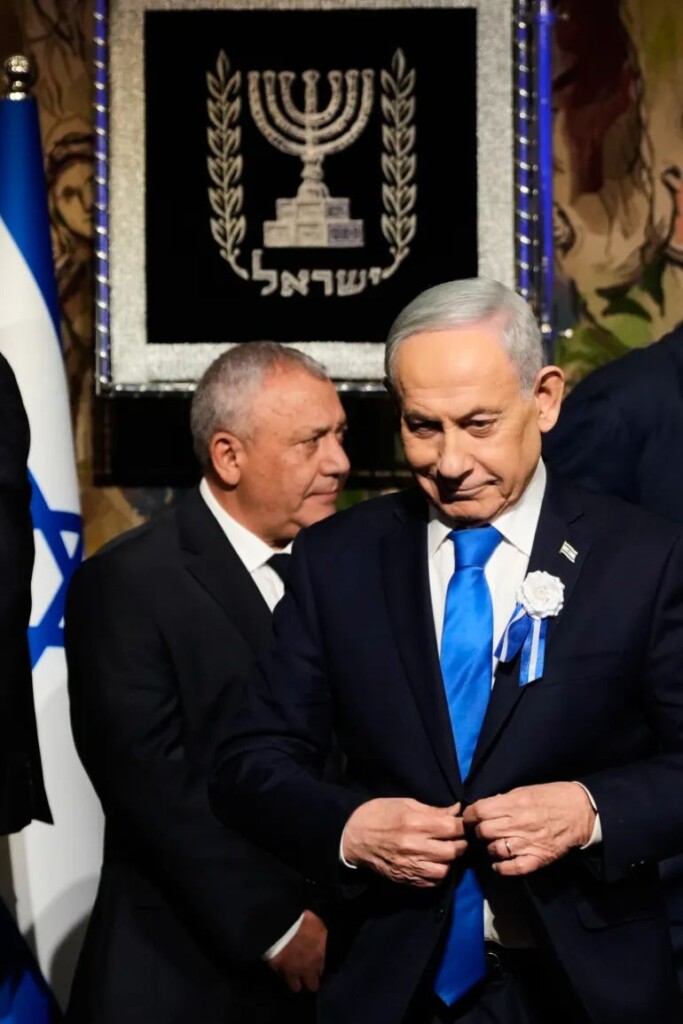
The challenge became more complicated after Netanyahu held an undeclared meeting with former Prime Minister Naftali Bennett, one of the leading figures in the opposition alliance. The meeting has raised concerns that the caretaker prime minister is attempting to create divisions among political leaders who have pledged to prevent his return to power.
According to Al Jazeera, the meeting lasted two and a half hours and was described by Netanyahu’s office as a security briefing. However, sources within the opposition alliance reportedly regarded it as a strategic disaster.
Bennett had not informed Eisenkot about the meeting beforehand, according to Israeli media outlet Ynet. During a subsequent gathering of opposition leaders, Bennett reportedly suggested exploring the possibility of forming a unity government with Netanyahu, Channel 12 reported.
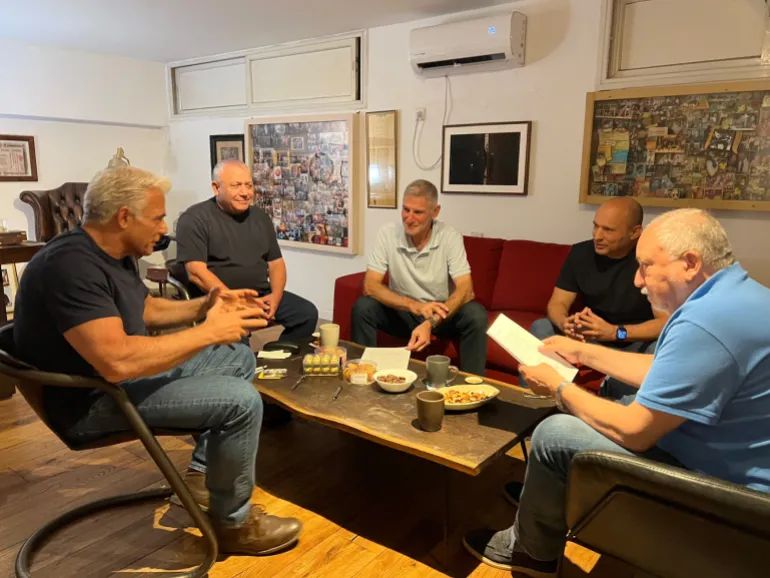
The development has placed renewed attention on Israel opposition bloc unity, particularly because several members of the alliance previously served in governments led by Netanyahu and have maintained political positions that sometimes overlap with his.
Netanyahu’s political strategy puts alliance under pressure
Netanyahu remains Israel’s longest-serving prime minister and has considerable experience navigating political disagreements among rival parties. His latest engagement with Bennett has therefore raised questions about whether he can persuade some opposition figures to abandon their commitment to keeping him out of government.
A senior figure in Eisenkot’s alliance told Ynet that Netanyahu was attempting to break up the opposition bloc through Bennett. The accusation reflects growing concern that the prime minister could exploit personal relationships and ideological differences to prevent the opposition from presenting a united front.
Bennett has a complicated political history with Netanyahu. He was once among the prime minister’s closest political allies and served in several of his governments before their relationship deteriorated.
In 2021, Bennett joined forces with centrist politician Yair Lapid to establish an alternative administration, ending Netanyahu’s 12 consecutive years in office. Bennett became prime minister for the first half of the coalition’s term, while Lapid was scheduled to take over during the second half.
Despite that political break, Bennett continues to share several policy positions with Netanyahu, making him an important figure in discussions about the opposition alliance’s future direction.
Eisenkot also has experience working with Netanyahu. Following the Hamas-led October 7, 2023 attack on Israel, he joined an emergency unity government led by the prime minister, serving as a minister without portfolio and a member of the war cabinet.
Another prominent opposition figure, Avigdor Lieberman, previously served as Netanyahu’s foreign minister and defence minister. These political histories illustrate why the alliance’s commitment to excluding Netanyahu may face pressure when negotiations become more complicated.
Can the opposition parties overcome ideological differences?
The opposition alliance brings together politicians whose domestic political positions differ considerably. Its members include figures on the right, centre and left, creating an unusual partnership built largely around their shared opposition to Netanyahu.
Eisenkot, a former chief of staff of the Israeli military, and Lapid are generally regarded as centrist politicians. Bennett occupies the right of the political spectrum, while Lieberman is also firmly right-wing but maintains a strongly secular political outlook.
Their differences are particularly visible in their approaches to religion and the role of ultra-Orthodox Jewish communities in Israeli society.
Bennett is a religious nationalist, whereas Lieberman is a staunchly secular politician with roots in Israel’s Russian-speaking community. Lieberman has repeatedly opposed the effective exemption of ultra-Orthodox Jewish men from compulsory military service.
The alliance also includes Yair Golan, leader of the Democrats, whose political positions place him further to the left than those of several other members.
Golan supports a two-state solution with the Palestinians and has openly criticised attacks by Israeli settlers against Palestinians in the occupied West Bank. He has accused the government of encouraging or tolerating such violence.
These differences make Israel opposition bloc unity difficult to sustain beyond the immediate objective of defeating Netanyahu. Even if the parties agree on the need for a change of government, they must still negotiate policies on military conscription, religion, Palestinian issues and the distribution of political power.
Al Jazeera noted that all the alliance’s members supported Israel’s war on Gaza, at least at its beginning, as well as Israeli attacks on regional countries, including Iran and Lebanon. However, their domestic political disagreements remain significant.
Eisenkot needs 13 additional seats to form a government
The opposition alliance faces a major parliamentary challenge because it does not currently have enough seats to form a government independently.
Following the October 27 elections, Eisenkot’s bloc holds 48 seats in Israel’s 120-member parliament, the Knesset. It therefore needs another 13 seats to reach the 61-seat majority required to establish a government.
That shortfall leaves the alliance dependent on political negotiations with parties outside its existing partnership. The difficulty is that potential parliamentary partners may demand concessions that could expose or deepen disagreements among the opposition leaders.
One of the most contentious questions concerns whether the alliance should seek support from parties representing Palestinian citizens of Israel.
Golan has already met political leaders from those parties and spoken positively about the possibility of forming a government with their support. However, the proposal has been rejected by other members of the opposition bloc.
The suggestion has also generated strong resistance among right-wing groups, with some protesters reportedly threatening civil war if such an arrangement becomes reality.
Lieberman has been particularly outspoken in rejecting any government that depends on the support of Palestinian political parties. His position reflects a major obstacle to Eisenkot’s efforts to assemble a parliamentary majority.
The disagreement creates a difficult choice for the opposition leadership. Rejecting potential support from Palestinian parties could make it harder to reach the required majority, while accepting their backing risks provoking resistance from right-wing partners.
Ultra-Orthodox parties create another political dilemma
The possibility of securing support from ultra-Orthodox Jewish parties presents another complicated issue for the opposition alliance.
Shas and United Torah Judaism collectively hold 13 seats, making them potentially important in negotiations over the formation of the next government.
However, their positions on military conscription have historically clashed with Lieberman’s political commitments. He has repeatedly opposed arrangements that effectively exempt ultra-Orthodox Jewish men from compulsory military service.
His apparent willingness to consider compromises on conscription has therefore attracted attention, particularly because the issue has been central to his political identity.
An agreement with the ultra-Orthodox parties could help Eisenkot close the parliamentary gap. Nevertheless, it could also require Lieberman and other opposition leaders to abandon or soften promises made to voters during the election campaign.
Such concessions could damage their credibility and trigger criticism from supporters who expect them to maintain their positions on military service.
The challenge is therefore not simply finding enough parliamentary votes. Eisenkot must ensure that any agreement reached with potential partners does not destroy the political unity that makes the opposition alliance possible.
Disagreements existed before the October election
The divisions within the alliance did not emerge after the election. Several disputes had already become public during the months preceding the vote.
In August, Bennett criticised Eisenkot’s proposal to introduce limited exemptions from military conscription for ultra-Orthodox men. He described the proposal as an insane mistake and warned that ultra-Orthodox politicians Aryeh Deri and Moshe Gafni would run circles around Eisenkot.
Eisenkot subsequently criticised Bennett and Lieberman, accusing them of practising old politics and damaging the opposition’s electoral prospects.
One major disagreement concerned which party should lead the next government. Eisenkot argued that the largest party within the alliance should have the right to lead the administration, a position that generated resistance among other opposition figures.
Lieberman also questioned Eisenkot’s intentions shortly before the election, describing him as Gantz 2.0. The remark referred to former defence minister Benny Gantz, who joined Netanyahu’s government in 2020 despite previously campaigning against him.
Lieberman accused Eisenkot of secretly pursuing an arrangement with Netanyahu and suggested that personal ambition was influencing his political decisions.
The disagreement exposed a lack of trust among some of the alliance’s leading figures, even before the parties began negotiating the formation of a new government.
After the election, Golan also confronted Lieberman over his insistence that any government should avoid relying on ultra-Orthodox parties while refusing support from Palestinian political groups.
Golan reportedly told Lieberman that if he continued to insist on those conditions, he was welcome to form a government with Netanyahu. The exchange demonstrated how difficult it could be for the opposition leaders to agree on a workable parliamentary strategy.
Previous statements reveal changing attitudes towards Netanyahu
The political history of the opposition leaders also shows that their current opposition to Netanyahu has not always reflected their earlier assessments of him.
In 2020, Bennett told reporters that he respected Netanyahu very much despite their personal differences. He also praised the prime minister’s lengthy time in office, saying Israel had won a victory by having him as leader and that he had done great things for the country.
Lieberman similarly expressed positive sentiments about Netanyahu in an interview with The Jerusalem Post in 2019. He said he wished the prime minister only really good results and hoped he would be acquitted of corruption charges.
Lieberman has since repeatedly cited those corruption allegations as evidence that Netanyahu is unfit to remain in office.
The contrast between those earlier statements and their present political positions highlights the changing relationships that have shaped Israel’s opposition landscape.
December 6 deadline could determine the alliance’s future
The approaching December 6 deadline adds urgency to Eisenkot’s efforts to keep the opposition parties together while pursuing the parliamentary support required to form a government.
Netanyahu’s meeting with Bennett has already raised questions about whether the alliance can maintain its commitment to excluding the caretaker prime minister from the next administration.
However, the larger challenge extends beyond that meeting. The opposition leaders must agree on a common political programme, settle disagreements over military conscription and determine whether cooperation with Palestinian political parties or ultra-Orthodox factions is acceptable.
Read also:Trump’s 2028 Republican succession audition puts Vance and Rubio under pressure
Their ability to compromise could determine whether the alliance becomes a functioning government or remains a collection of parties united mainly by their opposition to Netanyahu.
For Eisenkot, the task is particularly difficult because he must secure 13 additional parliamentary seats without making concessions that alienate existing partners or undermine the promises made during the election campaign.
The coming negotiations will therefore test whether Israel opposition bloc unity can survive the competing ambitions and ideological differences of its leading figures.
Netanyahu’s political manoeuvres may increase the pressure, but the alliance’s future will ultimately depend on whether its members can agree on what should replace his government, rather than simply agreeing that he should leave power.
About The Author