As the Middle East conflict enters its fifth day, the United States faces growing challenges in securing the safe departure of its citizens from the region. US struggles to evacuate Americans from Middle East come amid intensified Israeli strikes on Tehran, Iranian retaliation, and a rapidly expanding humanitarian crisis.
More than 1,000 people have reportedly died in Iran, while US military assets in Qatar, Saudi Arabia, and the UAE have sustained damage from missile and drone strikes. President Donald Trump confirmed that the Iranian air force and navy have been largely neutralized, claiming that 17 Iranian ships and nearly 2,000 targets had been destroyed.
The escalating situation has forced the closure of US embassies in several countries and the evacuation of diplomatic staff. Americans in Israel, for instance, are facing “very limited options” to leave, according to US Ambassador Mike Huckabee, as regional travel networks collapse.
In the UAE, safe air corridors have been opened to allow citizens and visitors to depart. Several European nations, including the UK, France, Italy, and the Czech Republic, have organized emergency flights to extract their nationals, while countries such as Thailand and Myanmar have implemented fuel rationing in response to disruptions in oil and gas supply.
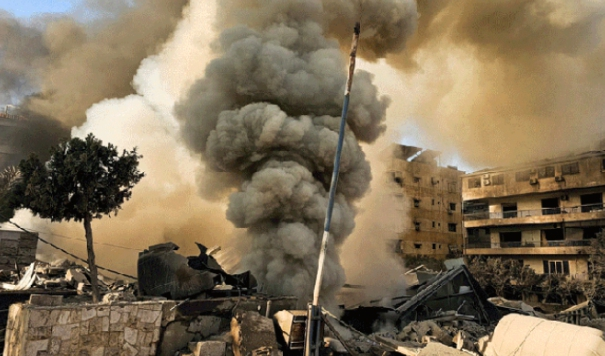
The Israeli Defense Forces (IDF) have launched what they describe as the tenth wave of strikes on Tehran, targeting command centers linked to the Basij militia and Iran’s internal security forces.
These facilities were critical in suppressing nationwide protests late last year, highlighting the strategic focus of Israeli operations. Residents in northern Tehran described explosions reverberating across the city, with many considering escape to the mountains but uncertain where safety could be guaranteed.
Satellite imagery shows dark plumes of smoke rising from key locations, including Tehran and the central city of Esfahan.
Lebanon is also increasingly drawn into the conflict. Israeli airstrikes in the southern suburbs of Beirut, particularly in the Haret Hreik neighborhood, have killed at least 11 people in the past 24 hours, including strikes in Aramoun and Baalbek.
The IDF has issued evacuation warnings for more than a dozen Lebanese villages, emphasizing that civilian areas near Hezbollah facilities are at high risk. Schools in Beirut have been repurposed as temporary shelters for displaced families, underscoring the growing humanitarian toll.
Meanwhile, the global energy market is facing acute disruption. Iran has vowed to attack ships transiting the Strait of Hormuz, which typically handles around 20% of global oil and liquefied natural gas exports. Several regional producers have halted output, driving crude and gas prices higher.
The US has responded by offering “insurance and guarantees” for ships and indicating that the Navy may escort tankers through the strait if necessary.
Analysts warn that prolonged conflict could push inflation higher worldwide and slow global economic growth, while UN officials highlight looming shortages in food, health services, and basic supplies across the Middle East.
Amid the chaos, the CIA is reportedly working to arm Kurdish forces to incite an uprising in Iran. Such operations, according to sources, aim to destabilize Iran’s internal security apparatus and create conditions conducive to a regime change.
This is part of a broader US strategy that, in parallel with Israeli strikes, seeks to weaken the Iranian leadership following the targeted killing of Supreme Leader Ayatollah Ali Khamenei in Tehran.
Khamenei’s death has left a power vacuum, with the Assembly of Experts gathering virtually to appoint a successor. Israeli officials have made it clear that any newly appointed leader would be considered a target for elimination, framing the selection of Iran’s next Supreme Leader as a focal point of the conflict.
The regional security situation has also prompted France to deploy Rafale fighter jets to its UAE bases to ensure airspace security. French President Emmanuel Macron criticized the US-Israel attack on Iran as outside the framework of international law but has nonetheless taken measures to safeguard national assets in the Gulf.
France’s nuclear-powered aircraft carrier Charles de Gaulle, along with its escort frigates, has moved into the Mediterranean as a precautionary measure amid rising tensions.
In Pakistan, the US State Department has ordered non-emergency personnel to leave consulates in Lahore and Karachi due to heightened threats, including drone and missile attacks from Iran and rising anti-US sentiment.
Recent protests in Karachi have already left 10 dead and 50 injured after demonstrators stormed the US consulate, illustrating the wider regional spillover.
On the human front, the war is impacting ordinary citizens far beyond combat zones. Iranian soccer player Sara Didar, preparing for the Women’s Asian Cup in Australia, expressed distress over her family and compatriots back home, reflecting the anxiety of the diaspora.
Similarly, evacuees from the Middle East have been seen arriving in Prague, aided by emergency military flights organized by the Czech government.
While President Trump has asserted US dominance and promised protection for maritime routes, the logistical reality of moving thousands of Americans from multiple hotspots remains precarious. Military aircraft and charter flights are being coordinated, yet demand far outstrips available capacity.
Analysts warn that without a comprehensive evacuation strategy, Americans and other foreign nationals could face significant danger as the conflict intensifies.
The strategic calculus in the region remains complex. Iran’s retaliation continues with missile strikes on US bases, including Al Udeid in Qatar, while Saudi Arabia and Kuwait intercept incoming drones and cruise missiles.
Israel’s air defense systems have been activated against rockets launched from Lebanon, highlighting the multi-front nature of the war. Each escalation not only raises the stakes for regional powers but also complicates evacuation and humanitarian relief operations.
China’s response has been notably restrained despite US strikes eliminating two allies of Beijing: Venezuelan President Nicolás Maduro and Ayatollah Ali Khamenei.
While Beijing has condemned these actions and reaffirmed diplomatic outreach to Iran, Chinese leadership has avoided direct confrontation, focusing instead on preserving strategic stability with Washington.
Analysts suggest this is consistent with China’s broader pragmatism and desire to maintain US-China relations amid global turbulence.
Read also: Iran war escalation enters fifth day as explosions rock Tehran
In sum, the combination of active combat, damaged infrastructure, and disrupted transport corridors has left the US scrambling to extract its citizens safely.
Military analysts emphasize that the unfolding situation in the Middle East represents one of the most complex evacuation challenges in recent history, blending kinetic warfare with humanitarian and logistical crises.
As US forces coordinate air and sea assets and allied nations mobilize evacuation efforts, the scale of the task highlights both the immediacy of the danger and the precariousness of life for Americans caught in the region.
About The Author