


Five Villagers found alive in Laos Cave- The dramatic discovery of five survivors inside a flooded cave system in Laos has sparked relief, celebration and renewed determination among rescue teams still searching for two missing villagers trapped underground for nearly a week.
The extraordinary rescue effort has drawn international attention after divers navigated narrow submerged tunnels, dangerous rock formations and rising floodwaters to reach the stranded group deep inside a remote cave in central Laos. The emotional breakthrough came after days of uncertainty, worsening weather and fears that persistent rainfall could further complicate rescue operations.
The story has already drawn comparisons to the world-famous Thailand cave rescue of 2018, especially after several experienced divers from that mission joined the operation in Laos. But rescuers warn that the danger is far from over.
Although five villagers have now been found alive, the operation remains extremely risky as teams continue working to locate the remaining two missing men and safely extract everyone from the cave system.
Emotional Scenes as Rescuers Reach Survivors
The moment rescuers finally located the trapped villagers inside the flooded cave quickly spread across social media, capturing emotional scenes of relief inside the dark underground chamber.
Video footage showed exhausted men crouched together on a rocky ledge surrounded by muddy floodwater after surviving days in isolation.
One rescuer attempted to calm the group as emotions overwhelmed the chamber.
“There’s no need to cry,” a member of the rescue team told the villagers.
The survivors reportedly told rescuers they were hungry, weak and dehydrated after spending days trapped underground with limited supplies.
Outside the cave, emotional family members and rescue workers celebrated as news emerged that the group had been located alive.
A young boy waiting anxiously near the rescue area reportedly recognised his father among the survivors and raised his hands in gratitude after seeing the footage.
The emotional reaction highlighted the enormous psychological pressure families had endured throughout the operation.
Laos Cave Rescue Draws International Attention
The unfolding Laos cave rescue has rapidly become one of Southeast Asia’s most closely watched rescue missions of the year.
International divers from several countries joined local teams after reports emerged that villagers had become trapped inside the cave following severe flooding triggered by heavy rainfall.
According to reporting by , the group had reportedly entered the cave to search for wildlife and gold before floodwaters blocked the entrance and submerged key passages.
The rescue mission has involved highly specialised cave divers, emergency responders and technical support crews battling dangerous underground conditions.
Finnish diver Mikko Paasi, one of the rescuers involved in the dramatic Thailand cave rescue in 2018, described the operation as one of the most difficult cave environments he had encountered.
“This is only a brief relief,” Paasi wrote after reaching the trapped villagers. “The extraction is still ahead and it ain’t going to be easy.”
His warning reflects the enormous danger that remains despite the successful discovery of the survivors.
Dangerous Conditions Inside the Flooded Laos Cave
Rescuers say the flooded cave system presents extreme hazards that continue threatening both survivors and emergency teams.
The cave passages are reportedly narrow, unstable and filled with muddy floodwater that severely limits visibility underwater.
Several sections are said to be only partially accessible due to sediment buildup, submerged rocks and collapsing passageways.
Divers Forced Through Tight Underground Tunnels
Rescue divers described crawling through tunnels measuring barely 60 centimetres in depth while carrying oxygen tanks and emergency supplies.
At several points, divers were forced to navigate underwater through completely submerged sections filled with debris and contaminated water.
Persistent rain has worsened conditions by constantly refilling flooded chambers despite ongoing pumping efforts.
Paasi described the location as “extremely remote and hostile.”
“When inside the mine you have to navigate hundreds of meters of constant restrictions, flood waters, collapse hazards and high risk of contaminated air quality,” he explained.
The operation has become even more complicated because the cave lies deep inside a remote jungle region with limited infrastructure and difficult access routes.
Rescuers reportedly needed to cross several kilometres of dense terrain simply to transport equipment to the entrance site.
Search Continues for Missing Villagers in Laos
Even after the discovery of the five survivors, authorities insist the mission remains incomplete as efforts intensify to locate the remaining two missing villagers in Laos.
Emergency teams have continued re-entering the cave system despite worsening weather conditions.
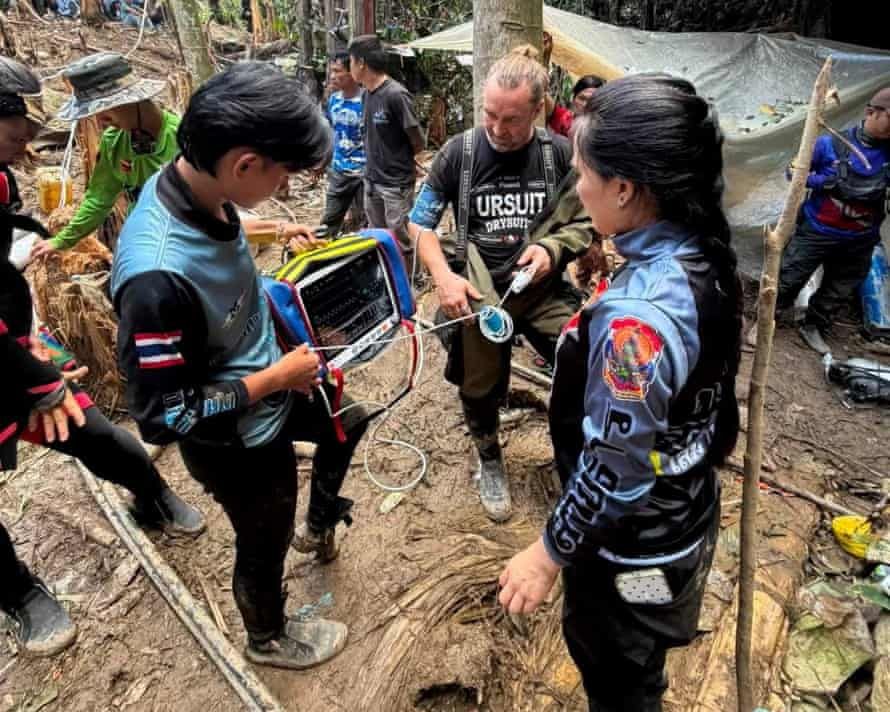
Health workers reportedly administered emergency first aid, oral rehydration salts and water to the rescued men while teams assessed the safest extraction strategy.
Thai rescue official Kengkard Bongkawong said planning remains underway for the next stage of the mission.
“Health checks and first aid were administered at the scene,” he said after the discovery.
Officials believe the missing men may still be trapped deeper inside the cave network or separated by flooded passageways.
That uncertainty has forced rescuers to continue searching despite growing exhaustion among crews.
Weather Remains a Major Threat
Heavy rainfall continues to pose one of the greatest dangers facing the operation.
Rescuers have repeatedly been forced to retreat from sections of the cave whenever sudden rainstorms increased flooding risks.
One rescue technician described how teams urgently withdrew from the cave after water levels rapidly began rising.
“We are afraid that the water will flood into the cave so we needed to urgently retreat,” he explained.
The unpredictable weather has complicated rescue planning because conditions inside the cave can change within minutes.
Emergency officials fear additional flooding could cut off access routes or separate rescue teams from trapped survivors.
Thailand Cave Rescue Experience Becomes Crucial
The involvement of veteran divers from the famous Thailand cave rescue has become one of the defining features of the Laos operation.
Several rescuers participating in Laos previously helped save 12 young footballers and their coach trapped inside Thailand’s Tham Luang cave in 2018.
That mission captured worldwide attention and was considered one of the most difficult cave rescues ever attempted.
Experts believe the experience gained during the Thailand operation is now proving invaluable in Laos.
Lessons From Past Cave Rescues
Cave rescues differ dramatically from ordinary emergency operations because rescuers must simultaneously battle water, darkness, oxygen limitations and unstable terrain.
Every movement inside a flooded cave system carries significant risk.
Experienced cave divers understand how quickly conditions can become fatal if visibility disappears or water currents intensify.
That expertise may prove critical as teams prepare for the dangerous extraction phase in Laos.
Analysts say the psychological aspect of cave rescues is equally important because trapped survivors often face panic, exhaustion and dehydration after spending days underground.
Rescuers therefore must stabilise victims physically and emotionally before attempting evacuation.
Gold Mining Questions Emerge
The incident has also renewed attention on informal mining activities in Laos.
Authorities say it remains unclear whether the trapped group entered the cave independently while searching for gold or whether they were connected to small-scale mining operations in the area.
Alluvial mining has expanded significantly across Laos in recent years as rising gold prices encouraged exploration in remote regions.
Environmental experts have repeatedly warned that poorly regulated mining activities increase risks for local communities, particularly during severe weather seasons.
The cave incident may now trigger renewed debate over mining safety regulations and oversight in isolated rural areas.
Rising Risks During Rainy Season
Experts say caves and mining tunnels become especially dangerous during periods of heavy rainfall because sudden flooding can trap people underground within minutes.
Water can rapidly block entrances, destroy air pockets and destabilise tunnel walls.
In Southeast Asia, seasonal monsoon rains frequently create life-threatening conditions in mountainous cave regions.
Rescue officials say this latest disaster highlights the importance of stronger weather awareness systems and emergency preparedness in remote communities.
Hope Remains Despite Difficult Rescue Operation
Despite the continuing dangers, rescuers remain cautiously optimistic that the remaining two missing villagers could still be found alive.
Officials believe the trapped group may have initially entered the cave with enough supplies to survive for several days.
That possibility continues motivating search teams working around the clock in exhausting conditions.
Families gathered outside the cave have also refused to lose hope as rescue workers continue entering the flooded passages.
The discovery of the first five survivors has strengthened belief that more positive news may still emerge from the operation.
Read more: US arms sales to Taiwan unlikely delayed by Iran war, experts say
The discovery of five villagers found alive in Laos cave has brought emotional relief after days of fear and uncertainty, but the dangerous rescue mission remains far from over.
As emergency crews continue battling floodwaters, unstable tunnels and relentless rain, hopes now centre on locating the remaining two missing villagers in Laos and safely bringing everyone back to the surface.
The operation has already demonstrated extraordinary courage from divers and rescue teams risking their lives underground in one of the region’s most dangerous environments.
For families waiting anxiously outside the cave, the successful discovery of survivors has transformed despair into renewed hope that the unfolding Laos cave rescue may still end in a miracle.
About The Author
