Russian attack on Ukraine kills six forms the central concern as residents describe terrifying barrages, emergency crews race to restore services, and Kyiv’s envoys depart for US-based negotiations seeking clarity.
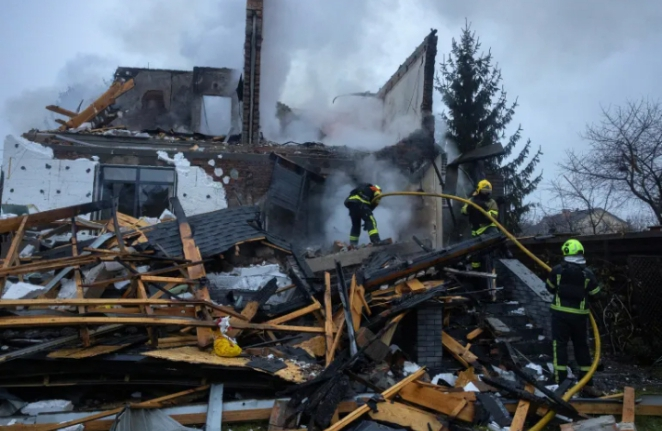
The latest wave of strikes left shattered homes, burning vehicles, fallen debris and families searching for missing loved ones while sirens echoed through the capital in relentless, brutally timed volleys.
Officials confirm six fatalities and dozens wounded, describing widespread structural damage across Kyiv and multiple surrounding regions as emergency workers struggled against fires fuelled by drone-delivered explosives.
Local crews restored power to hundreds of thousands of households, racing overnight to stabilise a grid severely compromised by what engineers called “the most intense bombardment in several months.”
Minister of Foreign Affairs Andrii Sybiha condemned the escalation, writing that “while everyone debates peace frameworks, Moscow pursues only destruction,” echoing a sentiment shared across increasingly anxious Ukrainian communities.
President Volodymyr Zelenskyy stated the assault involved roughly three dozen missiles and nearly six hundred drones, calling it “a calculated attempt to break civilian morale through constant terror.”
Kyiv’s military administration reported two deaths in the capital, adding that intercepted drones still caused “catastrophic impacts” when fragments struck residential blocks, courtyards and parked vehicles.
Emergency medics recorded twenty-nine injuries in Kyiv alone, saying many resulted from broken glass, collapsing walls and fires ignited after falling metallic debris penetrated upper-floor apartments.
Regional officials confirmed further deaths across districts surrounding the capital, including a fatality in the Kherson region and two in the southeastern Dnipropetrovsk sector after mid-day explosions.
Residents described children screaming as smoke engulfed neighbourhoods, with one survivor saying, “We hid under the stairs. Everything shook. We thought we would not see daylight again.”
Kyiv’s mayor said western sectors of the city temporarily lost electricity after facilities supporting high-demand winter heating were struck by the largest cluster of drones seen recently.
The head of Kyiv’s military administration accused Moscow of “targeting entire families,” calling the attacks deliberately timed to disrupt ongoing discussions among global powers about potential conflict-ending frameworks.
European diplomats questioned Moscow’s sincerity regarding negotiation efforts, noting the continued bombardments appeared to contradict public statements suggesting interest in de-escalation.
One envoy wrote that “missile launches are incompatible with diplomatic signalling,” adding that trust-building would be impossible without verifiable reductions in offensive operations.
As news of casualties spread, Ukraine’s delegation prepared for their scheduled meetings abroad, aiming to counter what officials describe as growing international pressure for compromise.
Zelenskyy announced that negotiators had left for discussions focused on achieving what he termed “dignified peace,” insisting Kyiv would not accept terms reducing Ukraine to a vulnerable geopolitical buffer.
The departure followed the resignation of Andriy Yermak, the president’s long-serving chief of staff, amid an ongoing corruption probe that reshaped the composition of Kyiv’s top advisory circle.
Former defence chief Rustem Umerov now heads the negotiating team, with Zelenskyy instructing them to “swiftly and substantively work out clear steps leading toward sustainable conflict resolution.”
Critics of the US-drafted peace proposal argue it disproportionately benefits Moscow, though Washington maintains the framework is designed to reduce casualties and stabilise Europe’s security environment.
Zelenskyy insisted cooperation with the United States remains “constructive,” expressing hope that progress made during earlier sessions in Geneva would advance once talks resume on American soil.
A senior Ukrainian aide said negotiators would meet top US officials, noting that “Ukraine seeks genuine guarantees, not arrangements leaving our sovereignty vulnerable to future coercion.”
The meetings, expected in Florida, are likely to address territorial control, long-term security assurances, demilitarisation parameters and mechanisms for monitoring any future ceasefire.
Parallel to diplomatic manoeuvres, Ukraine intensified asymmetric operations across the Black Sea, targeting vessels believed to support Russia’s sanctioned oil exports, an initiative central to Ukraine’s economic pressure strategy.
Security officials reported the successful strike of two tankers identified as Kairos and Virat, describing the mission as a “strategically important blow against Russia’s shadow fleet operations.”
Marine drones allegedly used in the attack caused fires and severe structural damage, leaving both vessels disabled en route to a major Russian oil port on the eastern Black Sea coastline.
Turkey’s maritime authorities confirmed explosions near the Bosphorus Strait, saying rescue operations were launched as flames spread across the cargo decks of the targeted tankers.
A Ukrainian security source said “video footage demonstrates critical damage,” adding that removing the ships from active service would impede Russia’s capacity to reroute sanctioned crude exports.
The official emphasised the tankers were empty at the time, stressing that Ukraine’s objective is to disrupt logistics rather than trigger environmental catastrophe through spillage.
Kyiv continues urging tighter international enforcement against what it labels the “shadow fleet network,” claiming these vessels enable Russia to circumvent sanctions that should restrict its war-financing capabilities.
Analysts say marine drone strikes reflect Ukraine’s evolving strategy to hit high-value assets remotely, compensating for limited naval strength while forcing Russia to disperse protective resources.
Security experts argue the Black Sea theatre increasingly shapes the broader conflict, noting that energy-related disruptions influence both Russia’s wartime economy and Europe’s political approach to sanctions.
Across Ukraine, the humanitarian toll continues mounting as winter approaches, with displaced families seeking temporary shelters and electricity workers racing to maintain essential heating services.
A mother from the Dnipropetrovsk region described the chaos after detonations rocked her street, saying, “We grabbed what we could. We ran while smoke filled everything behind us.”
Local councils distributed emergency blankets, food packages and medical supplies across impacted neighbourhoods while volunteers cleared rubble and accounted for missing residents.
Military analysts believe the overnight assault may signal Russia’s intent to intensify winter pressure, a tactic previously used to sap Ukrainian resilience by undermining critical infrastructure.
Despite exhaustion, Ukrainian commanders vowed renewed defence, saying “the country remains determined to resist aggression even under the harshest conditions,” encouraging civilians to continue cooperating with emergency protocols.
International leaders reiterated support for Ukraine, calling for intensified defensive assistance, though disagreements persist regarding the pace of weapons deliveries and the structure of long-term aid.
Global humanitarian groups urged immediate de-escalation, warning that continued strikes would deepen an already severe crisis affecting millions of people across multiple Ukrainian regions.
As diplomatic teams pursue solutions abroad, Ukrainian citizens brace for further attacks, uncertain whether negotiations will bring relief or merely run parallel to escalating violence.
Survivors across Kyiv called for global solidarity, with one elderly resident saying, “We need the world to stay with us. We cannot withstand this alone.”
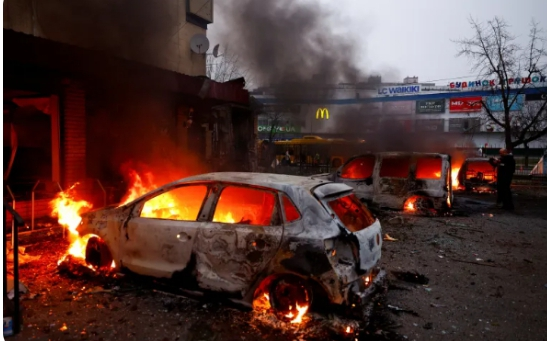
The night’s destruction left stark reminders of unrelenting conflict, prompting renewed debate about the feasibility of achieving compromise while casualties rise and front-line pressures continue.
For now, the Russian attack on Ukraine kills six remains the bleak headline capturing a country’s ongoing tragedy, shaping diplomatic urgency and reinforcing the demands for credible, enforceable peace.