Germany‘s criticism of US policy on Ukraine’s deep strikes has exposed growing disagreements among Western allies over how Kyiv should defend itself against Russia’s invasion, after German Defence Minister Boris Pistorius described Washington’s criticism as “quite a stupid thing”.
Pistorius was responding to remarks by Elbridge Colby, the US Undersecretary of Defence, who questioned the effectiveness of Ukraine’s long-range attacks against targets inside Russia. Colby argued that the strikes had neither brought the war closer to an end nor significantly slowed Russian advances on the frontline.
However, the German defence minister rejected that assessment, insisting that Ukraine had the right to attack military installations and other strategic facilities being used to support Russia’s war effort.
The disagreement comes as Ukraine continues to defend its territory against Russian attacks, while Western governments remain divided over the most effective way to support Kyiv and weaken Moscow’s military capabilities.
The diplomatic tension is also unfolding against the backdrop of the Asia-Pacific Economic Cooperation (APEC) summit in Shenzhen, China, where world leaders are holding discussions with significant implications for international security and the future of the war.
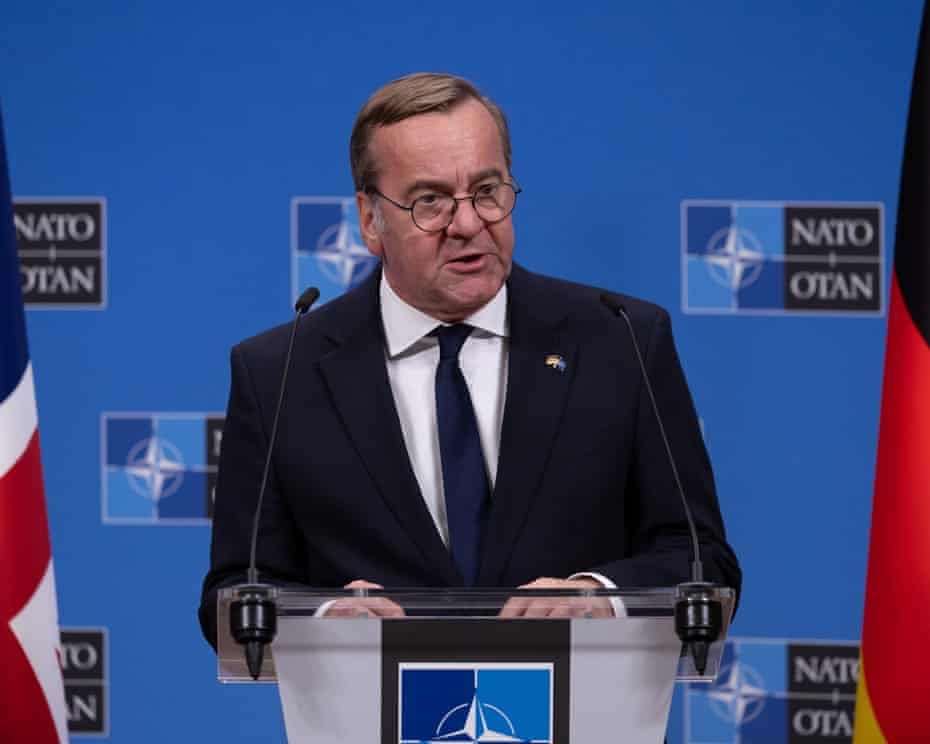
Pistorius challenges Washington’s position on Ukraine
Pistorius made clear that he considered the American criticism misplaced, particularly given the scale of Russia’s continuing attacks on Ukrainian infrastructure.
He argued that attention should instead be directed towards Moscow’s repeated strikes against facilities supplying electricity, water and heating to Ukrainian communities.
The German minister described attacks on such essential infrastructure as terrorism, suggesting that criticism of Ukraine’s military operations should not be separated from the damage Russia continues to inflict on civilian life.
His intervention highlights a disagreement over the boundaries of Ukraine’s military response. While Washington has questioned whether deep strikes can produce decisive results, Berlin’s position is that attacks on legitimate military targets inside Russia form part of Ukraine’s right to defend itself.
US questions the effectiveness of deep strikes
Colby had argued that Ukraine’s long-range operations had not achieved the strategic objectives expected of them.
His comments reflected concerns within sections of the American defence establishment about whether attacks deep inside Russian territory could substantially change the course of the conflict.
However, Pistorius’s response suggested that measuring the value of the strikes only by whether they immediately end the war overlooks their potential military significance.
Ukraine has repeatedly sought to weaken Russia’s ability to sustain its invasion by targeting facilities connected to its military operations. Kyiv maintains that it has the right to defend itself against the continuing assault.
The disagreement between the two allies therefore raises broader questions about the military strategy Western governments believe Ukraine should pursue.
Britain backs Ukraine’s right to strike Russian targets
The United Kingdom has also defended Ukraine’s military operations, with Defence Minister Wes Streeting expressing support for attacks intended to weaken Russia’s war machine.
Streeting argued that the strikes help degrade President Vladimir Putin’s military capabilities, buy Ukraine valuable time and ultimately save lives.
His position contrasts with Colby’s criticism and demonstrates that the United States and its European allies do not always share the same assessment of Ukraine’s military strategy.
Although Britain and Germany have expressed support for Kyiv’s right to strike Russian military targets, the debate illustrates the difficulties involved in maintaining a unified Western approach to the conflict.
For Ukraine, the ability to disrupt Russia’s military operations remains an important part of its defence strategy. For its supporters, the central question is how to provide assistance that strengthens Kyiv without creating further divisions among the countries backing it.
Ukraine warns Russia of stronger retaliation
Ukraine has also signalled that it intends to maintain its response to Russian attacks.
Yehvenii Khmara said Kyiv would retaliate more forcefully whenever Moscow launched attacks against Ukrainian territory.
He warned that for every Russian strike against Ukraine, the country would respond two or three times as strongly.
Khmara’s remarks reinforced Ukraine’s position that it would not accept restrictions on its ability to defend itself while Russian attacks continued.
The statement also comes amid the wider debate over the effectiveness of Ukraine’s long-range operations and the extent to which its international partners should support those efforts.
Kyiv has consistently argued that Russia’s military infrastructure cannot be treated as beyond the reach of Ukrainian forces when it is being used to sustain the invasion.
Trump meets Xi Jinping in Shenzhen as Ukraine war remains a global concern
The diplomatic disagreement over Ukraine is unfolding alongside high-level discussions at the APEC summit in Shenzhen.
US President Donald Trump is presently meeting Chinese President Xi Jinping after being welcomed by the Chinese leader on his arrival in the Chinese city.
The encounter places the Ukraine conflict within a wider diplomatic setting involving the United States, China and Russia. Russian President Vladimir Putin is also attending the summit, and a trilateral meeting involving Trump, Xi and Putin is expected to take place on Thursday.
The discussions are attracting international attention because of the potential implications for the war in Ukraine, global security and relations among the three major powers.
Ukraine is not represented at the proposed trilateral meeting, raising concerns about whether decisions affecting its future could be discussed without Kyiv directly participating.
The gathering has also revived comparisons with the 1945 Yalta Conference, where major Allied powers discussed the post-war international order. Critics fear that another arrangement among powerful countries could leave smaller nations with limited influence over decisions affecting their security.
Canada signals tougher sanctions against Russia
Canadian Prime Minister Mark Carney has also reaffirmed his country’s position on the conflict, saying sanctions against Russia will increase for as long as the war in Ukraine continues.
Carney made the remarks in Shenzhen, according to Agence France-Presse, as international leaders gathered for the APEC summit.
Main focus keyphrase:
His statement underlines Canada’s continued support for economic pressure on Moscow, even as Russia argues that Western sanctions have failed to weaken its economy.
The Canadian position contrasts with Putin’s repeated claims that restrictions imposed by Western governments have strengthened rather than crippled Russia.
Western unity faces another test
The exchange between Pistorius and Colby demonstrates that disagreements over Ukraine’s military strategy remain an important challenge for Western governments.
Germany and Britain have defended Kyiv’s right to attack Russian military targets, while the American criticism has raised questions about the effectiveness of such operations.

For Ukraine, the immediate priority remains defending its territory and reducing Russia’s capacity to continue the invasion. Its leaders are also watching developments in Shenzhen closely, particularly the discussions involving Trump, Xi and Putin.
The outcome of those diplomatic engagements could influence international pressure on Moscow and the future direction of efforts to end the war.
As the conflict continues, Germany’s criticism of US policy on Ukraine’s deep strikes reflects a wider debate over whether Western support should prioritise limiting the escalation of the war or giving Kyiv greater freedom to strike the military infrastructure sustaining Russia’s invasion.
About The Author