Xi and Putin challenge Western economic dominance as Chinese President Xi Jinping and Russian President Vladimir Putin criticise Western trade restrictions, sanctions and economic pressure ahead of their expected high-stakes meeting with US President Donald Trump in China. Their remarks at the Asia-Pacific Economic Cooperation (APEC) summit in Shenzhen highlighted growing disagreements over international trade, global influence and the balance of power.
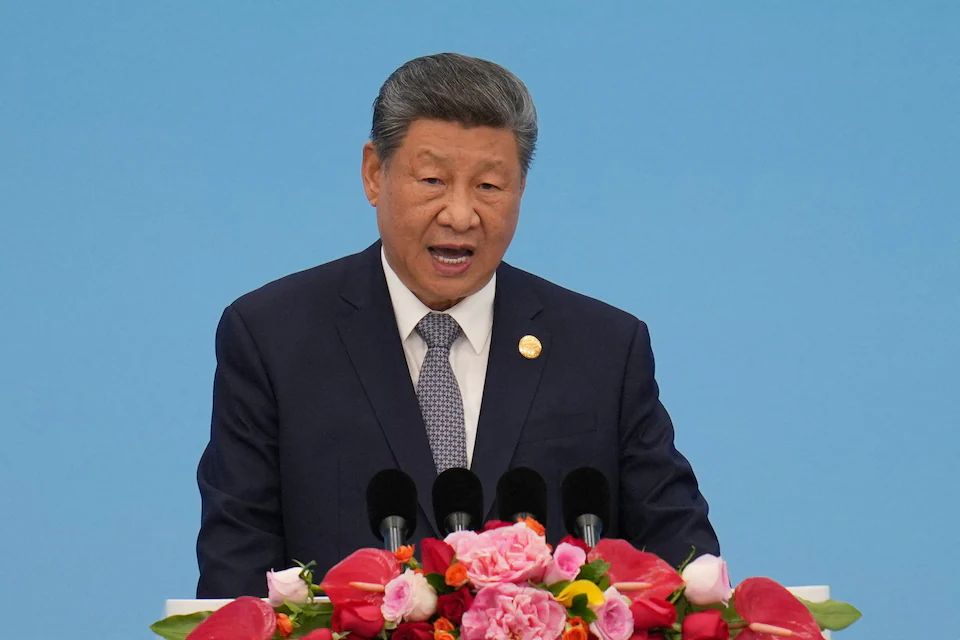
Xi used his address to promote open trade, investment and international cooperation, arguing that countries should support a rules-based multilateral trading system. He called for stronger cooperation through institutions such as the World Trade Organization (WTO), while emphasising the importance of stable global supply chains.
His intervention came as trade tensions between Washington and Beijing continued to intensify, particularly over American restrictions on China’s access to advanced artificial intelligence chips.
Xi calls for open trade amid US-China tensions
The Chinese president presented international economic cooperation as essential to global growth, warning against protectionism and unilateral actions that could disrupt trade and investment.
Xi said countries should work towards a more open international economic environment rather than introduce barriers that could undermine cooperation. His message appeared designed to position China as a supporter of global trade at a time when its economic policies are facing increasing criticism from Western governments.
China has also pledged to lower tariffs and open more areas of its market to international businesses. However, Beijing has maintained that it will resist what it describes as protectionist measures and attempts to restrict its economic development.
Dispute over advanced technology and supply chains
The disagreement between China and the United States extends beyond conventional trade. Washington has introduced restrictions aimed at limiting China’s access to advanced semiconductor technology, including artificial intelligence chips produced by companies such as Nvidia.
The restrictions reflect American concerns about China’s technological advancement and the potential military and strategic applications of sophisticated computing systems.
Beijing has opposed the measures and pledged to respond to what it considers unfair attempts to contain its development. The dispute has become a major element of the broader competition between the world’s two largest economies.
Western trading partners have also raised concerns about China’s enormous export surplus, which has exceeded $1 trillion annually. Critics argue that China’s industrial policies and manufacturing dominance have created an imbalance in international trade, placing pressure on industries and employment in other countries.
Some governments are particularly concerned that Beijing’s control over important parts of global supply chains could give it considerable geopolitical influence.
China, however, maintains that its economic model is appropriate for a country still developing and seeking to improve its industrial and technological capabilities.
George Chen of The Asia Group suggested that Xi’s message could appeal to countries in the Global South. He argued that Beijing was presenting a contrast between China’s approach to technological development and Washington’s increasingly restrictive policies.
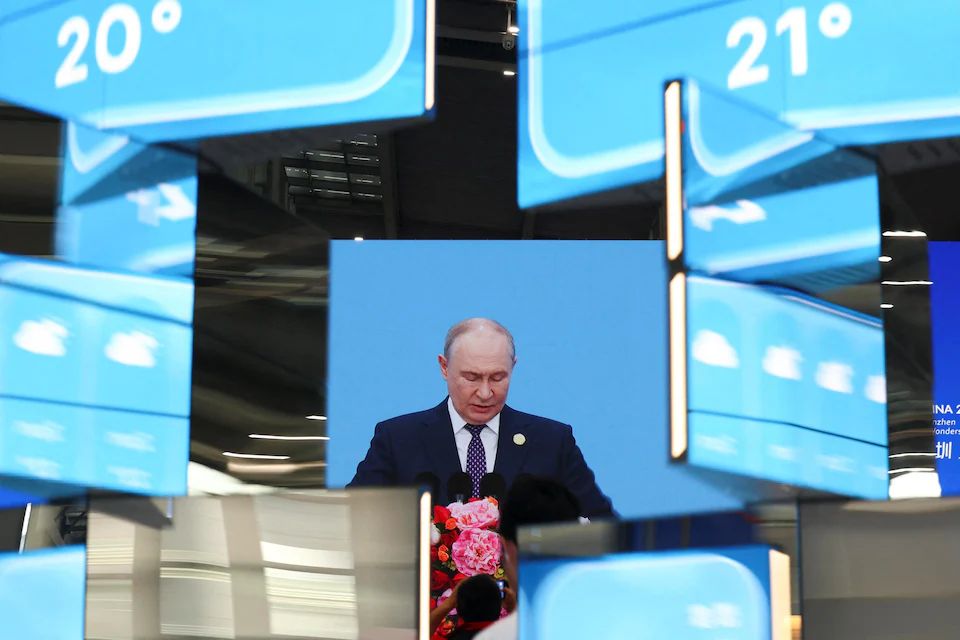
Putin attacks Western sanctions and economic pressure
Putin also used his appearance at the APEC summit to criticise Western economic policies, particularly sanctions imposed on Russia following its invasion of Ukraine.
The Russian president argued that sanctions, tariffs and export controls had become instruments of economic coercion used by Western powers to preserve their international influence.
He described Western countries as former hegemons and delivered a particularly sharp assessment of Europe’s position, portraying the continent as experiencing a humiliating decline.
Putin insisted that sanctions had not achieved their intended objective of weakening Russia. Instead, he claimed that the restrictions had encouraged the country to become more resilient and reduced the effectiveness of traditional Western economic pressure.
His comments were intended to challenge the assumption that powerful economies can use financial restrictions and trade controls to dictate the behaviour of other countries.
Russia’s economic argument comes amid continuing war
Putin’s remarks came against the background of Russia’s continuing war in Ukraine, which has entered its fourth year.
The conflict has brought extensive international sanctions against Moscow, while Western governments have continued providing support to Kyiv. Russia has repeatedly condemned these measures, arguing that they violate international economic principles and are intended to weaken its position.
Ukraine’s destruction of the vital Kerch road bridge linking Crimea with Russia also formed part of the difficult circumstances surrounding Putin’s appearance. The bridge has significant strategic importance for Moscow because it connects the annexed peninsula to Russian territory.
Despite the pressure, Putin used his speech to argue that Russia had adapted to the restrictions and that Western governments could no longer rely on economic coercion as effectively as they once did.
His criticism broadly echoed Xi’s warning against protectionism, although the two leaders were addressing different aspects of their respective disputes with Western countries.
Xi and Putin strengthen their strategic partnership
Xi and Putin also held a bilateral meeting during the summit, using the opportunity to reaffirm the strength of their relationship.
Both leaders described their partnership as stable and positive, while pledging to pursue additional measures aimed at advancing what they consider a multipolar international order.
The concept of a multipolar world is central to their shared criticism of Western dominance. It reflects their preference for an international system in which influence is distributed among several major powers rather than concentrated in the United States and its traditional allies.
Their cooperation has expanded across diplomatic, economic and strategic areas, particularly as both countries face strained relations with Western governments.
However, their partnership does not mean that their national interests are identical. Their public statements nevertheless demonstrate a shared interest in challenging Western policies and promoting alternatives to the existing international order.
Trump, Xi and Putin prepare for crucial meeting
The diplomatic attention surrounding the APEC summit is expected to intensify with the planned meeting involving Trump, Xi and Putin on Thursday.
The discussions could cover several major international issues, including Russia’s war in Ukraine, the US conflict with Iran, trade disputes, artificial intelligence, nuclear weapons and other areas of geopolitical tension.
The possibility of the three leaders reaching understandings on major international questions has attracted considerable attention, particularly among countries concerned that decisions by powerful governments could affect them without their direct participation.
The planned meeting has prompted comparisons with the 1945 Yalta Conference, where the leaders of the United States, Britain and the Soviet Union discussed the post-Second World War settlement and the distribution of influence in Europe.
Smaller countries concerned about great-power decisions
The comparison has raised concerns in Europe and parts of Asia that major powers could reach agreements affecting regional security and political arrangements without adequately considering the interests of smaller countries.
The Kremlin has dismissed the Yalta comparison as a game played by political scientists, while Beijing has presented the planned discussions as an opportunity to promote peace.
Nevertheless, the meeting is taking place at a time when international tensions remain high and the actions of the three countries carry consequences far beyond their borders.
Trump arrived in the region after visiting Manila, where he met regional partners and pledged to strengthen defence cooperation with the Philippines amid continuing tensions in the South China Sea.
He also raised the possibility of meeting North Korean leader Kim Jong Un in China, although no confirmed arrangement for such a meeting had been announced.
Regional security and global diplomacy in focus
Security developments elsewhere in Asia have added another dimension to the diplomatic gathering. Taiwan and Japan reported incursions by Russian military aircraft into their airspace on Tuesday, highlighting the continuing military sensitivities across the region.
The incidents come as countries in the Indo-Pacific closely monitor the activities of major powers and seek to protect their territorial and security interests.
Read also: Alan Milburn’s youth welfare reform plan puts pressure on Burnham over benefits overhaul
For Trump, the Asia trip is his first since the Republican Party suffered a defeat in the midterm elections. His discussions with Xi and Putin therefore carry both international and domestic political significance.
Analysts expect Washington and Beijing to seek relative stability in their relationship despite their disagreements over technology, trade and strategic influence.
The two presidents are also expected to meet again at the G20 summit in Miami in December, which would mark their fourth meeting this year.
As Reuters reported, the diplomatic engagements are unfolding against a complicated international backdrop involving trade disputes, military tensions and competing visions of global leadership.
Xi and Putin challenge Western economic dominance through their criticism of sanctions, protectionism and unilateral restrictions, but their arguments also reflect the wider struggle over who will shape the international economic and political system. Whether their positions translate into concrete agreements with Trump remains one of the central questions surrounding the planned three-way meeting.
About The Author