

Canada’s prime minister, Mark Carney, survives Parliament confidence votes, on two critical situations safeguarding his government and enabling the implementation of the national budget without risking a winter election.
The Liberal government’s budget, designed to address both domestic economic challenges and international trade pressures, required support from opposition MPs to ensure passage through Parliament.
Finance Minister François-Philippe Champagne emphasized that the budget’s larger-than-expected deficit was essential to protect Canadians from the unpredictable effects of global market instability.
The passage of the budget highlights the delicate balance of power in a minority government, where collaboration across party lines can determine legislative outcomes.
Carney’s reputation as a technocrat focused on economic policy rather than partisan politics was instrumental in navigating the high-stakes confidence votes successfully.
Initial projections had suggested a smaller deficit, but the current plan now estimates a deficit of C$78.3bn for 2025-26, reflecting a significant economic recalibration.
By contrast, the previous fiscal update had forecast a C$42.2bn deficit, illustrating the scope of adjustments necessitated by changing economic conditions.
The government aims to reduce the deficit gradually to C$56.6bn by 2029-30, demonstrating a commitment to fiscal responsibility while maintaining key spending initiatives.
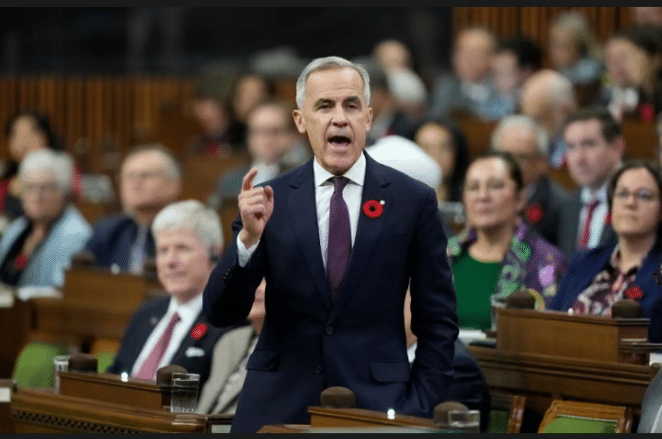
Carney’s strategy prioritizes economic stability over political gamesmanship, appealing to moderate conservatives and centrists seeking pragmatic governance amid uncertainty.
Cross-party cooperation proved critical when Conservative MP Chris d’Entremont switched allegiance to support the budget, signaling internal dissent within the opposition party.
D’Entremont’s defection reflected dissatisfaction with Conservative leadership under Pierre Poilievre, providing a strategic advantage for Carney’s minority Liberal government.
With the support of two additional MPs from other parties, the government was able to secure passage of the budget and avoid triggering an election.
Carney’s combination of economic expertise and careful political maneuvering allowed him to navigate Parliament effectively while maintaining government stability.
The two confidence votes were closely monitored, as failure would have forced an immediate federal election during the harsh winter months.
Rising economic uncertainty due to U.S. trade tensions prompted the Liberal government to introduce “generational” investments designed to stimulate growth and safeguard jobs.
Carney’s budget represents a proactive approach to economic management, designed to counter both domestic and international pressures on Canadian markets.
Finance Minister Champagne underscored the necessity of bold fiscal measures, highlighting the scale of disruptions caused by external economic developments.
The Liberal budget also reflects a long-term vision for reshaping Canada’s economy through targeted investments in infrastructure, technology, and public services.
While opposition parties criticized the budget for its size, political realities made it clear that these measures were necessary to preserve economic stability.
Internal pressures within the Conservative Party prompted some MPs to reconsider strict opposition, signaling potential collaboration on critical economic legislation.
Carney’s leadership exemplifies the advantage of combining economic expertise with strategic political insight in a minority government setting.
Beyond stabilizing the economy, the budget aims to foster innovation and competitiveness, positioning Canada to thrive amid shifting global market dynamics.
Observers noted that Carney’s pragmatic approach has helped him garner support from moderate MPs and centrists dissatisfied with partisan gridlock.
Short-term measures aim to strengthen employment, support productivity, and mitigate the effects of an uncertain domestic economy through targeted government programs.
Carney emphasized that swift and decisive government action is required to protect Canadians from external economic shocks.
The implementation of the budget will require ongoing cooperation with other parties, underscoring the importance of consensus in a minority Parliament.
The successful passage of the budget through confidence votes allows the Liberal government to advance its economic agenda and prevent early elections.
Canada’s minority government requires careful negotiation and coalition-building, balancing policy objectives with opposition demands and political realities.
Tensions within the Conservative caucus have become increasingly apparent, highlighting fractures that may influence future negotiations and legislative strategy.
Some MPs viewed the vote as an opportunity to assert independence from party leadership, reshaping the political landscape in Ottawa.
Carney’s willingness to engage across party lines demonstrates a pragmatic approach uncommon in contemporary Canadian politics.
The budget contains measures to support businesses and households, addressing immediate economic concerns while pursuing long-term growth objectives.
Opposition criticism focused on spending levels and fiscal responsibility, yet the government defended the deficit as necessary under current conditions.
The Liberals have balanced fiscal prudence with economic stimulus, aiming for stability while ensuring the country’s long-term strategic goals are met.
Canada’s international trade environment remains volatile, requiring a budget capable of responding to unforeseen developments in global markets.
Political analysts suggest that Carney’s successful confidence votes may strengthen the Liberal Party’s position in future legislative debates.
Defections like d’Entremont’s illustrate that personal and regional factors influence parliamentary decisions beyond formal party alignment.
Carney’s economic background enhances his credibility when negotiating complex legislation, reinforcing his influence among skeptical MPs.
Confidence votes are critical in Canada’s Parliament, directly affecting government stability and the execution of national policy.
The successful votes allow the Liberal government to proceed with infrastructure projects, social programs, and long-term economic initiatives.
Canada faces pressures from both domestic policy challenges and international trade disputes, requiring careful management to maintain growth.
Carney’s focus on pragmatic economic policy has helped consolidate support among legislators and the business community.
The government emphasizes responsibility, stability, and long-term planning to reassure Canadians amid fiscal uncertainty.
Negotiations highlight the interplay between political strategy, policy priorities, and personal considerations in Canadian governance.
Engaging across party lines has strengthened Carney’s ability to advance legislation while minimizing election risks.
Economic growth projections underpin much of the rationale for the budget, justifying short-term deficit spending for long-term stability.
Public response has been mixed, with optimism for growth tempered by concerns over rising deficits and national debt.
The government aims to maximize economic impact while minimizing unnecessary expenditures, reflecting a strategic approach to public finance.
Canada’s fiscal trajectory depends on collaboration, prudent management, and maintaining confidence in a minority government context.
Carney combines political acumen with economic expertise to navigate the challenges of minority governance effectively.
The budget passage illustrates how cross-party alliances can shape national policy and prevent political crises.
Opposition MPs face scrutiny balancing constituent needs against party expectations and national economic considerations.
Carney’s proactive management stabilized political uncertainty, allowing focus on long-term economic strategy.
The budget also includes measures to mitigate job losses and potential economic contraction in vulnerable sectors.
Investments in technology, infrastructure, and public services are central to promoting sustainable economic growth.
The Liberal government’s approach emphasizes flexibility and accountability to maintain public confidence and political stability.
Cross-party support underscores the nuanced calculations necessary for minority governments to achieve legislative success.
The confidence vote outcome reinforces the government’s ability to govern without immediate election pressures.
Future budgets will test the government’s ability to balance fiscal responsibility with policy priorities.
Carney’s technocratic approach offers a model for navigating minority governance without succumbing to partisan gridlock.
Long-term plans focus on deficit reduction while maintaining economic growth, informed by domestic and international fiscal trends.
Carney’s leadership, defined by pragmatism and foresight, stabilizes the political landscape during turbulent periods.
The confidence vote demonstrates that minority governments can succeed through negotiation, evidence-based policy, and strategic alliances.
Canada’s economy remains sensitive to global fluctuations, highlighting the importance of adaptive policy and fiscal prudence.
Ongoing monitoring of economic indicators will guide policy adjustments to safeguard long-term prosperity.
Carney’s success illustrates the value of combining expertise, diplomacy, and political strategy in a minority government.
The budget establishes a foundation for measured investments, balancing immediate relief with future growth opportunities.
Canada’s political landscape remains dynamic, but the budget provides a framework for navigating upcoming challenges effectively.
Legislative success reflects the intricate relationship between economic priorities, alliances, and electoral considerations.
Carney’s leadership ensures that ambitious economic initiatives proceed while minimizing the risk of early elections.
Maintaining fiscal discipline, transparent governance, and cross-party collaboration remains critical to sustaining public and parliamentary confidence.

Canada’s fiscal outlook relies on strategic investments and constructive engagement across party lines.
The government’s success in the confidence votes demonstrates effective minority governance through expertise, collaboration, and pragmatism.
Mark Carney survives Parliament confidence votes, securing government stability and enabling his budget plan to proceed without triggering a winter federal election.
About The Author


