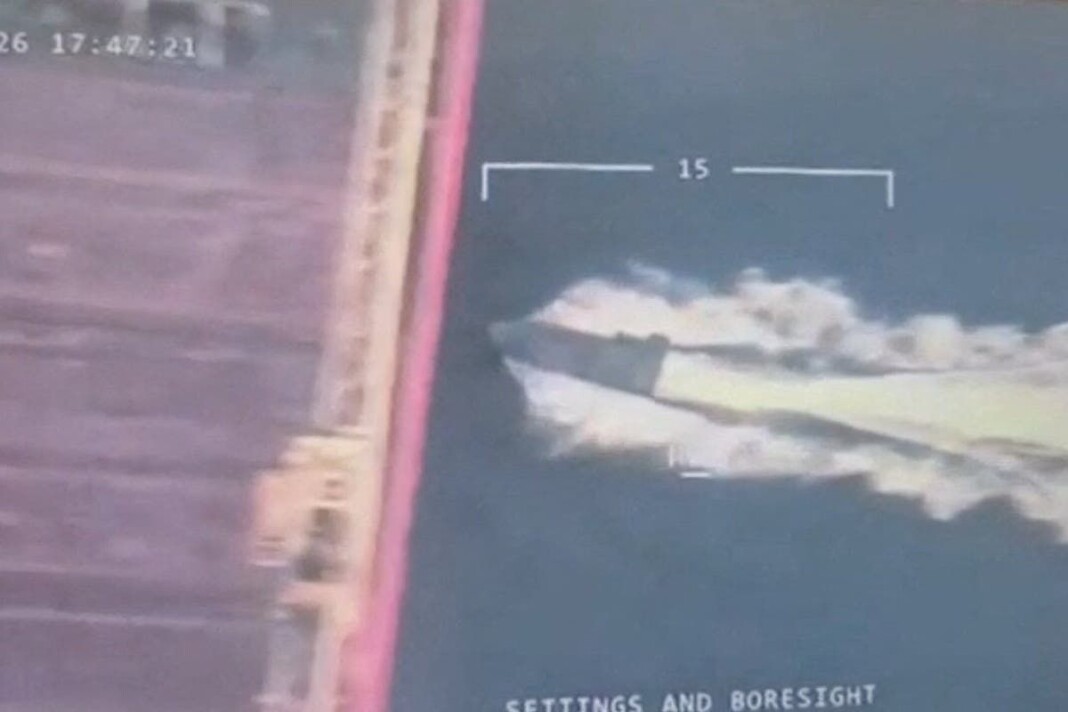

The Kremlin response to Ukraine’s attacks on Russian naval vessels in Libya has been a warning of “highly painful consequences” for Kyiv, with Moscow indicating that its Defence Ministry will determine what further action to take.
Kremlin spokesman Dmitry Peskov issued the warning on Monday after Ukrainian President Volodymyr Zelenskyy confirmed that Ukrainian forces had targeted Russian ships at the port of Benghazi.
“These actions result in highly painful consequences for the Kyiv regime,” Peskov said, making clear that Moscow regarded the operation as a serious development.
He also referred to remarks made by Russian President Vladimir Putin in Shenzhen, China, suggesting that Russia would maintain its current military course despite Ukraine’s attacks.
“I would like to recall a statement made by Putin in Shenzhen, in which he affirmed that this practice, this course of action by our military will continue,” Peskov added.
Moscow signals continued military pressure on Ukraine
Beyond the warning, Peskov indicated that Russia intended to maintain its ongoing military operations against Ukraine rather than allow the attacks on its vessels to change its approach.
He said Russian forces continued conducting large-scale strikes against military infrastructure in Ukraine every day, presenting those operations as part of Moscow’s response to developments on the battlefield.
“Our military personnel continue to carry out large-scale, comprehensive strikes on military infrastructure in Ukraine on a daily basis. This practice has very painful consequences for the Kyiv regime,” he said.
The Kremlin spokesman’s remarks suggest that Moscow is framing its continuing attacks on Ukraine as an established military policy, while warning that Kyiv should expect consequences for operations against Russian assets.
The Kremlin response therefore went beyond expressing anger over the damage to Russian vessels. Peskov used the opportunity to reinforce Putin’s position that Russia would continue its military campaign.
Defence Ministry to provide further details
Peskov said Russia‘s Defence Ministry was handling the matter and would provide information if it considered such disclosure appropriate.
“The Defence Ministry is dealing with this matter, and information will also be provided through the Defence Ministry if deemed appropriate,” he said.
His statement did not specify whether Moscow was considering a separate retaliatory operation against Ukrainian forces, nor did he announce a particular military measure connected directly to the Benghazi incident.
Instead, the Kremlin referred responsibility for further information to the Defence Ministry, leaving the nature and timing of any additional response unclear.
The announcement is significant because it indicates that Russia’s military authorities are assessing the incident, although Moscow has not publicly outlined what specific action, if any, will follow.
According to Al Jazeera’s report on Monday, Peskov also described the wider pattern of attacks on Russian naval and merchant vessels as a dangerous development. <Cite refs={[“turn557270news0″,”turn557270news1”]}/>
Russia describes attacks on its vessels as a dangerous trend
The Russian government’s concern extends beyond the Benghazi operation, with Moscow also pointing to attacks on Russian-linked cargo vessels in the Baltic Sea.
Peskov described the developments as an increasingly dangerous trend, arguing that repeated attacks on maritime assets risk worsening tensions in the region.
He also criticised the wider security implications of the incidents and called on Baltic countries to use their influence to encourage Kyiv to stop what Moscow characterised as terrorist practices.
Russia’s position reflects concern that Ukrainian operations against its vessels could increasingly affect maritime routes and locations outside the immediate battlefield.
The attacks have also created pressure on Moscow to demonstrate that Russian military and commercial assets operating abroad can be protected.
However, Peskov’s public remarks focused primarily on the continuation of Russia’s military campaign and the Defence Ministry’s handling of the incident, rather than announcing an immediate retaliatory strike.
Libya rejects being drawn into Russia-Ukraine conflict
While Moscow issued its warning to Kyiv, Libya’s Tripoli-based government condemned the Ukrainian military operations against Russian naval vessels in the country’s waters.
Read also: Germany takes seriously reports Russia may deploy nuclear weapon in space
The Libyan Foreign Ministry said the ongoing war between Russia and Ukraine did not give either country the right to conduct military operations on Libyan territory or within its territorial waters.
“The continuation of the war between Russia and Ukraine gives neither side the right to conduct military operations on Libyan territory or in its territorial waters,” the ministry said.
It also warned that foreign forces would not be permitted to use Libyan ports and civilian infrastructure for military purposes.
The statement reflected Tripoli’s determination to prevent Libya from becoming a theatre for military confrontation between Moscow and Kyiv.
Tripoli warns against using Libya to settle scores
The Libyan government’s reaction introduced a diplomatic dimension to the incident, as authorities sought to defend the country’s sovereignty while distancing themselves from the conflict.
Its warning was directed at both Russia and Ukraine, stressing that neither side could use the country’s territory or waters to pursue military objectives connected to their war.
The position also placed emphasis on protecting civilian infrastructure, particularly ports and other facilities that could become vulnerable if foreign military operations continued.
The condemnation came after Zelenskyy acknowledged Ukraine’s responsibility for operations targeting Russian naval vessels near Benghazi.
What Moscow’s warning means for the conflict
The Kremlin response highlights the possibility of further tension as Ukraine expands its operations against Russian maritime assets beyond the immediate war zone.
Although Peskov threatened painful consequences, he did not announce a specific retaliatory operation or provide a timetable for any military response.
His reference to Putin’s remarks in Shenzhen, however, reinforced Moscow’s determination to continue its military campaign against Ukraine.
The decision to leave further details to the Defence Ministry also means that Russia’s next official position on the Benghazi incident could provide a clearer indication of how seriously its military authorities intend to respond.
For now, Moscow has combined a direct warning to Kyiv with a declaration that its existing military operations will continue.
Libya, meanwhile, has made clear that it does not want its territory or waters turned into an arena for settling scores between the two countries.
The developments leave the incident with consequences extending beyond the damage to Russian vessels: a warning from the Kremlin, a possible further military assessment by Moscow and a diplomatic protest from the Libyan authorities.
The Independent reported Peskov’s warning, his reference to Putin’s position and Libya’s condemnation of the military operations.
About The Author