Pope Leo‘s austerity criticism has intensified scrutiny of Argentine President Javier Milei’s economic policies, after the pontiff challenged the country’s leadership to ensure that economic growth benefits ordinary citizens rather than leaving vulnerable people to bear the cost of government spending cuts.
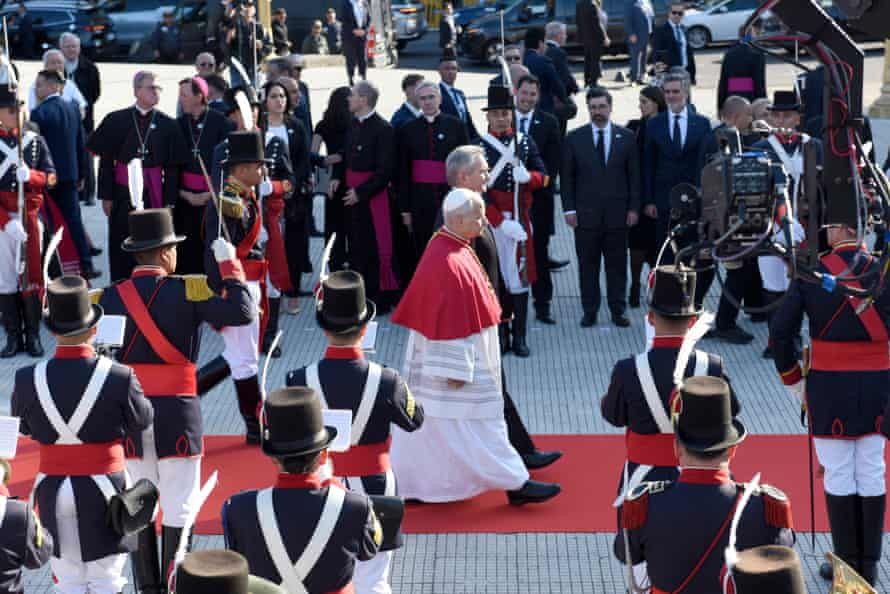
Speaking shortly after arriving in Buenos Aires on Sunday, Leo XIV delivered a pointed message about poverty, social protection and responsible leadership. His remarks attracted enthusiastic applause from the crowd gathered to welcome him.
“The economy must be at the service of the people, rather than people being at the service of the economy,” he declared, offering a direct challenge to the economic philosophy underpinning Milei’s sweeping austerity programme.
The Pope also highlighted the difficulties faced by families who continue to struggle financially despite working hard to meet their household needs.
His intervention is particularly significant because Milei has pursued an aggressive programme of public spending reductions since becoming president, promising to revive Argentina’s struggling economy and bring runaway inflation under control.
However, the consequences of those measures have generated controversy, especially among pensioners, low-income households, public-sector workers and people who depend on government assistance.
Pope Leo’s austerity criticism focuses on vulnerable Argentines
The pontiff‘s message went beyond a general appeal for economic fairness. He specifically defended poor people, pensioners and citizens whose circumstances make them dependent on public assistance.
Leo called for “particular concern be shown for those affected by illness, dependency and disability”.
Although he did not directly identify a particular government decision, the remarks were understood as an indirect reference to controversial reductions in disability assistance under Milei’s administration.
The Argentine Catholic Church has strongly criticised the government’s approach to essential social services, arguing that healthcare, disability support and other forms of assistance should not be treated simply as expenses to be removed from public accounts.
The Pope’s intervention placed the debate over austerity within a broader moral argument about the responsibilities of government towards citizens who are most exposed to economic hardship.
His message also questioned the idea that economic recovery should be assessed exclusively through financial indicators without sufficient consideration of its impact on ordinary households.
For Leo, the purpose of economic activity should ultimately be to improve human lives. His remarks suggested that financial discipline cannot be considered successful if the most vulnerable members of society are left without adequate support.
Democracy requires dialogue and responsible leadership
Beyond economic policy, the Pope used his address to remind Argentina’s political leadership that democratic government requires restraint, dialogue and respect for differing opinions.
Addressing Milei, whose political style is frequently characterised by confrontational speeches and insults against critics, Leo emphasised the importance of listening to opposing views.
He said strengthening democracy required a “willingness to listen” and the “careful use of words”.
The pontiff also highlighted the importance of integrity in public office, warning that “corruption undermines the confidence of citizens in their institutions.”
The remarks carried particular weight in a country where political disagreements have become increasingly intense under Milei’s presidency.
The president has maintained strong support among sections of the population who believe his economic reforms are necessary to reverse years of financial instability. However, opponents argue that the cost of those policies has fallen disproportionately on vulnerable households and public institutions.
By linking responsible language, democratic participation and institutional integrity, Leo broadened his message beyond the immediate argument over government spending.
His appeal also placed an expectation on political leaders to recognise that public confidence depends not only on economic results but also on how citizens are treated.
Argentina welcomes Pope Leo amid hopes of national reconciliation
The Pope’s arrival in Buenos Aires attracted large crowds, with thousands hoping his presence would help ease divisions between supporters and opponents of the president.
Argentina holds particular significance for the Catholic Church because it was the birthplace of Pope Francis, Leo’s predecessor, who died after leading the Church for more than a decade.
Francis never made a papal visit to his home country, leaving many Argentines disappointed. Leo’s arrival therefore represents the first visit by a pontiff to Argentina in nearly four decades.
The new Pope acknowledged the connection with his predecessor, saying he was “retracing” Francis’s steps.
For many residents, the visit represents an opportunity to hear the leader of the world’s 1.4 billion Catholics offer a message of unity at a time of considerable political and economic tension.
“Just like the World Cup unites us, hopefully the pope will too,” said Liliana Deblauwe, a 68-year-old retired teacher who waited with hundreds of people to see the pontiff visit a monument dedicated to national liberation hero José de San Martín.
Hundreds of other supporters gathered outside the presidential palace, chanting “Papa Leon” as the Pope met Milei.
Brian Inacio Rodriguez, a 26-year-old job seeker, travelled overland for five days from Ushuaia, at the southern tip of South America, to see Leo.
He said he hoped the pontiff would bring “much peace to Argentina”.
The reactions reflected the expectations surrounding the visit, with many citizens looking beyond religious ceremonies for a message capable of bridging the country’s political divisions.
Milei’s austerity programme remains controversial
Milei came to power promising to restore Argentina’s struggling economy and bring runaway inflation under control through a dramatic reduction in government spending.
His programme has involved shrinking the welfare state and cutting expenditure affecting public hospitals, universities and pensioners.
The president’s supporters argue that the measures are necessary to address longstanding economic problems, reduce government expenditure and restore financial stability.
However, the social consequences have generated substantial opposition, particularly among groups concerned about access to healthcare, education, disability assistance and pension support.
Argentina’s poverty rate has fluctuated considerably since Milei assumed office, reaching 32.3% in September, according to the figures cited in the report.
Read also: Trump’s Iran strike threat eases as he says fresh attacks are unlikely if talks progress
The economic difficulties have intensified arguments about whether the benefits of fiscal adjustment are reaching ordinary citizens or whether vulnerable groups are carrying an excessive share of the burden.
Milei’s administration maintains that drastic measures are needed to correct the country’s economic problems. Critics, however, question the social cost of pursuing those reforms through reductions in public support.
The Pope’s intervention has consequently given greater international visibility to a debate already dividing Argentine society.
Milei’s complicated relationship with the Catholic Church
The relationship between Argentina’s political leadership and the Catholic Church has been complicated by disagreements over social justice and the responsibilities of government.
Milei previously had a tense relationship with Pope Francis, who consistently advocated for poor people and criticised economic systems that excluded vulnerable communities.
During his political campaign, Milei insulted his fellow Argentine, calling him an “imbecile” for his support of social justice teachings.
Although the president softened his language after taking office, his confrontational approach towards the media and political opposition has continued to attract criticism.
His relationship with Pope Leo has so far been cordial, but the Argentine Catholic Church remains critical of his treatment of essential public services as primarily budgetary concerns.
Milei has also faced accusations of restricting democratic freedoms, including the right to protest. Nevertheless, he retains a loyal support base among citizens who credit his administration with reducing inflation.
The Pope’s visit therefore presents an important moment for relations between the Church and the government, particularly as disagreements over poverty, public services and economic priorities continue.
Pope Leo’s Latin America tour comes after cancer surgery
Argentina is the second destination on Leo’s ambitious 12-day tour of Latin America, following his visit to Uruguay.
The journey is his first trip to the region as Pope and comes just three weeks after he underwent surgery for lung cancer.
Latin America remains the world’s most Catholic continent, although religious identification has declined in several countries as societies become increasingly secular.
During his time in Uruguay, Leo condemned drug-related violence and called for stronger efforts to tackle child poverty.
His Argentine programme includes visits to a home for people with disabilities and a prison, alongside three open-air Masses.
The Catholic Church expects approximately seven million people to attend the various events scheduled during the visit.
The trip also presents an opportunity for the Church to strengthen its relationship with a country where Catholic identification has declined considerably.
A recent University of Buenos Aires poll found that 57.7% of respondents identified as Catholic, compared with approximately 90% in the 1960s.
For the Church, the visit is therefore both a pastoral mission and an important opportunity to reconnect with a changing population.
A challenge to Argentina’s political and economic leadership
Pope Leo’s austerity criticism has placed the human consequences of economic policy at the centre of his historic Argentine visit.
His appeal for an economy that serves people, rather than demanding that people serve economic targets, challenges the government to consider the experiences of pensioners, disabled citizens, low-income families and others affected by spending reductions.
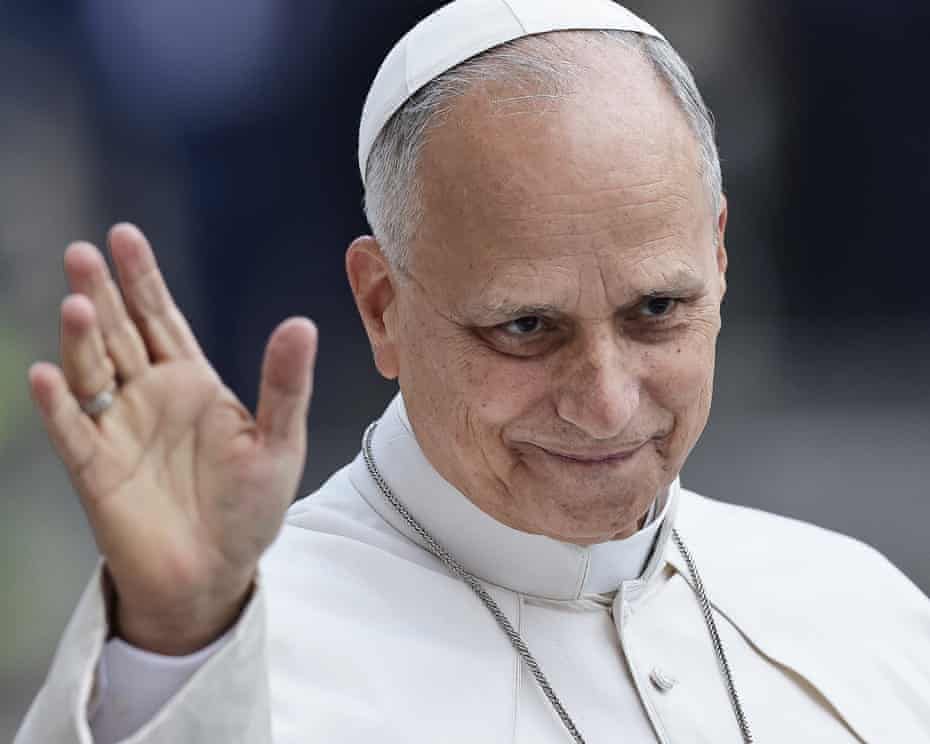
While the Pope did not directly demand that Milei abandon his economic programme, his speech made clear that economic growth must be accompanied by concern for human welfare.
The challenge facing Argentina is how to pursue financial stability while protecting citizens who depend on public services and social assistance.
As Leo continues his visit, his message of economic responsibility, democratic dialogue and national reconciliation is likely to remain central to discussions about the country’s future.
About The Author