Trump Nato Afghanistan claims– Donald Trump has triggered an angry backlash across the United Kingdom after claiming that Nato troops largely avoided frontline combat during the war in Afghanistan, remarks that senior politicians, veterans and families of the fallen say dishonour the sacrifice of thousands who served and died.
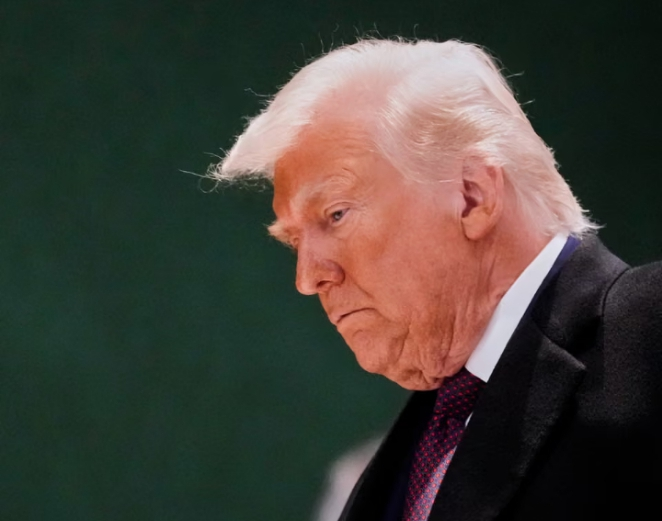
The controversy erupted after the US president suggested in recent interviews that allied forces “stayed a little off the frontlines” while the United States bore the main burden of the conflict.
The comments have been widely condemned in Britain, where leaders say they undermine the shared history of sacrifice between Nato allies during the 20-year war.
UK prime minister Keir Starmer led the criticism, accusing Trump of diminishing the role played by British and allied troops who fought and died in Afghanistan.
Speaking through his official spokesperson, Starmer said the president’s comments were “wrong” and failed to reflect the reality experienced by soldiers deployed in some of the most dangerous parts of the conflict.
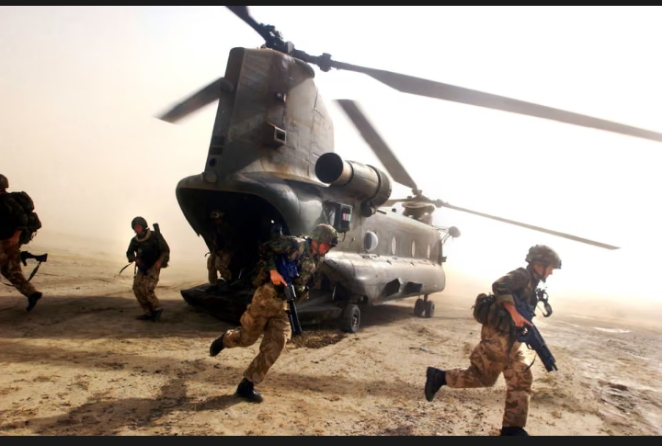
Britain lost 457 service personnel during the Afghanistan campaign, with thousands more wounded, many with life-changing injuries. For families who continue to live with that loss, Trump’s remarks have reopened old wounds.
Downing Street made clear that the government stands firmly behind the armed forces and Nato allies. Starmer’s spokesman stressed that the UK remains “incredibly proud” of the role British forces played, adding that their contribution was central to the Nato mission.
The criticism extended far beyond the Labour government. Conservative leader Kemi Badenoch described Trump’s remarks as “flat-out nonsense” and accused him of denigrating British troops.
She said the suggestion that soldiers avoided combat showed a profound misunderstanding of the war and the realities faced by those deployed.
Senior MPs from multiple parties echoed those sentiments. Liberal Democrat leader Ed Davey said the comments were insulting and urged the prime minister to take the issue up formally with Washington. Others argued that silence would risk normalising rhetoric that undermines long-standing military alliances.
Despite the anger, UK officials have indicated that there has been no direct call between Starmer and Trump since the remarks surfaced, and there are no immediate plans to summon the US ambassador.
Perhaps the strongest reactions have come from veterans and the families of those killed or injured in Afghanistan. Many say the president’s words ignore the lived reality of a brutal conflict that left deep scars across military communities.
Diane Dernie, whose son Ben Parkinson was critically injured when his vehicle hit a landmine in Helmand province in 2006, described Trump’s comments as “beyond belief”. Parkinson suffered catastrophic injuries and continues to require long-term care nearly two decades later.
Dernie said the idea that troops “fannied about behind the frontlines” was the “ultimate insult” to families who have spent years fighting for medical care and recognition for wounded veterans. She urged Starmer to challenge Trump directly rather than allowing the comments to pass unchallenged.
Former soldiers have also spoken publicly. Al Carns, the UK armed forces minister and a former Royal Marine who completed four tours in Afghanistan, dismissed the claims as “utterly ridiculous”.
Without naming Trump directly, Carns said anyone who believed such statements should meet serving personnel and bereaved families to understand the true cost of the war.
Nato Casualties Tell a Different Story
Statistics from the Afghanistan conflict directly contradict the suggestion that Nato troops avoided danger.
Over the course of the war, 3,486 Nato service members were killed, including 2,461 Americans. Canada lost 165 personnel, while Denmark suffered 44 combat deaths — the highest per capita loss of any Nato country outside the United States.
British troops were heavily involved in some of the most volatile regions, particularly Helmand province, where fighting against Taliban insurgents was intense and sustained. Many operations were conducted jointly with US and allied forces, underscoring the shared nature of the mission.
John Healey, the UK defence secretary, said Nato allies “answered the US call” after the September 11 attacks and should be remembered as heroes who gave their lives in service of collective security.
The United States remains the only Nato member to have formally invoked Article 5, the alliance’s collective defence clause, following the 2001 terrorist attacks — a moment that led directly to the deployment of allied troops to Afghanistan.
Trump’s Military Record Resurfaces
Trump’s comments have also reignited scrutiny of his own military history. Critics have pointed out that he avoided service during the Vietnam War after receiving medical deferments linked to bone spurs, a diagnosis that has been questioned over the years.
Several MPs and veterans described it as deeply ironic that a president who never served in combat would question the bravery and commitment of those who did.
Stephen Stewart, a former soldier and author, said Trump’s remarks were both offensive and inaccurate, adding that they desecrated the memory of soldiers who made the ultimate sacrifice.
Stewart argued that the comments represented more than a political gaffe, calling them a moral failure that deserved a clear apology to bereaved families.
The controversy comes at a sensitive time for Nato, as relations between the US and several European allies are already strained over defence spending, foreign policy priorities and Trump’s broader rhetoric about alliances.
In Denmark, where relations with Washington have recently been tense over Trump’s comments about Greenland, the reaction was particularly sharp. Adam Price, the Danish writer behind the television series Borgen, described the remarks as an insult to families still mourning loved ones lost in Afghanistan.
Diplomats fear that repeated attacks on Nato’s credibility risk weakening public confidence in the alliance, even as security challenges continue to mount globally.
UK Stands Firm on Nato Commitment
Despite the anger, UK officials have been careful to reaffirm their commitment to Nato and the transatlantic relationship. Ministers have stressed that while political leaders may clash, the bonds between soldiers who served together remain unbroken.
Former RAF officer and Labour MP Calvin Bailey said Trump’s account “bears no resemblance” to the reality faced by British forces on the ground.
He described close cooperation with US special operations units and emphasised that the dangers were shared by all who served.
For many in the UK, the episode has become about more than one set of remarks. It has reignited a broader debate about respect for military service, the cost of war, and the responsibility of political leaders to speak accurately about history.
As one MP put it, the issue is not about politics but about honouring those who fought, suffered and, in many cases, never returned home.
Read also: UK policy in Horn of Africa faces scrutiny over Sudan war, Somaliland ties
About The Author