Rubio tells lawmakers Trump wants to buy Greenland, reviving a long-standing ambition that has returned to the center of American foreign policy discussions in Washington.
The disclosure emerged during a closed-door congressional briefing, where Secretary of State Marco Rubio addressed lawmakers amid broader discussions about global security challenges.
Although the briefing primarily focused on Venezuela, concerns quickly shifted toward Greenland following recent remarks from President Donald Trump and senior administration officials.
Rubio reportedly reassured lawmakers that Trump preferred acquisition through purchase rather than military force, attempting to calm growing unease within Congress.
“Buying Greenland is being explored as an option,” Rubio told lawmakers, according to officials familiar with the discussion.
The remarks immediately reignited controversy surrounding Trump’s repeated interest in acquiring the vast Arctic territory governed by Denmark.
Trump has openly expressed admiration for Greenland’s strategic and economic potential since his first term as president.
The renewed interest prompted Trump to instruct aides to provide him with an updated plan for acquiring the autonomous territory.
That request, made the same day as Rubio’s briefing, underscored the seriousness of the administration’s intentions.
Greenland occupies a critical position in the Arctic, offering military, economic, and geopolitical advantages as global competition intensifies in the region.
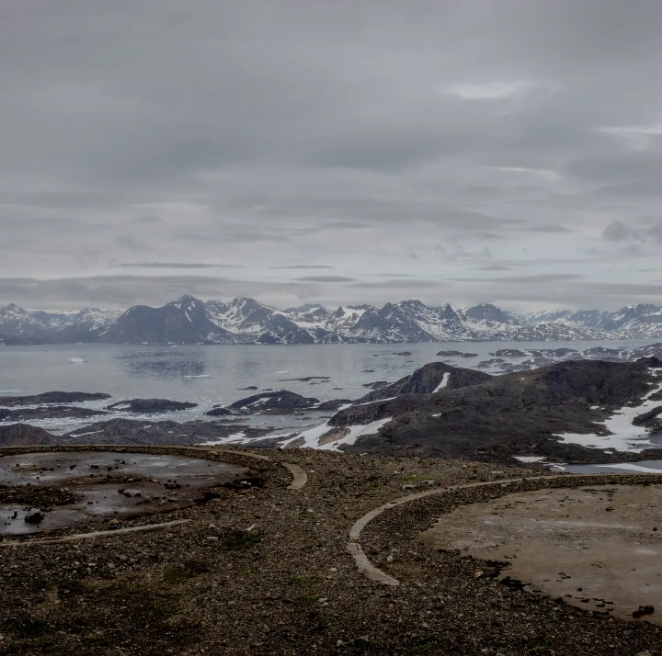
Its proximity to North America and established US military presence already make it strategically significant to Washington.
Trump’s background as a real estate developer has often influenced his unconventional approach to diplomacy and territorial negotiations.
“All options are being reviewed,” Trump has said previously when questioned about Greenland, framing the issue as a strategic investment.
Rubio declined to provide specifics on how a purchase might occur or whether Denmark had been formally approached.
Lawmakers pressed the secretary on whether such discussions risked damaging alliances at a critical geopolitical moment.
Concerns were heightened by recent comments from senior White House aide Stephen Miller regarding Greenland’s status.
Miller asserted publicly that Greenland “rightfully belongs to the United States,” comments that drew swift backlash across Europe.
European leaders viewed the statements as a direct challenge to international norms governing sovereignty and territorial integrity.
Denmark, which maintains authority over Greenland’s foreign policy and defense, rejected the idea outright.
Danish Prime Minister Mette Frederiksen responded firmly, reiterating that Greenland is not for sale.
“Greenland belongs to the Greenlandic people,” Frederiksen said, reinforcing Denmark’s longstanding position.
The controversy escalated when six NATO allies issued a joint statement supporting Denmark’s stance.
Britain, France, Germany, Italy, Spain, and Poland joined Denmark in publicly opposing Trump’s assertions.
“Security in the Arctic must be achieved collectively,” the statement read, emphasizing NATO cooperation.
The allies stressed respect for sovereignty, territorial integrity, and the inviolability of borders.
“These principles are universal, and we will not stop defending them,” the statement added.
The coordinated response marked an unusually strong rebuke from close US allies.
Analysts say the pushback reflects growing anxiety over unilateral actions affecting shared security interests.
Greenland’s role within NATO’s Arctic strategy makes the issue particularly sensitive.
Any attempt to alter its status could disrupt delicate regional balances amid rising Russian and Chinese activity.
Rubio sought to reassure lawmakers that diplomacy remained the preferred approach.
“There is no plan for invasion,” Rubio emphasized, according to officials briefed on the meeting.
Still, critics argue that repeated public statements undermine diplomatic trust regardless of intent.
Opposition lawmakers warned that rhetoric alone could strain transatlantic relationships.
Some Republicans privately expressed concern that the issue distracts from pressing global crises.
The administration maintains that Arctic security demands creative thinking and long-term planning.
Trump allies argue that Greenland’s resources and location justify renewed discussions.
Greenland holds vast reserves of rare earth minerals, increasingly vital to modern technologies.
Melting ice has also opened new shipping routes, intensifying international competition in the Arctic.
The United States already operates Pituffik Space Base, formerly Thule Air Base, in northwest Greenland.
That presence has long been coordinated with Denmark under existing agreements.
Critics question what additional benefits outright ownership would provide.
Legal experts note that purchasing territory from a NATO ally presents unprecedented challenges.
International law would require consent from both Denmark and Greenland’s autonomous government.
Greenland’s leaders have shown no interest in transferring sovereignty.
Instead, they continue to pursue greater autonomy and economic independence.
Public opinion in Greenland strongly favors self-determination rather than foreign acquisition.
Despite resistance, Trump’s continued focus has kept the issue alive.
His supporters frame the proposal as bold leadership unconstrained by diplomatic convention.
Detractors describe it as destabilizing and unnecessary.
Rubio now faces the challenge of managing fallout while maintaining alliance unity.
Congressional oversight committees are expected to monitor developments closely.
Further briefings are anticipated as lawmakers seek clarity on administration intentions.
Read also: European leaders defend Greenland sovereignty as Ukraine security talks hold in Paris
For now, Rubio tells lawmakers Trump wants to buy Greenland, a statement that has reverberated far beyond Capitol Hill.
The episode highlights enduring tensions between transactional diplomacy and established international norms.
As Arctic competition accelerates, Greenland’s strategic importance will only grow.
Whether ambition turns into action remains uncertain.
What is clear is that the debate has reopened questions about power, sovereignty, and alliance trust.
And once again, Greenland finds itself at the center of global attention.