Stephen Miller strongman worldview is increasingly defining how the Trump administration views global affairs, replacing diplomacy with power projection and unapologetic coercion abroad.
Once known primarily for shaping hardline domestic policies, Miller has extended his ideological reach beyond America’s borders into foreign policy decision-making circles.
As President Trump’s deputy chief of staff for policy and homeland security adviser, Miller commands exceptional authority within the White House power structure.
Officials say his influence stretches across immigration enforcement, national security planning, and emerging territorial ambitions tied to American strategic interests.
During Trump’s first term, Miller was central to policies that produced mass deportations and family separations at the southern border.
Those policies tested constitutional boundaries while redefining executive power, earning Miller a reputation as the administration’s most uncompromising ideologue.
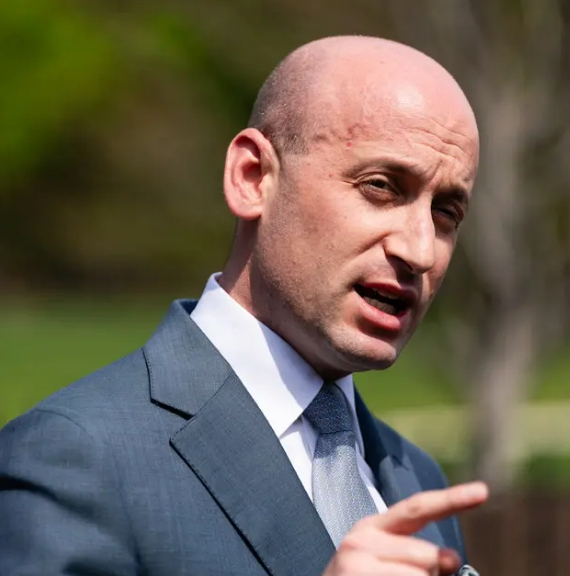
Now, that same rigidity is being applied to international relations, particularly toward weaker or resource-rich regions viewed as strategically exploitable.
Greenland has emerged as a focal point of this thinking, with Miller defending Trump’s long-standing desire to assert control over the Arctic territory.
Appearing on CNN, Miller framed global politics as a realm governed not by cooperation but by force and dominance.
“We live in a world that is governed by strength, that is governed by force, that is governed by power,” Miller told Jake Tapper.
He continued, “These are the iron laws of the world since the beginning of time,” dismissing diplomatic norms as secondary considerations.
Such statements reflect a worldview that prioritizes coercion over consensus and strategic advantage over international goodwill.
Trump foreign policy force doctrine has increasingly sidelined traditional allies, even when long-standing partnerships are at stake.
Denmark, which governs Greenland and is a NATO ally, has found its relationship with Washington strained by these ambitions.
Administration officials argue that Greenland is essential for US national security due to Arctic access and mineral resources.
Critics counter that such rhetoric echoes imperial-era justifications rather than modern alliance-based security frameworks.
Within the White House, Miller’s rise signals Trump’s preference for loyalists who reinforce instincts rather than challenge assumptions.
Advisers who once tempered Trump’s impulses are largely absent, creating space for ideologues to exert unchecked influence.
Venezuela represents another testing ground for this aggressive posture, with officials hinting at intervention framed as security necessity.
Miller has supported rhetoric portraying Venezuela as both a threat and an opportunity for American strategic leverage.
This approach mirrors his domestic philosophy, where enforcement and deterrence replace compromise and reform.
Hard-right ideology in US diplomacy is reshaping America’s global image, drawing concern from allies and adversaries alike.
Foreign policy experts warn that force-first strategies risk long-term instability and diplomatic isolation.
Yet within Trump’s inner circle, such warnings are viewed as outdated or naïve.
Supporters argue that Miller’s worldview reflects geopolitical reality rather than idealistic restraint.
They believe American power must be asserted decisively to secure resources and maintain dominance.
Opponents see a dangerous erosion of norms that once anchored US leadership.
As Miller’s influence grows, the administration’s foreign policy appears increasingly driven by ideology rather than balance.
Read also: US commits to back Multinational defence of Ukraine if Russia launches fresh attack
Whether this strategy delivers security or sparks confrontation remains an open question.
What is clear is that Stephen Miller’s strongman worldview now occupies the center of Trump’s global vision.