European leaders have jointly declared that Greenland belongs solely to its people, rejecting any external claims as they gathered in Paris for high-level Ukraine security talks.
The statement was issued during a meeting of the so-called “coalition of the willing,” bringing together leaders from major European powers and Denmark.
They stressed that decisions concerning Greenland rest exclusively with Denmark and Greenland, reaffirming respect for sovereignty and territorial integrity under international law.
Although no country was named directly, the remarks followed renewed rhetoric suggesting Greenland could be taken over for strategic Arctic interests.
Leaders emphasised that principles of the United Nations Charter, including respect for borders, must remain the foundation of global order.
Denmark’s prime minister welcomed the show of solidarity, describing it as essential at a time of mounting geopolitical pressure in the Arctic region.
The Arctic has gained increasing strategic importance due to climate change, new shipping routes, and growing military competition among global powers.
European officials insisted Arctic security should be achieved collectively, working alongside NATO allies, including the United States.
They warned that unilateral actions would undermine long-standing security arrangements that have preserved stability since the Second World War.
Alongside Greenland concerns, the Paris summit focused heavily on Ukraine’s future security as fighting with Russia continues.
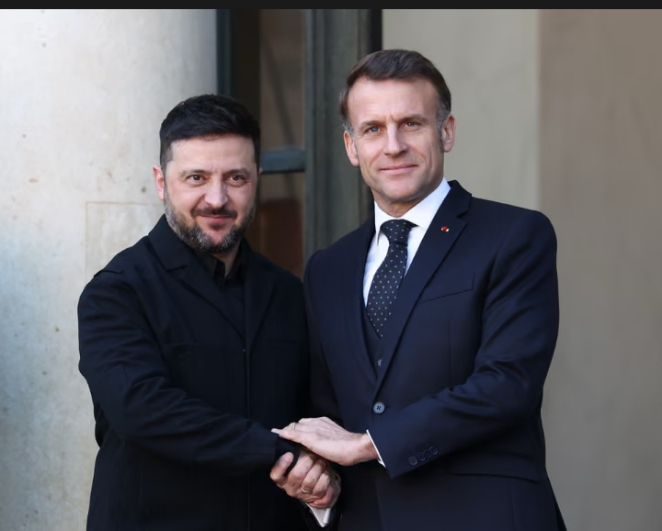
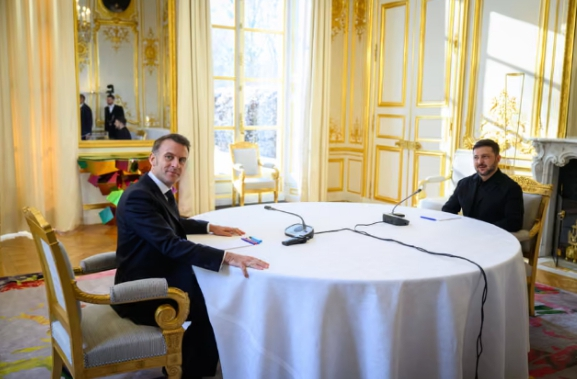
Ukrainian President Volodymyr Zelenskyy attended the meeting, holding talks with European leaders and representatives from allied nations.
Discussions centred on how to strengthen Ukraine’s defences and deter any future Russian aggression after a possible ceasefire.
Draft proposals suggest European states could offer politically and legally binding security guarantees to Ukraine once hostilities pause.
These guarantees may involve military capabilities, intelligence sharing, logistical assistance, and coordinated diplomatic and economic measures.
Officials noted such commitments would be activated only if a ceasefire formally comes into effect.
European leaders believe clearer commitments from Europe could encourage stronger security assurances from the United States.
Reports indicate the US may support a European-led multinational force deployed in Ukraine after a ceasefire.
Under the proposed framework, Washington would help monitor and verify any ceasefire agreement.
The US could also provide backing if Russia were to launch another large-scale attack on Ukraine.
While details remain limited, diplomats say discussions are moving toward a shared Europe–US security framework.
Zelenskyy described his meetings as constructive, stressing that diplomacy must be backed by concrete military assistance.
He highlighted Ukraine’s urgent need for stronger air defence systems to protect civilians and critical infrastructure.
According to Ukrainian officials, every delivery of defensive weapons improves both security and the chances of successful diplomacy.
The Ukrainian leader also met France’s president, discussing additional defence support and longer-term cooperation.
European leaders acknowledged Ukraine’s military would remain the first line of defence against further aggression.
They stressed continued investment in Ukraine’s armed forces would be essential even after any ceasefire.
At the same time, leaders recognised that lasting peace would require Russia’s agreement to any proposed security framework.
So far, Moscow has shown little indication it is ready to end hostilities or accept binding international guarantees.
Despite these challenges, European officials said unity remains their strongest asset in confronting overlapping security crises.
They argued that defending sovereignty in Greenland and supporting Ukraine are both tests of international law.
Leaders concluded that allowing borders to be challenged anywhere risks instability everywhere.
As talks continue, Europe is positioning itself as a more decisive security actor alongside its transatlantic partners.
The Paris meeting underscored Europe’s intent to defend its values, territories, and allies in an increasingly volatile world.
Read also: Trump’s Venezuela gamble: Military force, Political vacuum, and a growing regional crisis