The price of Premium Motor Spirit (PMS), popularly known as petrol, has risen by approximately 643 per cent in Nigeria since the removal of fuel subsidies in May 2023, with fresh geopolitical tensions in the Middle East now threatening another round of increases for consumers already grappling with inflation and a rising cost of living.
Data reviewed by market analysts show that petrol prices have climbed from about N175 per litre before President Bola Tinubu assumed office in May 2023 to between N1,300 and N1,400 per litre in several parts of the country by May 2026.
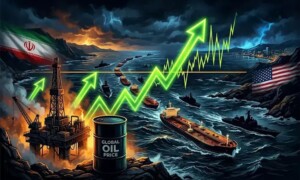
The increase reflects a combination of domestic economic reforms and global market developments, including the removal of fuel subsidies, exchange-rate liberalisation, and a recent surge in international crude oil prices following renewed conflict involving Iran, Israel and the United States.
Key Takeaways
- Petrol prices have risen about 643% since May 2023.
- Subsidy removal remains the biggest driver of higher pump prices.
- Naira depreciation significantly increased import costs.
- Dangote Refinery initially helped moderate prices through competition.
- Rising Middle East tensions have pushed crude oil towards $100 per barrel.
- Analysts warn petrol could exceed N1,500 per litre if oil prices continue rising.
- The Federal Government says fuel subsidies will not return.
Brent crude oil traded above $97 per barrel this week as investors reacted to renewed tensions involving Iran, Israel and the United States.
Market concerns have focused on the Strait of Hormuz, a key global oil shipping route that handles roughly one-fifth of global crude trade.
Analysts warn that prolonged disruptions could place additional upward pressure on fuel prices in Nigeria and other oil-importing economies.
The development comes as Nigerian motorists continue to grapple with petrol prices ranging from N1,300 to N1,400 per litre across major cities.
How Nigeria Reached N1,300 Per Litre
One of President Tinubu’s first policy announcements after taking office on May 29, 2023, was the removal of fuel subsidies.
The decision immediately altered the pricing structure of petrol in Africa’s largest economy, where government support had kept fuel prices artificially low for decades.
Within days of the announcement, pump prices rose from around N175–N200 per litre to above N500.
At the same time, the government adopted a more market-driven foreign exchange policy. The naira subsequently weakened significantly against the US dollar, increasing the cost of imported petroleum products.
The combined effect of subsidy removal and currency depreciation created a sharp upward adjustment in domestic fuel prices.
Economists broadly supported the reforms as necessary to reduce fiscal pressures and attract investment, but warned that the transition would impose significant short-term hardship on households and businesses.
Petrol Price Timeline: 2023–2026
| Period | Average Petrol Price |
May 2023 (Pre-subsidy removal) June 2023 Early 2024 September 2024 Late 2025 May–June 2026 | N175–N200 N500–N550 N600–N700 N1,000–N1,080 N800–N900 N1,300–N1,400 |
The table illustrates how petrol prices have evolved since the removal of fuel subsidies in May 2023, highlighting the impact of exchange-rate reforms, changing import costs and global crude oil market volatility.
The Return of Implicit Subsidies
As fuel prices continued climbing, the Nigerian National Petroleum Company Limited (NNPC) was accused of reintroducing a form of subsidy through what analysts described as under-recovery payments.
For much of 2024, petrol sold at approximately N600 per litre despite landing costs reportedly exceeding N1,000 per litre.
The former Chief Financial Officer of NNPC, Umar Ajiya, later acknowledged that government-backed support mechanisms had effectively reduced pump prices below actual import costs.
That admission reinforced concerns among economists that subsidy removal had not been fully implemented during the transition period.
When those interventions eased, fuel prices resumed their upward trajectory, eventually crossing N1,000 per litre.
Dangote Refinery Changes Market Dynamics
A major turning point came with the entry of the Dangote Petroleum Refinery into Nigeria’s fuel market.
The refinery’s commencement of PMS production created competition within a sector long dominated by imports.
Throughout late 2024 and much of 2025, aggressive pricing strategies by Dangote helped moderate fuel costs.
Petrol prices stabilised largely within the N800–N900 range, offering temporary relief to consumers and businesses.
Many industry observers viewed the refinery as a potential long-term solution to Nigeria’s dependence on imported fuel.
However, external market forces soon challenged those gains.
Oil Prices Rally as Middle East Tensions Escalate
Global energy markets have been shaken by escalating tensions involving Iran, Israel and the United States.
Brent crude oil recently climbed above $97 per barrel, while West Texas Intermediate crude traded above $94 per barrel after reports that diplomatic efforts between Washington and Tehran had stalled.
Investors reacted strongly to reports suggesting Iran could move to restrict shipping through the Strait of Hormuz, one of the world’s most critical energy corridors.
Approximately one-fifth of global oil trade passes through the waterway.
Any disruption to shipping routes in the region could significantly affect crude supplies and fuel prices worldwide.
Energy traders have consequently built a substantial geopolitical risk premium into oil prices.
Why Global Oil Prices Matter to Nigerians
Although Nigeria is a major crude oil producer, domestic petrol prices remain highly sensitive to international market movements.
Refined petroleum products are priced largely according to global benchmarks, while exchange-rate fluctuations further influence final pump prices.
As crude oil prices rise, refiners face higher feedstock costs, which are eventually passed on to distributors and consumers.
This dynamic explains why petrol prices in Nigeria have accelerated again despite increased local refining capacity.
The recent jump from around N800 per litre to approximately N1,300 has coincided with rising international crude prices.
Expert Views
Professor Adeola Adenikinju, a former president of the Association of Energy Economists, said higher crude oil prices present both opportunities and risks for Nigeria.
According to him, government revenues could improve as oil export earnings rise, but consumers face worsening inflationary pressures.
He argued that targeted social support programmes are necessary to protect vulnerable households from the effects of higher transportation and food costs.
Meanwhile, the National President of the Petroleum Products Retail Outlet Owners Association of Nigeria (PETROAN), Billy Gillis-Harry, expressed concern that authorities have yet to announce significant relief measures.
He warned that continued escalation in Middle East tensions could push petrol prices beyond N1,500 per litre.
Read Also:Nigeria energy sector rebounds as NNPC profit jumps 74% and Dangote cuts petrol price
Nigeria FDI Crisis Deepens as Foreign Investors Pour $3.37bn Into Nigerian Bonds
- Baasi kidnapping: Escaped victim identifies suspect, leading to arrest in Oyo
- Tinubu campaign office vandalised in Ibadan, PBAT-KO Movement alleges APM link
- UK rejoining the EU: Michel Barnier says Britain would be welcomed back with conditions
- Putin Trump resume Ukraine peace talks as Russia frees US teacher
- Real Madrid vs RB Leipzig: Spanish giant win 4-1 as Mbappé, Diomande shine amid Vinícius Jr. boos
Independent Market Analyst View
Ayodeji Ebo, Managing Director and Chief Business Officer at Optimus by Afrinvest, said energy prices remain one of the biggest inflation risks facing Nigeria.
“Any sustained rise in crude oil prices above current levels is likely to translate into higher logistics costs, transportation expenses and broader inflationary pressures.
While Nigeria may benefit from stronger oil revenues, households and businesses will continue to face significant cost challenges,” he said.
Financial analyst and Chief Executive Officer of Cowry Asset Management, Johnson Chukwu, said Nigeria’s fuel market remains vulnerable to global supply disruptions despite recent gains in domestic refining capacity.
“The emergence of local refining is positive for Nigeria’s long-term energy security, but crude oil remains globally priced.
As long as international prices rise significantly, domestic consumers will continue to feel the impact through higher pump prices and inflationary pressures,” Chukwu said.
Global Comparison: How Nigeria Compares
Nigeria is not alone in facing fuel-price pressure.
Several emerging economies have experienced similar increases following subsidy reforms and global energy shocks.
Countries such as Egypt, Pakistan and Sri Lanka have all implemented fuel-pricing adjustments in recent years as governments sought to reduce fiscal burdens and align domestic prices with international market realities.
However, Nigeria’s 643 per cent increase ranks among the most dramatic fuel-price adjustments recorded by a major oil-producing economy during the past three years.
Inflation and Cost-of-Living Impact
The latest increase in petrol prices has amplified inflationary pressures throughout the economy.
Transport operators have raised fares repeatedly, while food distribution costs have climbed sharply.
Manufacturers and service providers have also reported higher operating expenses linked to fuel and logistics.
Although the Federal Government launched the Presidential Compressed Natural Gas Initiative to encourage alternatives to petrol and diesel, adoption remains relatively limited compared with the scale of national fuel consumption.
As a result, petrol remains the dominant transportation fuel across Nigeria.
Government Position
The Federal Government has repeatedly ruled out a return to fuel subsidies.
Fromer Minister of Finance and Coordinating Minister of the Economy, Wale Edun, has maintained that market-based pricing remains essential for economic stability and long-term investment.
Officials argue that reintroducing subsidies would reverse hard-won reforms and place additional strain on public finances.
Government representatives have instead emphasised targeted interventions and investment in alternative energy programmes.
What Investors Should Watch This Week
Market participants will closely monitor several developments:
- Further diplomatic negotiations between the United States and Iran.
- Any disruption to shipping through the Strait of Hormuz.
- Weekly movements in Brent crude oil prices.
- Dangote Refinery pricing announcements.
- NNPC retail pricing decisions.
- Exchange-rate movements affecting fuel import costs.
- Inflation data and potential policy responses from Nigerian authorities.
These factors will determine whether petrol prices stabilise or move higher in coming weeks.
Could Petrol Prices Rise Further?
Industry experts say the outlook remains uncertain.
If geopolitical tensions ease and oil prices retreat below current levels, domestic fuel prices could stabilise.
However, prolonged disruptions in the Middle East or additional pressure on global oil supplies could trigger another upward adjustment.

For now, consumers, businesses and policymakers remain caught between the benefits of higher oil revenues and the economic realities of rising fuel costs.
The direction of crude oil prices over the next several weeks may determine whether Nigeria experiences another fuel-price shock or a period of relative stability.
Frequently Asked Questions
Why has petrol become so expensive in Nigeria?
Petrol prices increased sharply following the removal of fuel subsidies in May 2023. Additional factors include the depreciation of the naira, rising global crude oil prices, logistics costs and market-based pricing reforms introduced by the Federal Government.
Could petrol prices rise above N1,500 per litre?
Yes. Industry stakeholders and petroleum marketers have warned that petrol prices could exceed N1,500 per litre if crude oil prices continue rising or if tensions in the Middle East further disrupt global energy supplies.
Is Dangote Refinery reducing petrol prices?
The Dangote Petroleum Refinery helped moderate prices during parts of 2025 by increasing local supply and creating competition in the market. However, international crude oil prices remain a major determinant of final pump prices.
Will the Federal Government bring back fuel subsidies?
Federal authorities have repeatedly stated that fuel subsidies will not return. Officials argue that subsidy payments distort the economy and place unsustainable pressure on public finances.
Outlook
For now, Nigeria faces a delicate balancing act. Higher crude oil prices could improve government revenues and strengthen foreign exchange earnings, yet they also threaten to deepen inflation and worsen living costs for millions of households.
The trajectory of Brent crude, developments in the Middle East, Dantgote Refinery pricing decisions and government economic policies will likely determine whether petrol prices stabilise in the coming months or continue their upward march toward new record highs.
Read more @ireport247news
About The Author